Category Archives: Shoulder Sleeve Insignia and Patches
A Temporary Break From Tradition: Navy Shoulder Sleeve Insignia
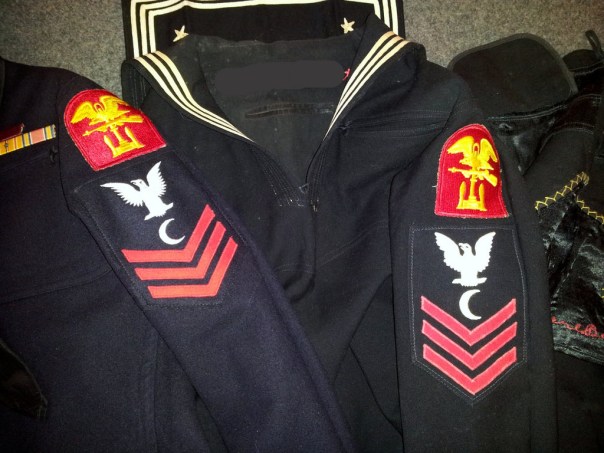
Two examples of the correct placement of the Navy SSI, worn during WWII. Shown on these uniforms is the Amphibious Forces Personnel patch.
Dress uniforms of the United States Navy have been remained relatively consistent, holding fast to their traditional appearance since the mid-nineteenth century. From the pullover jumper with the flap and neckerchief to the beautifully embroidered eagle and specialty marks of the rate badge, the uniform seldom strays too far from its unique appearance.
There have been some departures or design variances that left traditionalists scratching their heads, wondering why the navy brass seemingly tried to make the naval uniforms take on traits from the sibling military branches.
One of the most significantly negative changes occurred during the 1970s when the jumper uniforms (both service dress versions – blues and whites) were summarily eliminated in favor of the vanilla-stylings of a simple button-down white shirt and black trousers (known as “salt and peppers”) with a combination cover. The change was short-lived as the jumpers were re-instituted in the early 1980s and have been in use since. Due to their unpopularity, these uniforms draw little or no interest from collectors.
Another, less impactful change that was applied to the navy dress uniform was far less sweeping and seemed to set apart specific naval components rather than provide unity across the naval services. During World War II, with the ranks swelling to all-time highs, obviously necessary due to the manning requirements of a nearly 6,100-ship fleet, the specialized nature of certain functions had emerged into the spotlight, drawing significant attention from the rest of the armed forces and American public. The need to set these services apart arose, somewhat organically, as units began to adopt uniform concepts from the other branches.
Shoulder sleeve insignia (SSI) had been in use across the U.S. Army as a means for identifying which units soldiers belonged to, the Navy had never previously authorized similar markings for their uniforms (other than hat tallies for the blue flat or “Donald Duck” hats).
The uniform shirt bore only rate and rating as well as distinguishing marks at the onset of World War II. However, by 1943, sailors in the minesweeper community had begun affixing an embroidered red, white and blue circular-designed patch (representing a painted device seen aboard mine sweeper vessels) to their left shoulders, directly above the rate badge. The commanding officer of the minesweeper, USS Zeal (AM-131) seeking to determine if such a patch was authorized for wear, sent a letter to navy brass. The Chief of Naval Personnel responded on June 24, 1943 that the patch was not permitted for wear. Despite the rejection, sailors continued to wear the SSI.
As the war progressed, other naval components began to adopt shoulder patches and approval from the higher-ups for these patches began to trickle down.
Officially Approved U.S. Navy Shoulder Sleeve Insignia (with approval date):
- Amphibious Forces Personnel – January 1944
- Motor Torpedo Boat Personnel (PT Boat) – September 1944
- Minecraft Personnel – December 1944
- Naval Construction Battalion (Sea Bees) – October 1944
-
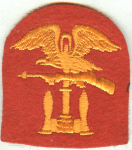
- Approved for wear in early 1944, this Naval Amphibious Forces patch has a nearly–identical U.S. Army counterpart (the same gold emblem instead on a field of blue) was the first of a handful of Navy SSI (Image source: eBay).
-
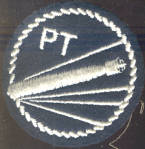
- This Motor Torpedo Boat Personnel (PT Boat) patch was approved for wear in September, 1944 (source: eBay).
-
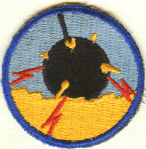
- Minecraft Personnel SSI from 1944.
-
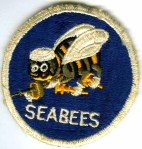
- Authorized “SEABEES” patch (source: National WWII Museum).
-
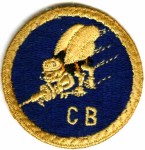
- This variation of the authorized SeaBees patch also originates during WWII but incorporates the abbreviation for the unit.
Unauthorized SSI:
- Amphibious Forces (Gator) Patch
- Minesweeper Personnel Patch
- Harbor Defense Personnel Patch
- Mosquito Boat Patch
-
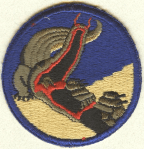
- This unauthorized Naval Amphibious Forces patch started appearing sometime in 1943 (source: eBay).
-
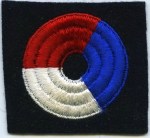
- The navy disallowed this Mine Sweeper Personnel patch in 1943, yet that did not prevent its use in the fleet during the war. (source: LJ Militaria).
-
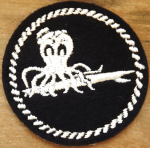
- Though unauthorized, this Harbor Defense Personnel (also known as Harbor Net Tender) is for wear on the dress blue uniform (source: eBay).
-
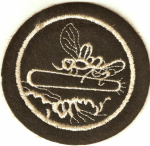
- Manufactured for wear on dress blues, this is a fine example of the un-approved Mosquito Boat Personnel patch (source: eBay).
-
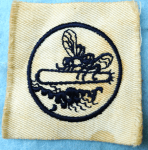
- This white variant of the unauthorized Mosquito Boat Personnel patch has never been worn on a uniform (source: eBay).
On January 17, 1947, the Navy once again embraced tradition and officially abolished all shoulder sleeve insignia.
Due to their considerable production, the authorized SSI patches are plentiful and readily affordable for militaria collectors. The unofficial insignia will be more challenging to locate and in some cases be considerably more expensive to acquire.
Research Resources:
- Marks, Specialty Marks and Distinguishing Marks of the Sea Services (U.S. Militaria Forum discussion topic)
- U.S. Navy Rating Badges, Specialty Marks & Distinguishing Marks 1885-1982 (Stacey, John A., paperback)
- Complete Guide to United States Navy Medals, Badges and Insignia: World War II to Present (Thompson, James G., paperback)
USMC Patch Rarities and Scarcities – What to Look For
Admittedly, patch collecting has only been a dabbling affair for me. While I find this focus area quite intriguing and considerably broad, I still only give it contextual attention. What I mean by that is that I tend to acquire patches that are related or connected to something else I am already collecting. However, there are some exceptions that have lead me to dive a little deeper, assembling a little bit more of a complete collection of certain patches and shoulder sleeve insignia.
Being a veteran of the U.S. Navy, I find that I am more inclined toward navy and Marine Corps patches. Considering that Navy shoulder patches, predominantly seen during WWII, are limited to a handful of varieties, I have been slowly working to expand my collection with at least one example of each. Serious patch collectors know that each of these Navy patch types may have several variations in their design, embroidery, thread colors and backing materials, just to name a few. Rather than commit a lot of time and finances in the pursuit, I chose to simply fill the hole in the collection with one of the variations. My collecting of Marine Corps patches has followed the same path, but with the wider spectrum of patches, but building a complete group will require more time.
Time is something I have plenty of. World War II Marine Corps SSI run the gamut of availability and scarcity and unfortunately, more disposable cash is going to be required for me to fill the gaps in my collection as some USMC patches are downright scarce and highly sought-after. A few months ago, I introduced you to the basics of Devil Dog patches, providing you with a brief history and insight into the more common pieces. However, I didn’t begin to scratch the surface regarding those items that draw the attention of hardcore collectors and fakers alike.
One could essentially group Marine Corps patches into a few levels of availability or scarcity. I am hesitant to apply the term “rare” as sometimes it erroneously conveys to novice collectors a sense of exorbitant monetary value on an item. What this means is that while something might be hard to find, it doesn’t mean that there are lots of collectors are competing for the same item. However, in some instances with the hard-to-find USMC patches, rare and scarce can be interchangeable and the values can be cost-prohibitive for the majority of collectors. In my experience, I’ve categorized USMC patches by their use (i.e. unit type).
Divisions
These patches cover the WWII USMC divisions ranging from the First (1st) through the Sixth (6th) Marine Divisions (MarDiv). Besides the common patches, there are some hard-to-find examples, especially those created during the very early months of the war. The 1st MarDiv patches that were made in Australia (when the division was relieved and sent to Melbourne for R&R following the Guadalcanal operation of 1942-43). These patches are quite distinct featuring a unique backing material and unique embroidery. Of course there are a vast number of variations for each of the subsequent divisions to be on the lookout for.
-
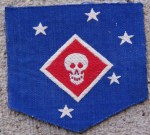
- Marine Raider battalion patches are rare enough, but when they are Australian made (like this example), they command a premium when sold (source: USMF).
-
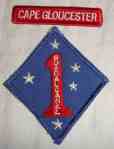
- 1st US Marine Division with Cape Glouseter tab (source: Snyder’s Treasures).
-
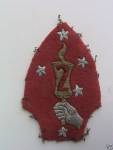
- One of the popular patch backing materials (for both collectors and moths) is wool as seen on this 2nd Marine Division patch (source: USMF).
-

- Variations play a significant role in determining value. This heart-shaped variant of the 2nd Marine Division is going to cost a collector a pretty penny (source: USMF).
Marine Air Wing (MAW)
For the purposes of organizing my collection, I have also grouped in the Marine Aircraft Fuselage patches as the units are connected. The MAW units are organized from the 1st through 4th and also include a headquarters group. Each unit has an associated patch design. The same structure applies to the Fuselage units and their patches (1st-4th and HQ). There are several variants of each patch design which can make a novice get cross-eyed wading through each one.
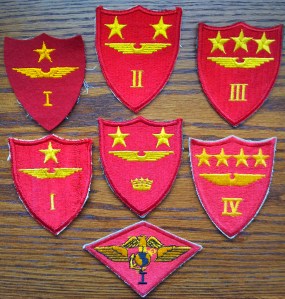
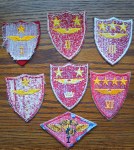
This assortment of patches includes examples of all four Marine Fuselage units along with the HQ patch (shown with the crown). The bottom SSI is from the 1st Marine Air Wing.
Raider Battalions
Perhaps the most widely sought patches originate from the elite Marine Raiders. These legendary units were the original Marine Special Forces units and employed highly skilled grunts who routinely operated behind enemy lines. The unit patch design is simplistic but conveys an ominous symbol superimposed onto a field of blue with five white stars. There are several variations of this patch with correlating price ranges – the upper end of which can break almost any collector’s bank.
-
- Marine Raider battalion patches are rare enough, but when they are Australian made (like this example), they command a premium when sold (source: USMF).
-
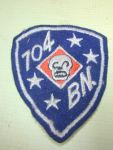
- This patch is frequently seen for sale online and is continuously attributed to a Marine Raider unit. Unfortunately, no such unit has ever been found to have existed. This patch is something of an anomaly and is more than likely a fantasy piece (source: Snyder’s Treasures).
Amphibious Corps
These patches employ a similar design to the Marine Raiders patch, borrowing the shape, color, five-star arrangement and the central white-bordered, red diamond field.
-
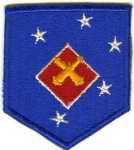
- This 1st Marine Amphibious Corps patch variant features gold-colored thread for the crossed cannons instead of the more common white thread (source: USMF).
-
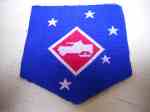
- The half-track-line symbol in this patch is that of the 1st Marine Amphibious Corps – Tank Destroyer unit (source: Snyder’s Treasures).
Marine Defense Battalions
These battalions were responsible for providing protection of bases throughout the Pacific Theater and consisted of more specialized units including coastal gun and anti-aircraft batteries, a detection battery (searchlights and radar) and machine gun units. These patches would be characterized more as scarce rather than rare. Authentic examples are available but are nowhere near as common as the division patches. Expect to pay a bit of a premium for these patches.
-
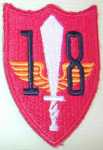
- The 18th Defense Battalion SSI design bears more resemblence to that of a Marine Fuselage Wing patch rather than the other Defense Battalion patches (source: Snyder’s Treasures).
-
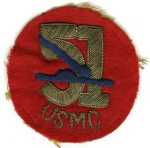
- Though quite subtle in design, the 51st Defense Battalion patch easily conveys their mission. This is a rare bullion example (Source: USMF).
-
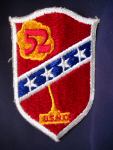
- This patch is in keeping with the other designs associated with Marine Defense battalions. This example is from the 52nd Defense Battalion (source: Snyder’s Treasures).
Fleet Marine Forces Pacific (FMFPAC)
Nine patch designs align with the eight units (anti-aircraft artillery, artillery battalions, bomb disposal companies, dog platoons, DUKW companies, engineer battalions, supply and tractor battalions) along with a headquarters unit, and pose an interesting challenge for collectors. Along with the embroidery and backing variations, there are some color alternatives (white emblems instead of gold) which pose some challenges for collectors locating them all.

Showing the patch fronts of four of the Fleet Marine Forces, Pacific; V Amphibious Corps (with the alligator); also displayed is the “Londonderry” patch of the ” Irish Marines’ of the 1st Provisional Marine Battalion.
Among these patches are four examples of the FMF PAC units. The example in the bottom row (with the star) is a more rare white-thread example of the FMF PAC Supply unit. The two patches flanking the FMF PAC Supply SSI are the 5th Amphibious Corps (at left) and Marine Detachment Londonderry patch.
Marine Detachment
These detachment patches are some of the most desirable USMC patches, the Londonderry and Ship’s Detachment patches being a bit more affordable than the more rare (and unique) Iceland patch.
-
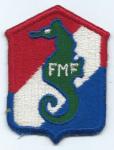
- One of my favorite USMC patch designs is that of the 13th Marine Defense Battalion with the “FMF” superimposed over the seahorse (Source: USMF).
-
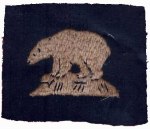
- The 1st Marine Brigade (Iceland) patch is distinct and lacks any of the more common WWII USMC patch traits with its all black field and the polar bear perched upon the ice (Source: USMF).
Aviation Squadrons
Perhaps the most widely sought after and diverse patches stem from USMC aviation squadrons. These patch designs could include variations that range from Disney crafted in painted-leather to embroidered fabric. Each squadron could have many renditions dependent upon how long the squadron was active and based upon where they were located. Squadrons could have their patches made in theater by resident artisans (including squadron personnel) or by domestic manufacturers. Specific designs could vary based upon available materials or leadership changes. As the WWII veterans’ personal artifact groups continue to arrive on the market, collectors still discover new variations of squadron insignia that were previously unknown, making authentication a challenge even for the most experienced patch enthusiast.
-
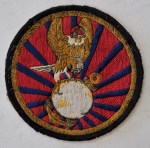
- This could be one of the rarest designs of patches for any service branch incorporate bullion thread as seen in this USMC VMD squadron patch (source: USMF).
-
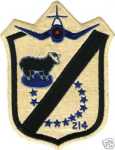
- Perhaps the pinnicle of USMC aviation squadron patch collecting, the “Blacksheep” of VMF-214 is the most replicated and one of the rarest (source: eBay image).
Education about these patches is key. I cannot emphasize enough that research prior to making any purchases of rare patches is highly recommended. One of the best resources is the U.S. Militaria Forum; specifically, What are the Rarest WWII USMC Patches for detailed insight as shared by the most experienced collectors and militaria historians.
US Marine Corps Uniform: Shoulder Sleeve Insignia Introduction
-

- The progression of the uniforms of the USMC from 1741 to 1859 (source: USMC)
-

- Current dress uniforms of the USMC (source: USMC).
As one views any iteration of the current Marine Corps uniform, it will be observed that they are somewhat simple in their design and appointments, paying homage to their traditions and legacy. While the present-day US Marine Corps uniforms may appear to be vastly different from those worn by colonial marines, they carry a significant amount of features and the overall theme from the originals.
-
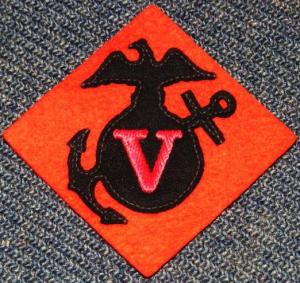
- The WWI-vintage SSI of the 11th Marine Regiment of the 5th Marine Brigade (Source: Hayes Otoupalik).
-
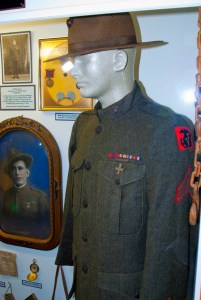
- Here is a pristine example of a WWI Marine uniform with the 11th Marine Regiment, 5TH Marine Brigade patch.
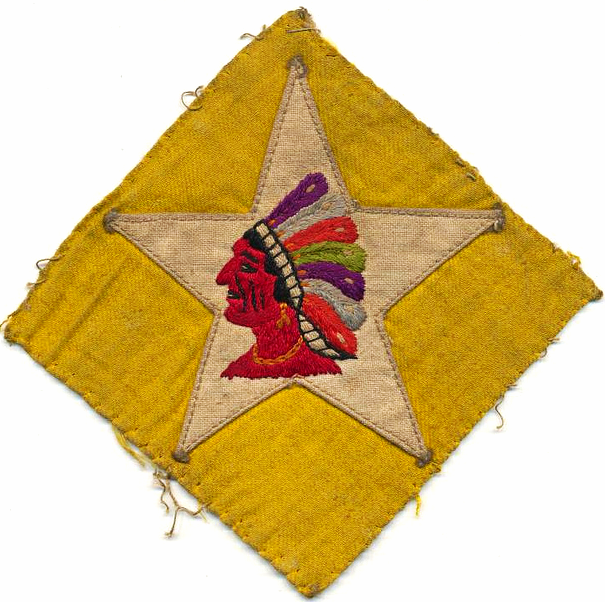
SSI of the 2nd Battalion 6th Marines (Source: Western Front Association).
As war waged in Europe in the early twentieth century, the United States was virtually unprepared to take on any combat activities due to the isolationists’ vehement opposition to the seemingly continuous strife of the monarchies of the old countries. The unpreparedness of the US military became apparent as they began to train and outfit the troops. The leadership had to scramble to buy materials to produce the uniforms required to equip nearly 4 million troops.
The Army had been in a period of transition from the uniform patterns used during the Spanish American War, and evolved through a handful of designs prior to arriving at three patterns used during WWI. The Marines, having been even less prepared, had to rely on the the Army for outfitting, for a number of reasons that included unifying all of the Allied Expeditionary Forces (AEF) and the need to consolidate production due to time and resource constraints.
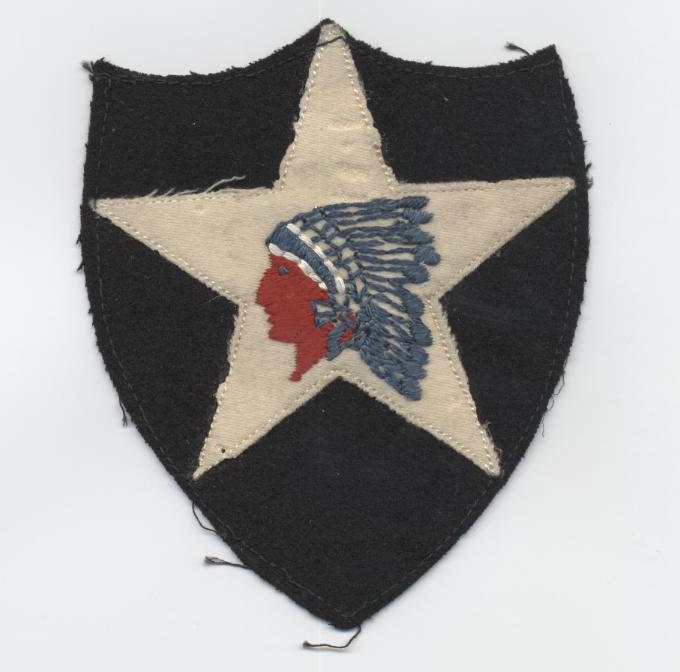
This shoulder patch belongs to the 6th Marine Regiment (Source: US Militaria Forum).
As the AEF began landing in Europe, there was little distinction between the branches of U.S. forces, largely leaving them to all look indistinguishable from each other. The Marines, seeking to set their uniforms apart from those of the Army, began to appoint their jackets with buttons and collar discs while adding the eagle, globe and anchor devices to the overseas cap.
Late in the war, the Marines began applying shoulder sleeve insignia to the left shoulders of their jacket sleeves. With the 6th Marine Regiment being placed under the Army’s 2nd Infantry Division, the design of the Marine SSI bears similarities to the 2ID patch, incorporating the Indian head symbol. The rarer USMC shoulder patch of WWI is that of the 11th Marine Regiment (part of the 5th Marine Brigade) which bears the Roman numeral “V” superimposed over a black EGA. In the years following WWI, the Marine Corps uniforms returned to their original configurations, removing the unit identifiers.
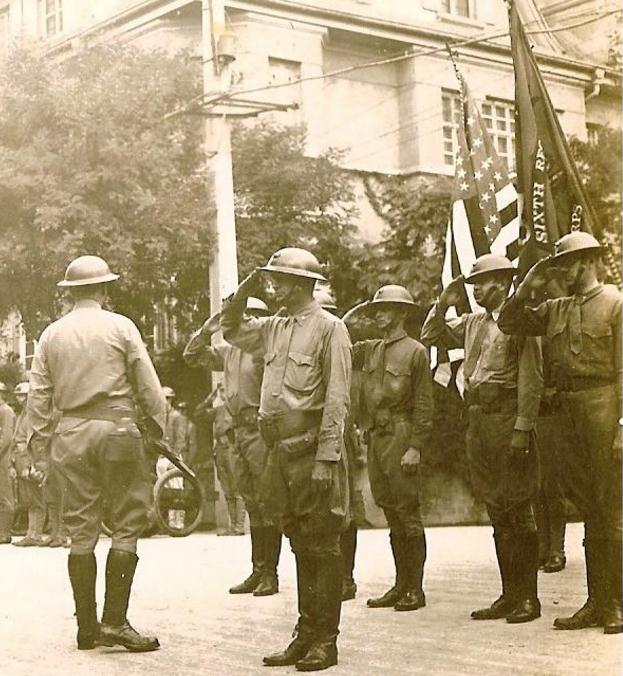
You can clearly see that these interwar-period China Marines lack any SSI (Source: Chinamarine.org).
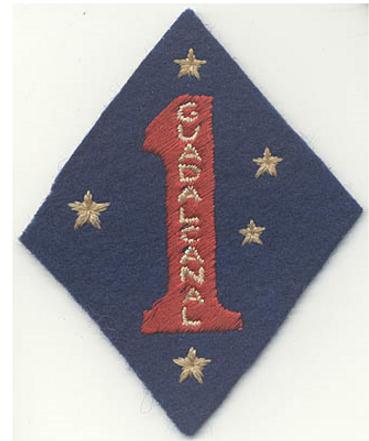
This Australian-made First Marine Division patch was created for the battle-hardened veterans of Guadalcanal while on R&R in Melbourne Australia (source: Flying Tiger Antiques).
Following combat on Guadalcanal, Marines of the 1st Marine Division were en route to Australia for R&R. It was thought that the Marines would again be wearing army uniforms, like they did during the Great War. Seeking to set the Marines apart from the army troops, discussion among the division leadership began taking place about a solution.
“They sat in facing bucket seats, between the litter of packs, seabags, typewriters, briefcases — the kinds of things that staff officers would necessarily bring out of battle.
General Vandegrift (division commander, Major General Alexander A. Vandegrift) had begun to be a little bored with the monotony of the long plane ride. “Twining (then-Lieutenant Colonel Merrill B. Twining),” he said, “what are you doing?”
“An idea I have for a shoulder patch,” said Twining. “The stars are the Southern Cross.”
Vandegrift looked at it for a moment, scribbled something on it, and handed it back to Twining, who saw the word, “Approved,” with the initials, “A.A.V.”
They had been on the ride from Guadalcanal to Brisbane. Because the first few days in Australia were hectic, Twining did nothing else about the patch until one morning he was called into Vandegrift’s office.
“Well, Twining, where’s your patch?” Vandegrift asked to the discomfort of Twining.
“I bought a box of watercolors,” Twining says in recalling the incident, “and turned in with malaria. I made six sketches, each with a different color scheme. In a couple of days I went back to the General with my finished drawings. He studied them only a minute or so and then approved the one that is now the Division patch.” *
-
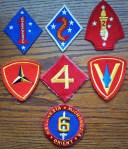
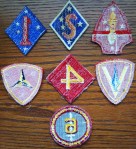
- These are the Marine Divisions (1-6). Shown are two versions of the 2nd MarDiv. Three of these patches are wool felt.
-
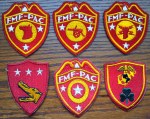
- Showing the patch fronts of four of the Fleet Marine Forces, Pacific; V Amphibious Corps (with the alligator); also displayed is the “Londonderry” patch of the ” Irish Marines’ of the 1st Provisional Marine Battalion.
-
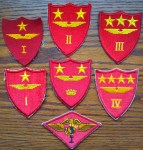
- Marine Air Wing Patch variants. One of these is a felt patch.
-
- The backs of the patches can help shed light on whether they are authentic.
-
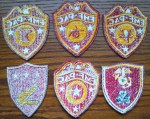
- Showing the backs of the FMF and other patches.
-
- Showing the backs of the FMF and other patches.
As the war wore on, other Marine Corps units began to design and implement shoulder sleeve insignia, sourcing from many manufacturers resulting in multiple patch variations for each unit identifier. In March of 1943, Marine Corps leadership made shoulder insignia officially supported, approving them for wear on dress uniforms.
Shortly after the end of the war, the Marine Corps struggled to maintain their existence while their ranks contracted from six divisions and five air wings (and several ancillary battalions) down to three divisions and wings. The need for the shoulder insignia had passed and so they were eliminated on January 1, 1948. No SSI has been (officially) worn on a Marine Corps uniform since that time. As with Army SSI, collecting each version of each unit patch can be a fun yet painfully lengthy process. As with any aspect of collecting, the rarer the patch, the larger the dent will be in your budget.
In preparing to move into collecting USMC SSI, I recommend that you start off simple. Pursue the common patches while keeping your eyes open and setting aside funds for the rarities. It is advisable that you obtain trusted publications to learn how to distinguish between the variants and the faked patches.
Available Resources:
- Complete Guide to United States Marine Corps Medals, badges and Insignia: World War II to Present
- Shoulder Sleeve Insignia of the U.S. Armed Forces 1941-1945
*McMillan, George. The Old Breed : A History of the First Marine Division in World War II. Washington: Zenger Pub. Co, 1979.
Theater-Made Militaria
This Australian-made First Marine Division patch was created for the battle-hardened veterans of Guadalcanal while on R&R in Melbourne Australia (source: Flying Tiger Antiques).
Within the realm of just about every collecting pastime exists undocumented glossaries packed with terms and phrases used to describe certain aspects of that particular genre. For those of us new to collecting, these terms can be some of the biggest obstacles to understanding the ins and outs of collecting, especially as we are trying to navigate our way to better understand specifics and details.
In some instances, terms can be rather self-explanatory (at least for people like me), but still may not make a whole lot of sense. Such is the case with “theater-made”, which seems to be bandied about rather freely.
As I launched into militaria collecting, I saw the term applied to a broad swath of army items, predominantly shoulder sleeve insignia (or patches) dating from World War I to present day. What astounded me was that these experts could spot not only that a particular piece was theater-made, but could tell you where in the world it was made. With certain pieces, a theater-made example could sell for considerably more than an American-made patch. The Australian-made 1st Marine Division patch comes to mind.
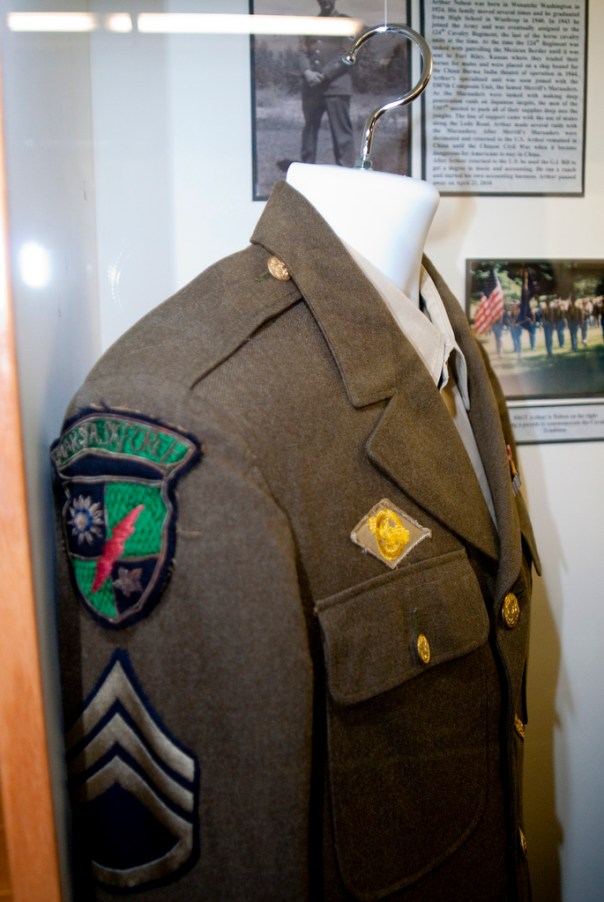
This WWII army veteran’s uniform sports a right-shoulder SSI of the 5307th Composite Unit (also known as Merrill’s Marauders).
To a veteran of the U.S. Navy, theater-made items seem commonplace. During our six month-long deployments to the Western Pacific, our ships would visit ports in countries such as the Philippines and Hong Kong. During our three- and four-day stays, many of us would take what little money we saved and head out to the tailor and embroidery shops to order custom uniforms or uniform items from the local craftsmen. These special-order pieces add a unique and personal touch for uniforms worn out on liberty or to make us stand out in a positive manner during inspection. However, we never thought of these components as theater-made.
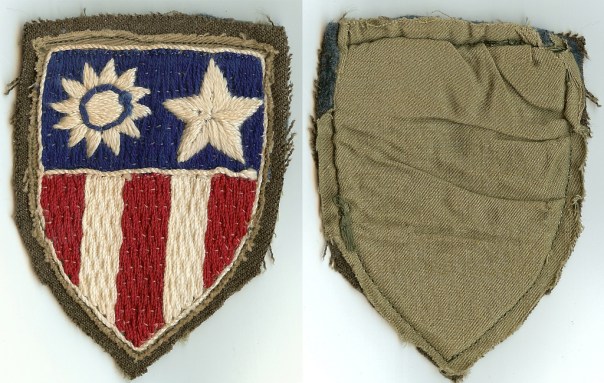
This China Burma India (CBI) patch is one of my theater made SSIs.
Aside from having items made for uniform-wear, armed forces personnel find unique methods for commemorating events, deployments and other aspects of their service. Having patches custom-made to wear on a utility or flight jacket (to document a deployment) was a common occurrence in the years that I served.

Patched naval aviator jackets were quite popular in the 1960s and again in the ’80s. Many aviation squadron detachments had patches custom-made to denote their deployment and the ship they were attached to.
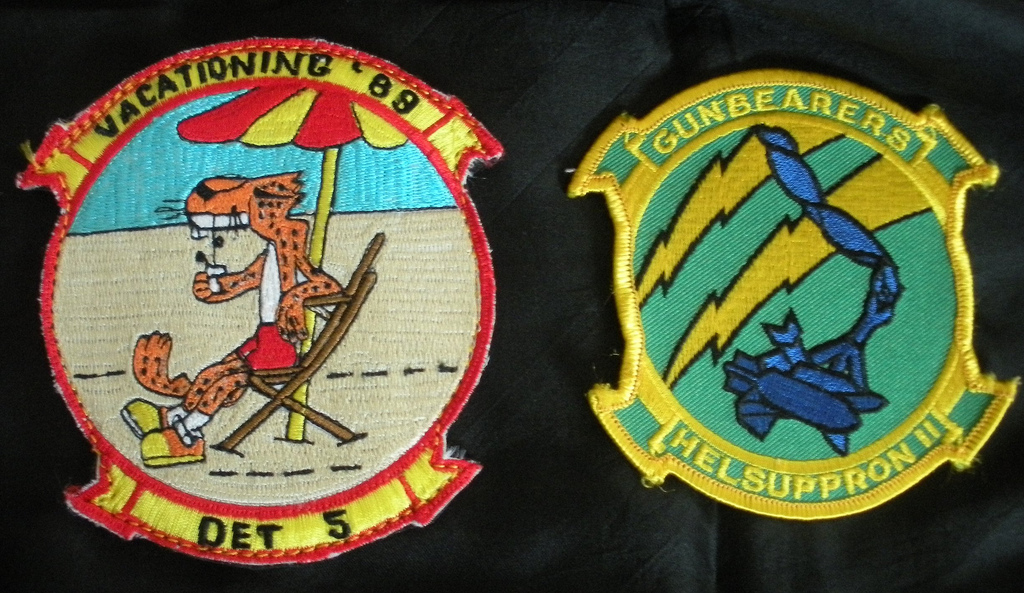
The patch on the right is the helicopter squadron’s official insignia while the patch on the left was custom-made in the Philippines for the specific deployment (in 1989) and detachment (Det. 5) from the unit.
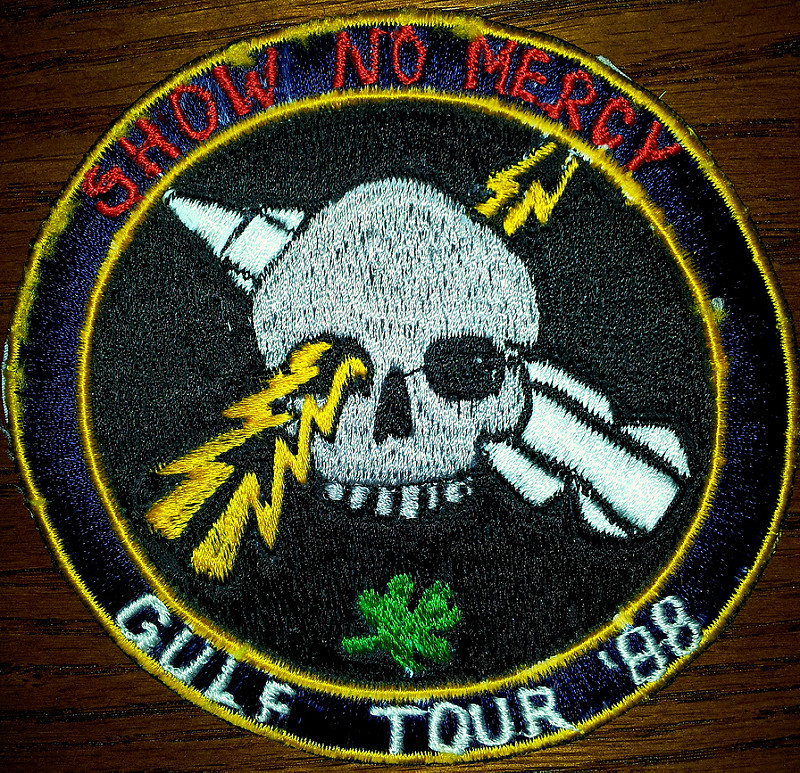
During one of my deployments, I had this patch made in the Philippines to commemorate our tour to the Persian Gulf. The embroidery was done with a machine that was free-hand (rather than computer-controlled) leaving a more rudimentary interpretation of my design.
As some of the custom pieces are slightly more rudimentary in construction, forgers tend to leverage that to their advantage. When collectors begin to pursue what are being passed off as theater-made items, they must have some sort of education before pulling the trigger to protect themselves from being deceived. Learning how to discern the difference takes time in comparing known, genuine items against pieces that have far too many variances can be a lengthy educational process. One of the stumbling blocks that many inexperienced collectors do is to subordinate their judgement to that of experienced collectors, relegating their decision making to another person without allowing for knowledge transfer – not asking the questions in order to learn for themselves.
I am still learning how to tell the difference with patches from earlier eras (WWI, WWII and Vietnam) and seeing that there are a lot of very well-executed fakes (sometimes branded as “reproductions”) that fall onto the market with little or no description and a fair amount of deceptive language leaving the potential buyer to make a judgement call. With some patches trading hands for prices for several hundred dollars, con-artists are quick to take cues from the collectors and attempt to replicate (with faux aging) vintage items to sell to unsuspecting collectors.
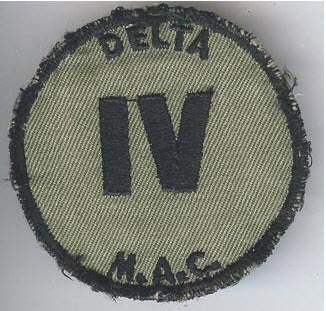
My father, a Viet Nam combat veteran, wore a patch like this on his OD fatigues in country. I have my doubts as to the authenticity of it as a vintage patch, instead it could be one of the thousands currently reproduced in Vietnam to capitalize on the growing collector market.
Selected Research Resources:
- Theater-made Patches: Real or Fake? – US Militaria Forum
- Reproductions and Fakes: Second World War
- Fake Vietnam Patches; Buyers beware – eBay
- Reproduction Alerts! – Vintage Productions
Where to Look – Seeking Militaria in all the Right Places

Looking for a metal insignia device to fill a missing gap in your shadow box or a hole in your collection? This table had a decent array of insignia to choose from.
 The Veteran's Collection