Category Archives: US Navy
Dream of Me When You Sleep: Homefront Military Pillow Covers
While reading a discussion on a militaria forum regarding a World War I veteran’s medal group (that at that time had recently been listed for sale by Bay State Militaria), I was reminded that so much in military collecting is out of reach for my budget. This particular collection of artifacts contained the Army officer’s decorations and medals which included the Distinguished Service Cross, Belgian Order of the Crown, Knights level, Belgian Croix de Guerre, three awards of the French Croix de Guerre, United States Silver Star Medal, Purple Heart Medal, Legion of Honor, Knights class and many other decorations. Not only was this group considerably out of my reach but I couldn’t even afford to purchase this soldier’s WWI Victory medal (which included ten clasps, documenting the battles he participated in) if it had been parted out. The group was listed for just under $6,800 and based upon the amount of history the buyer acquired (yes, it sold very shortly after it was listed), it was worth every penny.
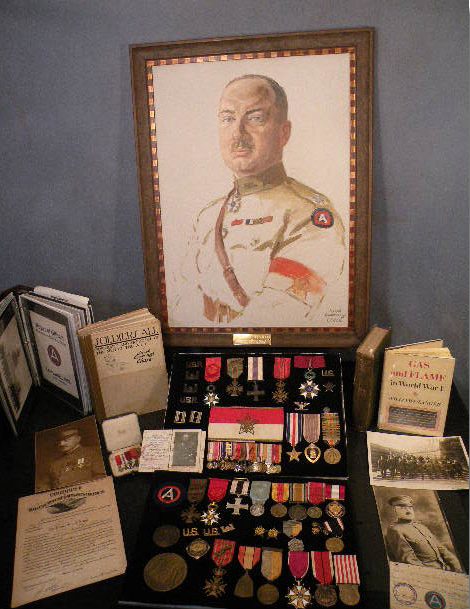
From a painting by noted artist, Arthur Cummings Chase, to the array of medals, decorations and ephemera, this WWI Army officer’s grouping is nothing short of spectacular (image source: Bay State Militaria).
The career of the veteran was not only significant during his time in uniform but in his work after he served. In reading his history-making accomplishments as noted, one could see why this grouping commanded such a high listing price:
- “This Officer was decorated while attached to the British during advanced Chemical Training in 1918. He then personally led the first American Chemical Weapons Attack in History as Company Commander of B Company, 1ST Gas and Flame Regiment.”
- “A very historic grouping with a famous painting of this Officer by Joseph Cummings Chase which is in itself a treasure. This portrait was one of 125 painted in France in 1918-19 by Joseph Cummings Chase. approximately 75 ended up in the National Portrait Gallery in Washington, DC. This is one of just a few known to be in Private Hands.”
This WWI Army officer’s (his name was not disclosed) group is purely museum quality as this officer also played a significant engineering role (during the interwar period) on New York’s George Washington Bridge and Holland Tunnel construction projects.
Meanwhile, back in the realm where I live (known to me simply as reality), my World War I collection consists of a few items that were affordable and have visual appeal. With my family serving in every American conflict dating back to the War for Independence, I try to locate objects that will display well and have some sort of connection to my family’s military heritage.
-
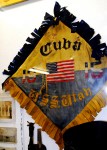
- This pillow cover (on display at the Indiana Military Museum) recognizes the USS Utah’s (BB-31) service in 1915 around Cuba. The Utah would later be sunk at Pearl Harbor on December 7, 1941.
-
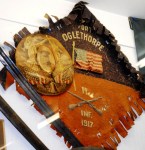
- A rather tattered Fort Oglethorpe (Georgia) pillow cover dating to 1917 shows the crossed rifles of the the 11th Infantry Regiment which participated in the Vosges Mountains, St. Mihiel, and Meuse-Argonne offensive engagements during WWI. This cover is on display at the Indiana Military Museum.
Two pieces that fit my criteria (as stated above) and met my budgetary constraints are these WWI-specific wool flannel pillow covers. As it turns out, their similar designs complement each other quite well and will look fantastic on my office wall.
-
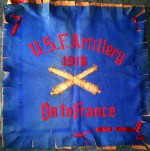
- One of my uncles enlisted into the Army and was assigned to an artillery regiment (under the Coast Artillery Corps) and served in France from 1918 until late 1919. I purchased this well-worn pillow cover as a reminder of his service during the war.
-
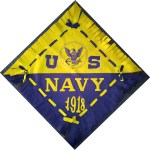
- Homefront pieces such as this 1918-dated U.S. Navy pillow cover helped to remind family of the service of their loved one as they openly displayed their patriotism in their homes. When I acquired this several years ago, there seemed to be several listings over the course that year (2011). I haven’t seen any listed in several years, since then.
-
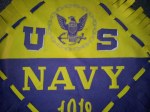
- This close-up reveals the detail of the cover with the hand-cut lettering and insignia and the needlework on the naval crest and chain.
-
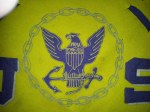
- Since one of my uncles served in the Navy during the Great War, I wanted this pillow cover to compliment the Army Artillery cover that I acquired (in honor of his twin brother). The detail in the embroidery is subtle yet ornately executed.
Pillow covers were quite popular during World War II with most designs being simple silk-screened patterns or pictorials on silk material. Typically, these were gifts purchased by the service members and sent to family and sweethearts as reminders of the loved one away at war. During the war, these were mass-produced and can be acquired without severely crippling your collecting budget.
Commemorating a wide variety of subjects such as military branches of service, forts or military bases, ships or aircraft, pillow covers have been dated to the first few years of the twentieth century. The early examples tend to be constructed from a wool flannel with lettering and designs stitched to the face.
-
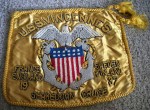
- This ornately appointed pillow cover commemorates shakedown cruise of the (then) newly commissioned New Orleans class heavy cruiser, USS Vincennes (CA-44).
-
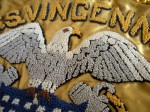
- The eagle of the officer’s crest insignia has the bird’s head facing its left shoulder. From 1860 to 1940 the eagle in the officer’s crest faced this direction. In 1941, Navy uniform regulations changed the eagle’s facing direction to conform with heraldic tradition (facing right indicates honor).
-
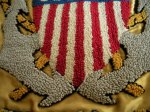
- Close inspection of the Vincennes pillow cover shows the ornate chenille needle work in the colorized naval officer’s crest insignia.
While the common designs of WWII (such as the more generic “Army” and “Navy” versions) will be plentiful and therefore inexpensive, the more ornate or specific they are, the price will be higher. With Navy ships of significance (such as the USS Arizona or Enterprise) expect to pay a premium.
Wahoo! A Bounty of Historical and Antique Books!
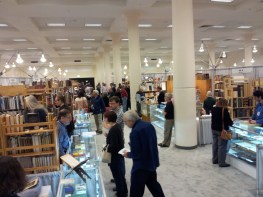
There are abundance of book dealers and vendors to visit at the Seattle Antiquarian Book Fair and attendees should spend time in each booth to find the treasures they seek.
Having attended many types of collectibles (sports memorabilia, coins, comic books, etc.) and antique shows over the course of the past few decades, I can attest that this event (that held my attention for several hours) was probably the most captivating of them all.
Knowing that I had not previously attended a show of this nature, one of my militaria collector colleagues told me about the Seattle Antiquarian Book Fair and that there would be book dealers who specialize in military history and associated rare and hard to find publications. Knowing that I’d have an opportunity to locate an out of print work or simply peruse literal pages of military history made attending this show an absolute must.
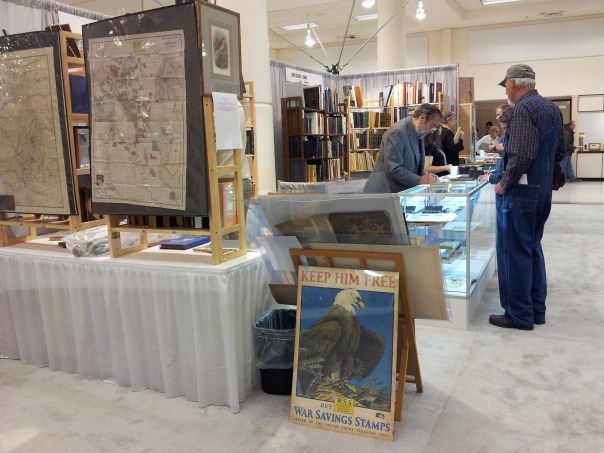
While the Seattle Antiquarian Book Fair is dominated by vintage and collectible books, there is also a considerable amount of ephemera, such as this WWI war savings stamps poster, for sale.
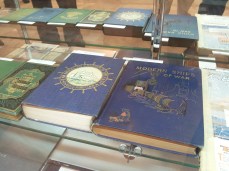
These two late-19th century books are in pristine condition.
Waiting in line to enter the exhibition hall, a staff member briefed the eager crowd about the rules, in order to provide the sellers with a measure of inventory security, to gain admittance: there would be no heavy coats, large bags or loose books allowed in. Once I checked my coat, I walked through the large double doors and my eyes immediately widened. From the highly organized booth spaces, complete with LED-lighted glass display cases and large bookshelves and wall-to-wall carpet, one could tell this wasn’t the typical gathering of vendors.
The very first display that I visited, my eyes were overwhelmed by the pristine, recognizable titles. I began to peer into the gleaming displays featuring books and noted works that were worthy of the bright lights and presentation. Books from the 18th and 19th century in pristine condition were sitting side-by-side with rare, one-of-a-kind manuscripts and documents. Booth after booth, I was continually amazed by each vendor’s wares.
-
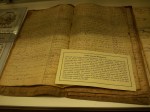
- Although not specifically militaria-related, this late 18th century whaling ship log (from two ships; the Harlequin and Leviathan) was an amazing piece of history to see. At $75,000, it was a few “zeros” out of my financial reach.
-
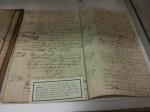
- Yet another whaling ship log. This one for the vessel, William, dates from 1838. Note the whale stamp next to the latitude and longitude entry.
-
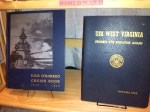
- WWII cruise books of the battleships USS Colorado and USS West Virginia.
-
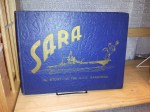
- The aircraft carrier USS Saratoga’s WWII cruise book is in absolute pristine condition and was available for only $200.
Unfortunately for me, most of the pieces that truly held my interest had price tags well into the thousands (such as the Narrative of the Mutiny aboard His Majesty’s Ship Bounty published in 1790 for a mere $12,500, which was exceptional). Had my bank account been more flush, I would have had a much more difficult time trying to make a decision between the various historic items for purchase.
-
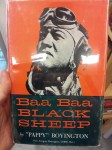
- For a mere $30, this later printing of Medal of Honor recipient Greg Boyington’s autobiographic work was a steal…
-
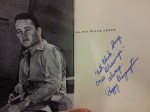
- …That it was autographed was extremely enticing, even though I already had signed copy!
With a few dollars burning a hole in my pocket, I knew I couldn’t leave the show empty-handed. Having walked the entire show over the course of a few hours, I returned to an earlier-visited vendor who specializes in military books and selected the signed first edition of Medal of Honor recipient Rear Admiral Richard O’Kane’s World War II narrative about the legendary submarine, the USS Wahoo and her fearless skipper, Commander Dudley “Mush” Morton.
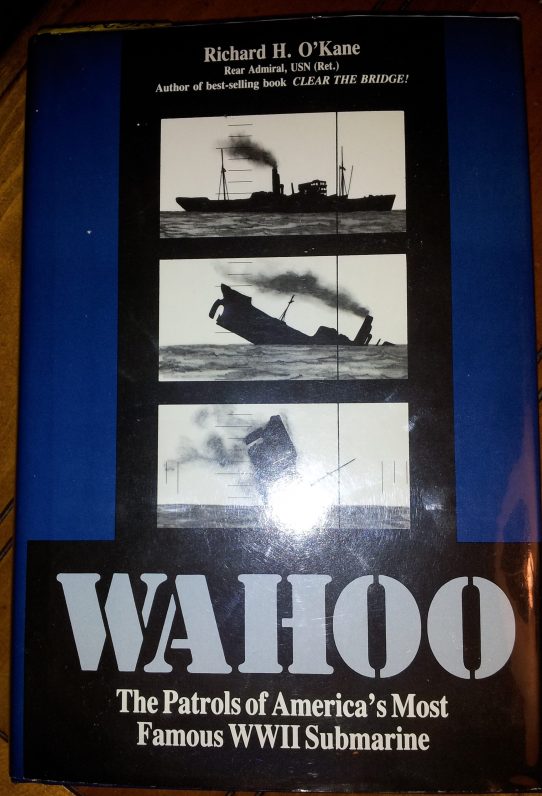
After visiting the military book vendor’s booth several times, I was drawn to add to my collection of Medal of Honor recipients’ autographs; purchasing Rear Admiral O’Kane’s work on the WWII submarine, the USS Wahoo.
With a few dollars burning a hole in my pocket, I knew I couldn’t leave the show empty-handed. Having walked the entire show over the course of a few hours, I returned to an earlier-visited vendor who specializes in military books and selected the signed first edition of Medal of Honor recipient Rear Admiral Richard O’Kane’s World War II narrative about the legendary submarine, the USS Wahoo and her fearless skipper, Commander Dudley “Mush” Morton.
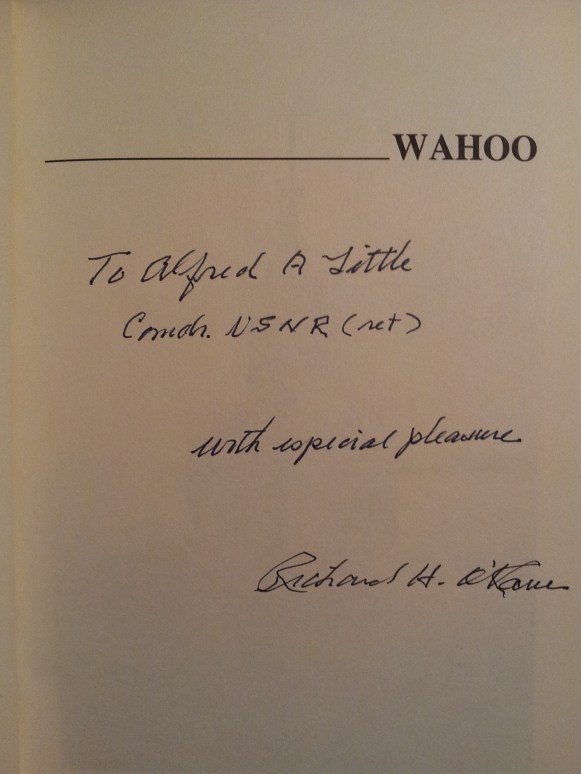
My first edition copy of Wahoo is autographed by Rear Admiral Richard O’Kane.
My feet thoroughly tired and my hunger pangs overwhelming me, my time at the fair drew to a close and I was happy to be leaving with a piece to add to my collection of autographs from notable military veterans.
Yardlong Photography and the Military: Family Military History Discovery in Less than a Yard
Because I am known within my family and circle of friends as the military-history person, I am on the receiving end of artifacts from those who know about my interests. From the moment that I was gifted with my maternal grandfather’s WWII navy uniforms and decorations (which can be seen in this post) and my grand uncle’s Third Reich war souvenirs, my appreciation for military history was ignited.
Over the years, I have either received or been approached to determine my interest in becoming the steward of historical family military items which have included, uniforms, medals and decorations, weapons (along with artillery rounds and small arms ammunition), flags, documents and other historical pieces. Some of the most special items that I have inherited have been photography (albums and individual photos). With the last box of items that were part of two family estates (my paternal grandparents and a step-relative), I received a nearly two-foot long, vintage panoramic photograph (known as a yardlong photo due to their length: these images can be nearly thee feet in length) of a U.S. Navy crew, professionally positioned and posed pier-side in front of their destroyer.
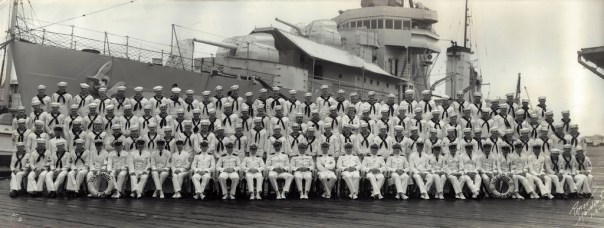
Finding this framed yardlong photo was a pleasant surprise. It took me a second or two to spot the lettering on the life-rings to know that this was my uncles’ ship. Moments later, I found them both, posed with their shipmates.
For the first half of the 20th Century, a common practice within the military was to capture, in photographs, an entire company, regiment, even battalion of soldiers. The same holds true with the compliment of naval vessels with divisions, departments or even the full crew (obviously, size of the ship and on-duty personnel dictate who is present in a photo). The photographs were taken with cameras that allow the lens to be pivoted or panned from side to side in order to span the entire width of the subject, exposing a very large piece of film. As with the negative, the resulting images were elongated and fairly detailed (most often, these were contact prints, the same size as the negative). However the extremities of the photographs were slightly distorted or lacking in crisp lines due to the chromatic aberration that is almost unavoidable. For the most part, the elongated images are quite detailed and almost without exception, faces are recognizable when the military units were captured within these yardlong photographs. There are still photographers creating panoramic images using vintage cameras and film.
-
- While visiting the USAF Airman Heritage Museum at Lackland AFB this past summer, I snapped some photos of this 1947 yardlong of the Air Training Command formation of the USAF insignia.
-
- This image shows the how the command used different uniforms and headgear to form the details of the insignia.
-
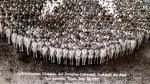
- Moving in closer to the photo, one can see the facial details of the airmen. The caption reads, “Indoctrination Division, Air Training Command, Lackland Air Base, San Antonio, Texas July 19, 1947.
The photograph that I received was in an old frame, backed with corrugated cardboard and pressed against the glass pane. As I inspected the image, I noticed the ship in the background behind the crew that was posed in their dress white uniforms. Noting the blue flaps and cuffs on the enlisted jumpers, I knew that the photo was taken in the 1930s. My eyes were drawn to the two life-rings that were held by sailors on each end of the image, displaying the name of the ship; USS Smith and the hull number, 378. From researching my paternal grandmother’s siblings, I discovered that both of her brothers had served in the U.S. Navy and were both plankowners of the Mahan-class destroyer, USS Smith (DD-378). Dating the image will take a little bit of work (there are no indications of when it was taken – not in the photographer’s marks on either corner nor written on the back). However, I do know when the ship was commissioned, when my uncles reported aboard and departed the ship. Discernible in the image on my uncles’ uniforms are some indications of rank. I can tell that the older brother (who enlisted in 1932) is a petty officer (he reported aboard as a Seaman 1/c) and the younger brother was still a seaman (I can’t see the cuffs of his uniform to determine the number of white piping stripes present) as noted by the blue cord on his right shoulder. I should be able to narrow down the period once I can go through the massive service records to locate dates of rank. However, my initial assessment is that the photo might have been captured near the time of commissioning or, perhaps to commemorate a change of commanding officers.
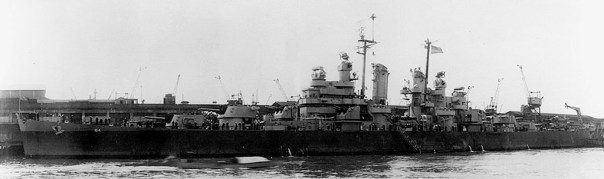
This yardlong image (a scan and a reproduction print) was sent to me by the son a of a veteran who served aboard the USS Vincennes (CL-64) during WWII.
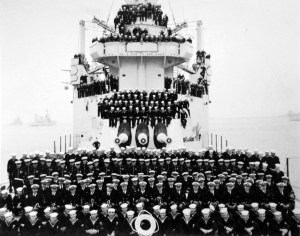
This image was shot using a panoramic camera though it technically isn’t a yardlong photograph. The crew of the USS Vincennes (CA-44) is posed on the ship’s fantail, after 8″ turret and superstructure which is a nod to how many naval crew photos were posed in the late 19th Century.
Being an archivist for my ship and the recipient of some fantastic artifacts, I have been contacted by folks seeking to provide me with images to preserve within my photo archive. A few years ago, a gentleman emailed requesting to send to me a copy of a yardlong photograph that his father, a WWII navy veteran, owned from his time in service. The image was of the second cruiser (USS Vincennes) that was named for the city in Southwestern Indiana. The Cleveland-class light cruiser, hull number 64, had been laid down as the USS Flint but was changed during construction following the loss of the heavy cruiser during the Battle of Savo Island on August 8-9, 1942. The light cruiser was completed and commissioned on January 21, 1944 and served gallantly through WWII and was decommissioned in September of 1946. The man who contacted me had the ship’s photo scanned at a high resolution and sent the image file to me (on a thumb-drive along with a full-size print).

I wish I could have landed this photo of the USS Tacoma (CL-20) crew from 1920, four years before her demise on Blanquilla Reef, Vera Cruz, Mexico.
I am not a collector of yardlong photography but when the images are contextual to the areas that I do collect, I am happy to be able to acquire them. Receiving the image of the Smith and finding my grandmother’s brothers in the photograph motivated me to promptly hang it with my other family military history. In scanning the image for this article, I am reminded that I need to have it properly framed with archival materials to allow it to be preserved for generations to come.
A Different Sort of Navy Cross “Recipient”
Last week, I wrote about how the militaria collecting community embraces new collectors by providing invaluable guidance and answers to questions newbies might have. I also touched on the giving and generous nature these folks have toward genuinely interested, potential newcomers to the pastime.
With my day job, I have the wonderful opportunity to stay off the road a few days each week by telecommuting to work and plugging into my company and team workload electronically, which affords me the opportunity to be around my family during the day. Earlier this week, the doorbell rang about the time of our normal, daily postal delivery. I answered the door to see our letter carrier standing with a stack of mail and a parcel. Unfazed by the delivery contents, I thanked the postal worker as I grabbed the bundle and closed the door.
Walking away from door, I checked the parcel to see that it was addressed to my son. Just a few days before, I was checking the latest postings on one of the militaria forums as I was catching up on some of the amazing new discoveries other collectors were sharing when I saw something that caught my eye. It was a posting that was offering something special to a young, budding collector (under seventeen years of age) provided he or she is the first to respond to the thread.
As it was a school day and my kids are home-schooled, my son was nearby immersed in his math studies. I called him over to read the posting and to look at the pictures of the free item that was offered by this thoughtful collector. My son, who is fourteen, has a keen interest in history, including military history (hard to tell where he gets that from) and took to militaria a little more than a year ago. He read the details of the forum post and I watched as his eyes grew wide, viewing a full set of medals, full and miniature, ribbon and lapel pin of a fairly current Navy Cross in a presentation case, in unissued, new condition. He promptly responded to the offer, indicating that he wanted the medal for his collection.
-
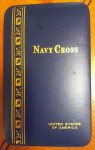
- My son opened the shipping box and pulled the presentation case out of the bubble wrap. It was exciting to see the anticipation on his face build.
-
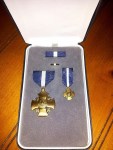
- Opening the case, it was revealed the four pristine pieces to this Navy Cross set. My son is quite thrilled to have this in his collection.
Since my son has embarked on his own militaria collecting venture, he has been the recipient of several similar offers ranging from medals to patches and even a World War II Eisenhower uniform jacket in pristine condition. These fellow collectors, in their efforts to spark the next generation of collectors, are almost obstinate in their refusal to accept so much as a penny to cover shipping costs. These folks do this (quite often, in fact) out of the kindness of their heart and knowing the joy that it brings the youngster on the receiving end.
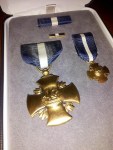
The medals are pristine and clearly, unissued to a recipient.
I walked to the table, returning to my laptop where my son was also seated with his books. In my hand was the package containing the Navy Cross set. I reached out to him with the package with butterflies in my stomach. I was almost as excited to see the medal as he was! Responsibilities come first in our house so I told him that he could open it once his work was completed. It pained me to do that…heck, I wanted to open it!
A few hours later, my son opened his package and was giddy as he removed the medal case from the bubble wrap. He opened the case and carefully removed each piece from its individual wrapping while we discussed the reasons Navy and Marine Corps personnel are awarded this beautifully-designed valor decoration. We discussed how this medal didn’t belong to him (it wasn’t awarded to him) and that he was merely a steward – charged with learning about it and sharing the history with others.
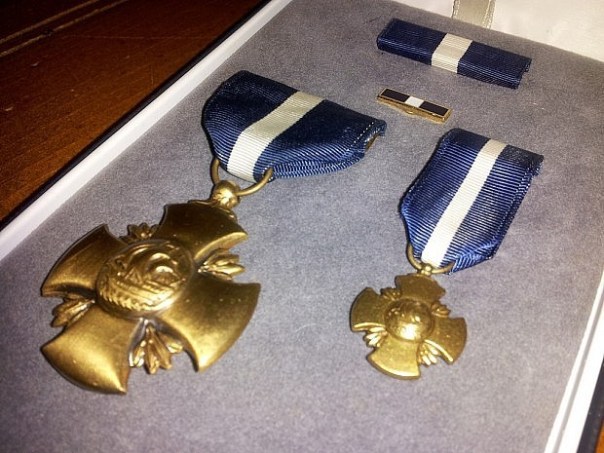
The medal set includes the full-size, mini, the ribbon and the lapel pin.
Sharing – this is something my son, along with many other young militaria collectors, is learning as it is being demonstrated to him by other collectors.
Militaria Issued: Giving and Receiving
Over the span of the last seven years, I’ve worked diligently in learning the ins and outs of collecting militaria and yet have only begun to scratch the surface. Delving into the details, for me, has produced an incredible wealth of knowledge surrounding many aspects of military pieces, such as when or where an item was worn or used. But that hasn’t been the most substantial reward in my passion for military collecting.
Being a student (not to be glib, as I am always learning) of American history has occupied my attention for decades. My wife and children could tell you stories about my side excursions to see some obscure item or location of historic note during our family vacations, in my passion to align book knowledge with the visual reality. Experiencing history helps to bring the stories to life and while facts are solidified in this process, actually seeing an item or location opens my mind to new questions with this acquired perspective. This process of learning is fun for me, but in regards to militaria, it still isn’t the pinnacle of satisfaction in collecting.
My military artifact collecting was sparked when a few boxes of Third Reich items were dropped into my lap nearly twenty years ago as my family dealt with our aging grandparents and the need to relocate them from their home of fifty years to an assisted living care facility. Having moved only once over the course of eighty-five years, my grandfather had accumulated quite a “treasure-trove” of artifacts including his older brother’s World War II trunks that were untouched from the time they arrived from Germany in 1945. I was suddenly thrust into the task of researching the pieces that my uncle had “acquired” during his participation in the elimination of the Nazi menace.
Though I didn’t get into collecting German militaria, my interest was piqued with the idea of owning pieces of history. The thought of possessing a tangible artifact that was connected to history as well as the connection to my family member’s participation in those events, was compelling and dovetailed nicely into the incessant genealogy project I was, and still am, working on.
-
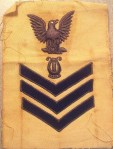
- I was gifted this 1920s navy musician 1/c rating badge – like one my uncle would have worn – from fellow collector when I first began collecting U.S. militaria. This act demonstrated to me that the militaria community was much different from the others I’d participated in.
-
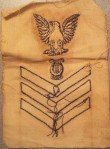
- Showing the reverse side of the rating badge – much can be revealed about these patches by looking at the back.
I have dabbled in collecting in several areas in my lifetime and I have met a lot of nice and passionate people who shared similar interests as me. Those relationships always tended to be more proprietor-patron rather than collaborative and sharing. However, from the moment I started to seek answers to questions regarding personal military artifacts that I had inherited from a few relatives, I began recognizing different traits in the people who collect militaria. Aside from a passion for the objects and the rich history, these collectors were quick with thoughtful responses to my inquiries as they provided detailed descriptions and guided me to research resources in an effort to enable me to be self-reliant. Among all the quirks and odd interests, I noticed an authentic sense of community with militaria collectors.
One trait that really blindsided me as I was increasingly immersed into militaria collecting was the trusting and giving nature of these people. As I participated in the discourse and discussion surrounding these wonderful objects, I began to build relationships with other collectors. Out of the blue, one collector asked me for my address as he had “something” for me. This fellow collector observed and gleaned, from my posts on a militaria forum, what my interests were and subsequently sent me a vintage 1920s rating badge – something that one of my uncles would have worn on his navy uniform. I was humbled by the gesture and that this collector would accept no offer of payment for his trouble. This example was merely a foretaste of what I would experience on a somewhat regular basis and my collection has grown because of the kind hearts of others. The charitable nature of others is infectious which prompted me to do the same with other collectors.
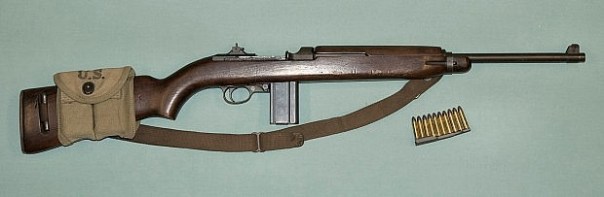
This fine example of the M1 carbine shows a magazine pouch attached to the rifle’s stock.
Awhile ago, I was invited to tag along with two other guys that are as passionate about military history and collecting as me to visit a local dealer of antique books and manuscripts. This dealer, a highly regarded authority in many circles, showed several fantastic pieces from his personal collection that prompted three jaws to repeatedly drop. Toward the end of our visit, the gentleman retrieved a WWII-vintage M1 carbine rifle in immaculate condition that was a distinct departure from the paper artifacts and, knowing that we were all interested in militaria, offered it for sale with a low-ball price tag. Unfortunately for me, financial constraints precluded me from purchasing the vintage weapon. However, one of my companions did “pull the trigger” and came away with the rifle.
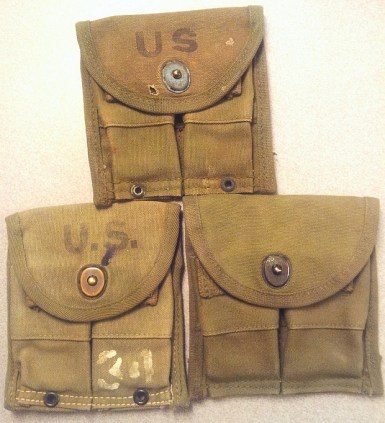
I recently acquired these M1 carbine pouches to give to a friend and fellow collector who recently purchased a late-WWI M1 carbine rifle. The nice, used condition will be great accompanying his rifle.
Not long after the M1 offering, I stumbled across a set of three WWII-vintage M1 carbine magazine pouches that were in good condition and were listed at a very affordable price. Thinking about my friend’s recent purchase, I snagged the pouches to give to the new carbine owner.
-
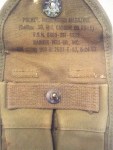
- This mag pouch shows a much later set of markings that appear to have a date stamp of 1957.
-
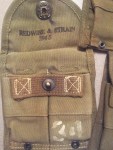
- Looking inside one of the pouch’s magazine flaps reveals a 1945 date stamp.
Over the last few years, I have gifted several pieces from my collection in the hope that it helps a fellow collector fill in the gaps or simply provides enjoyment in receiving a new piece they had not seen before or never knew existed.
 The Veteran's Collection