Category Archives: Other Militaria
The Bizarre and the Oddities of Militaria
While there are certainly traditional military items that folks collect such as uniform items and weapons, some people aren’t satisfied with the status quo of militaria collecting. It takes a person with a bit of a twisted perspective to seek out the strange or odd items or to possess the ability to see the contextual vantage point of the militaria collector.
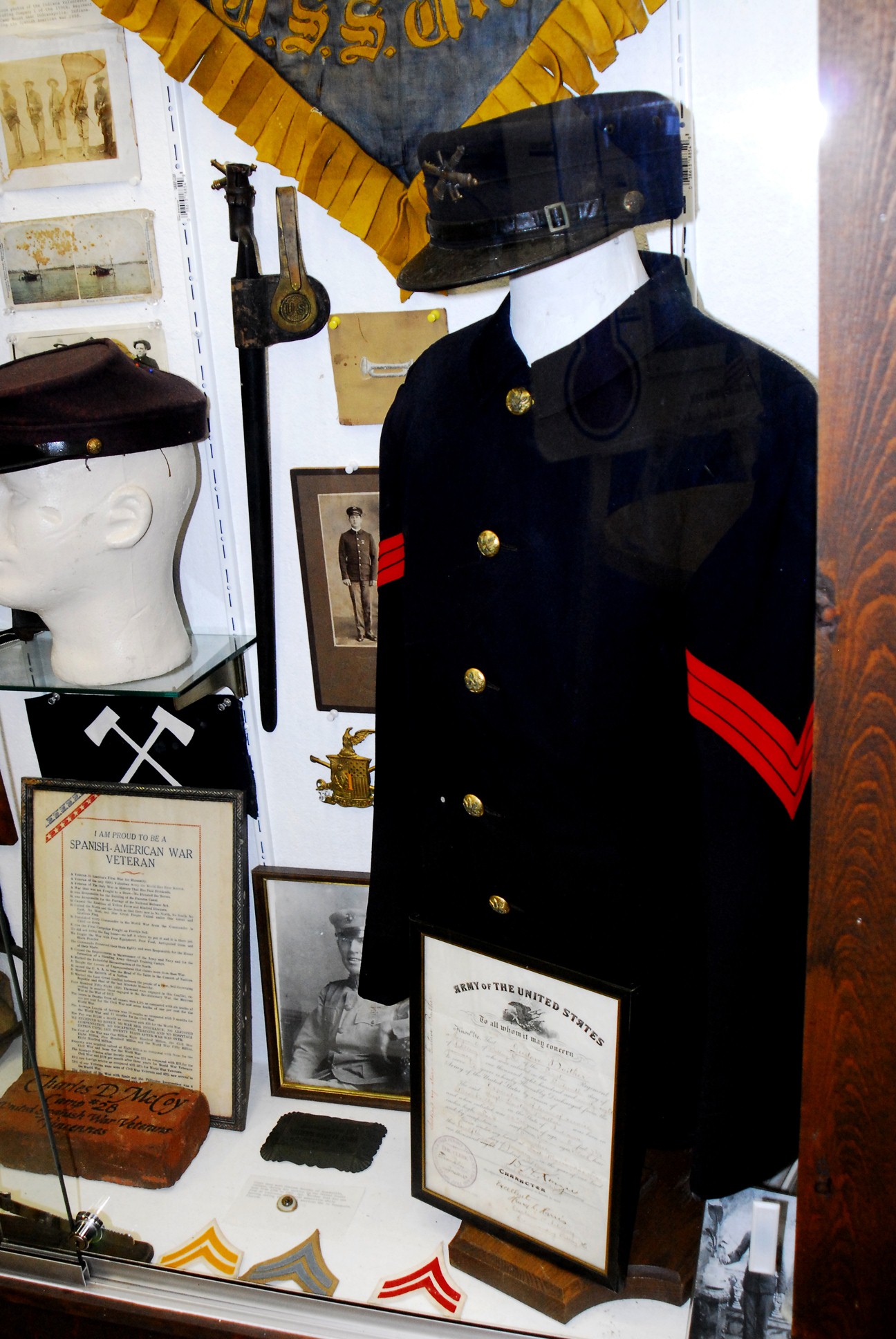
At first glance, Sgt. Gustave Blaither’s Spanish American War Uniform Group (located at the Indiana Military Museum) seems to be a normal SpanAm War group display
Suppose that there are collectors who focus on field surgeon equipment from the Civil War era. A collection might include medicines and physician’s guides, but it could also include surgical implements. Aside from the traditional scalpel set, expect to see an array of macabre bone saws and tourniquets.
Another example of what some folks might deem as odd militaria could be a collection of named (meaning, engraved with the veteran’s name) Purple Heart medals awarded to service members who were killed in action (KIA). While this may also seem dark, most collectors of Purple Hearts (at least that I’ve encountered) see this as a way to preserve history and share the story of those who made the ultimate sacrifice for our nation. Whenever I glimpse one of these medals, I am overwhelmed when I consider the price that was paid by an American.
One of the most bizarre items of militaria that I have personally seen was at the Indiana Military Museum located in Vincennes, Indiana. Among the wonderful displays is a group of items that belonged to soldier who served during the 1898 war with Spain.
It seems that he suffered a debilitating head wound when some stored ammunition exploded, emitting a destructive array of metal and wood debris. The result of the wounds sustained by Sergeant Gustave Baither was the traumatic loss of one of his eyes.
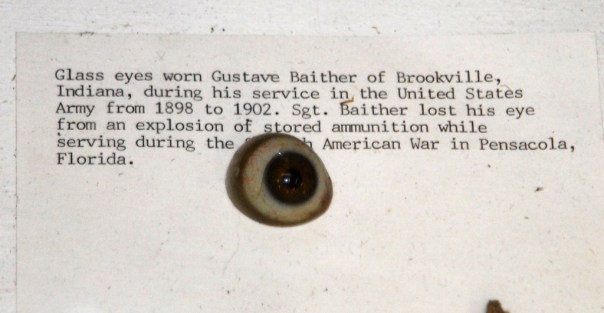
Closer inspection of Blaither’s collection yields this odd gem – his glass eye.
In my own collection, I have preserved an item that to the untrained eye would be indistinguishable as something pertaining to military use. However, this piece is a part of naval and seafarer tradition spanning centuries of sea-going service. Hand-made from a section of 1-1/2-inch fire hose, a piece of a broom handle, electrical heat-shrink tape and wrapped with braided shotline (used during Underway Replenishment), the shillelagh is a centerpiece of the equator crossing initiation ceremony known as Wog Day.
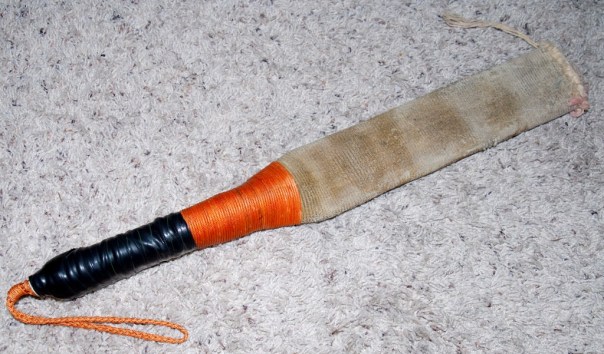
This “Wog Dog Correction Tool”, also known as a “Shillelagh, ” was made and used aboard the USS Camden (AOE-2) during the 1989 WestPac deployment.
My shillelagh, made during my last sea deployment in 1989, was used to provide much-needed correction to the pollywogs (those who hadn’t crossed the equator) by applying gentle (ok… maybe not-so-gentle) swats to their posterior region as they crawl across the ship’s decks. Upon completion of that cruise, my shillelagh was tossed into my closet where it has remained, almost forgotten… that is until my kids wanted to learn about Navy traditions.
What unusual items are in your collections?
Decorating Sacrifice: Honoring Our Fallen

Most Americans have no connection Memorial Day, their heritage or to the legacy left behind by those who gave their lives in service to this country.
This weekend, we Americans are being inundated with myriad auditory treats, such as the sound of burgers and hot dogs sizzling on the barbecue grill, the roar of the ski boats tearing across the lake, the rapid-clicking of fishing reels spinning, or the din of children playing in the backyard. All of this points to the commencement of summer and the excitement-filled season of outdoor activities, vacations and fun. The bonus is that we get to extend this weekend by a day and play a little harder as that’s what this weekend is all about!
With the opening volleys of artillery (the Confederates firing on Fort Sumter) in the early morning hours of Friday, April 12, 1861, a war of the bloodiest nature commenced within the confines of what was known as the United States of America, but which was anything but united. The division of the states had been years in the making as the founding fathers could hardly agree on the slavery issue when trying to establish a single Constitution that would bind the individual states together as one unified nation. The division led to an all-out conflict—a war that would pit brother against brother and father against son—that wouldn’t cease until almost exactly four years later (at Appomattox on April 10, 1865) and three-quarters of a million Americans were dead (the number was recently revised, up from 618,000, by demographic historians).
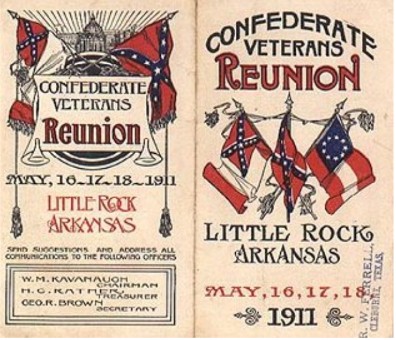
A 1911 reunion pamphlet for the United Confederate Veterans organization.
In the days, weeks, months and years that followed, the sting of the Civil War would linger as families suffered the loss of generations of men. The Southern States where battles took place had cities that were obliterated. The agricultural Industry was devastated. The business operation surrounding the king crop of the south, cotton, heavily dependent upon slave labor, had to be completely revamped. Many plantations never returned to operation. The Northern industries that had grown extremely profitable and dependent upon the war, churning out uniforms, accouterments, artillery pieces and ammunition, no longer had a customer.
Although the South was undergoing reconstruction and the nation was moving to put the war in the past, and some Americans who lost everything were seeking to start afresh in the West. Like the servicemen and women of the current conflicts, Union and Confederate veterans alike were dealing with the same lingering effects of the combat trauma they had endured. While life for them was moving on, they were drawn to their comrades-in-arms seeking the friendship they shared while in uniform. In 1866, Union veterans began reuniting, forming a long-standing veterans organization (which would last until 1956 when the last veteran died) that would be known as the Grand Army of the Republic (GAR). Similarly, Confederate troops would reunite, but wouldn’t formally organize until 1889 with the United Confederate Veterans.
While the country was still engaged in the war, the spouses and mothers of troops, along with their local communities, honored those killed in the war—the scant few that were returned home for burial—by decorating their graves. Freed slaves (known as Freedmen) from Charleston, South Carolina, knew of a tragedy that took place at a prisoner of war (POW) camp where there were more than 250 Union soldiers who had died in captivity and had been buried in unmarked graves. The Freedmen, knowing about the graves, organized and gathered at the burial site to beautify the grounds in recognition of the sacrifices made by the soldiers on their behalf. On May 1, 1865, nearly 10,000 Freedmen, Union veterans, school children and missionaries and black ministers, gathered to honor the dead at the site on what would come to be recognized as the first Memorial Day.
“This was the first Memorial Day. African-Americans invented Memorial Day in Charleston, South Carolina. What you have there is black Americans recently freed from slavery announcing to the world with their flowers, their feet, and their songs what the War had been about. What they basically were creating was the Independence Day of a Second American Revolution.” – historian David W. Blight
-
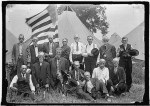
- Gettysburg Reunion: GAR members and veterans of The Battle of Gettysburg encamped at the gathering (source: Smithsonian Institute).
-

- Veterans of General George Pickett gather at Gettysburg’s Bloody Angle during the 50th anniversary of the battle (source: Smithsonian Institute).
-
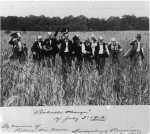
- To mark the 50th anniversary of the Civil War this group of Confederate veterans reenacted “Pickett’s Charge” at Gettysburg during the 1913 reunion (source: Smithsonian Institute).
The largest gathering of Civil War veterans took place in 1913 at the Gettysburg battlefield, marking the 50th anniversary of this monumental battle. Soldiers from all of the participating units converged on the various sites to recount their actions, conduct reenactments, and to simply reconnect with their comrades. Heavily documented by photographers and newsmen alike, the gathering gave twentieth century Americans a glimpse into the past and the personal aspects of the battles and the lifelong impact they had on these men. By the 1930s, the aged veterans numbers had dwindled considerably yet they still continued to reunite. In one of these last gatherings, Confederate veterans recreated their battle cry, the Rebel Yell, for in this short film (digitized by the Smithsonian Institute).
-
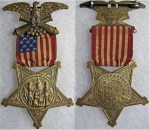
- Obverse and reverse of a GAR medal from 1886 (source: OMSA database).
-

- This vintage cabinet photo shows a Civil War veteran proudly displaying his GAR medal.
The Militaria Collecting Connection
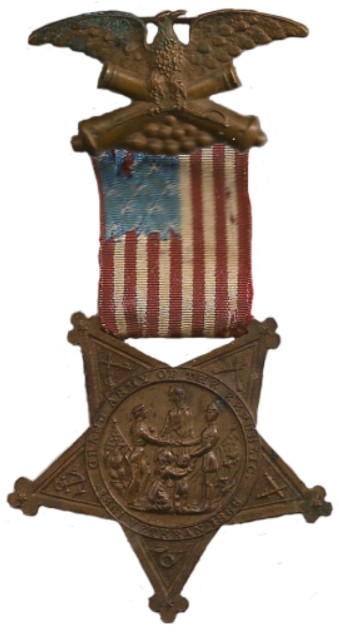
GAR Membership medals are very collectible and are reasonably priced.
While collecting Civil War militaria can be quite an expensive venture, items related to these veterans organizations and reunions are a great alternative. One item that is particularly interesting, the GAR membership medal, was authorized for veterans to wear on military uniforms by Congressional action. The medals or badges were used to indicate membership within the organization or to commemorate one of its annual reunions or gatherings.
Over the years following the 1913 reunion, veterans and their families increasingly honored those killed during the war around the same time each year. As early as 1882, the day to honor the Civil War dead (traditionally, May 30) was also known as Memorial Day. After gaining popularity in the years following World War II, Memorial Day became official as congress passed a law in 1967, recognizing Memorial Day as a federal holiday. The following year, on June 28, the holiday was moved to the last Monday of May, creating a three-day weekend.
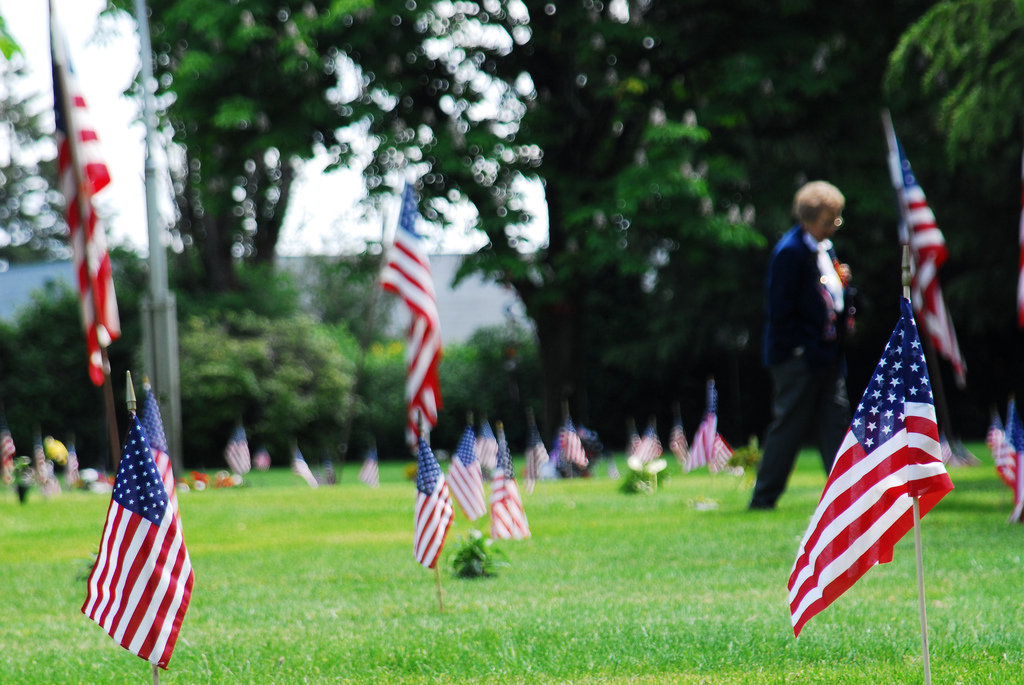
A woman walks the cemetery grounds on Memorial Day.
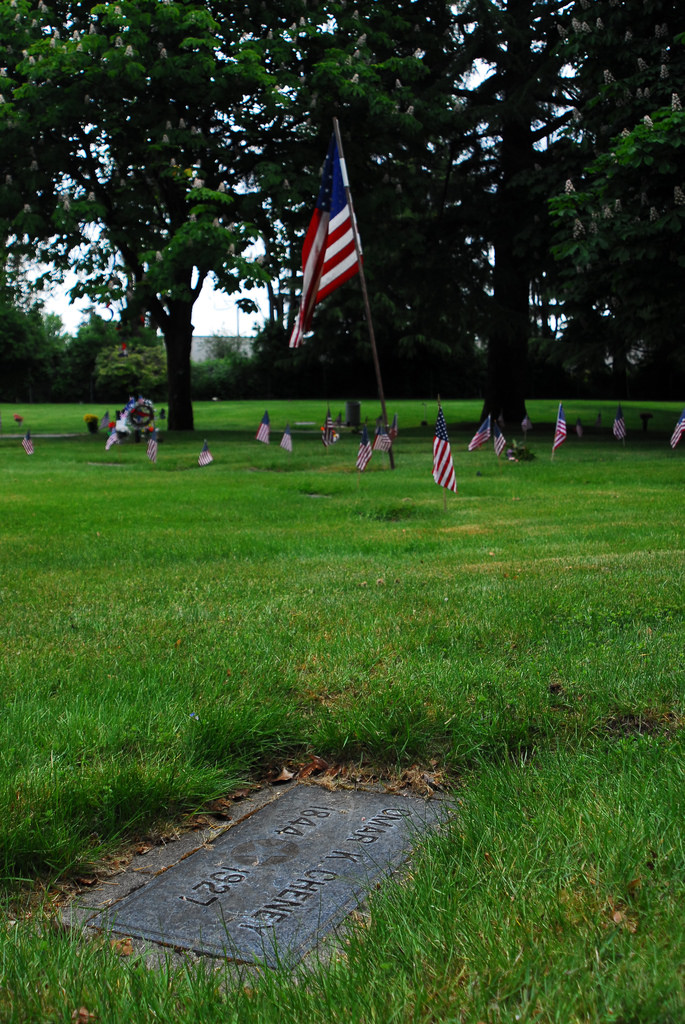
The grave of Union Veteran and GAR member, Omar Cheney.
This Memorial Day, rather than committing the day to squeezing in one last waterskiing pass on the lake or grilling up a slab of ribs, head out to a cemetery (preferably a National Cemetery if you are in close enough proximity) and decorate a veteran’s grave with a flag and spend time in reflection of the price paid by all service members who laid down their lives for this nation. Note the stark contrast to the violence experienced on the field of battle as you take in the stillness and quiet peace of the surroundings, observing the gentleness of the billowing flags.
Remembering (and Collecting) the USS Maine!
In the decades following the American Civil War, the United states was busy dealing with the reconstruction of the South, expansion into the Western states and territories, adding new stars to the blue canton of the national ensign (i.e. the addition of states to the Union), the influx of the destitute of Europe seeking to benefit from the Land of Opportunity and all the trefoils of a growing nation. Few Americans set their eyes upon the instability of governments beyond the borders and shores as the nation surpassed her first century of existence. Life, though fraught with the many diverse challenges of the time, was good.
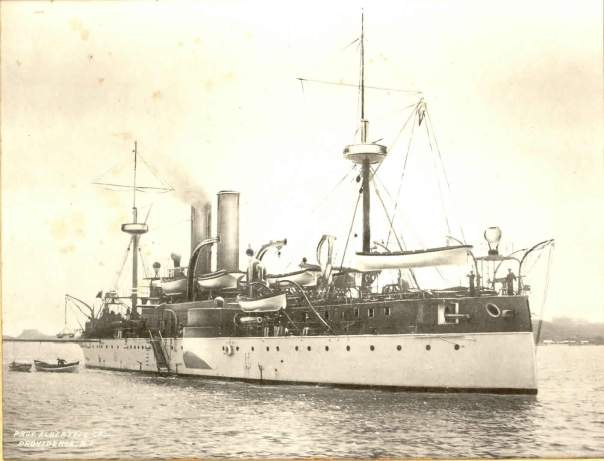
USS Maine ACR-1 – Havana Harbor, 1898
In the latter half of nineteenth century, the American navy commenced a dramatic technological transformation from wooden-hulled sailing sloops and frigates, followed by ironclads and paddle-wheels, to steel coal-fired steam warships. Naval gunnery was advancing and the U.S. leadership was following the advances being made by the British navy that had necessitated a radical departure from the ship design convention (of the time) in order to take full advantage of the new capabilities. The U.S. Navy, had been fully committed to the designs of the ironclad Monitor and many of the European navies adopted similar designs following the American’s success with them during the Civil War. With technology advancing at such a rapid pace and the need for a global naval reach, the Monitor was rendered obsolete, in favor of larger, more powerful ships with greater sailing range which would come to be known as pre-Dreadnoughts.
In the 1880s, the U.S. Navy began planning and designing their first pre-Dreadnought armored cruisers. By 1886, the Navy funded the first two ships of the new design, the lead ship, USS Maine and her (closely-related) sister, the USS Texas. The Maine’s keel was laid down on October 17, 1888 at the Brooklyn Naval Shipyard and wouldn’t be completed for nearly seven years. She was commissioned and placed into service on September 17, 1895 and following sea trials and fitting out, was assigned to the North Atlantic Squadron for service.
As the 1890s were drawing to a close, a spark in the tinderbox of the Cuban independence movement began to be fanned by U.S. financial influence. American capitalism and politics had been involved in Cuba for the past few decades investing heavily in the sugar cane and tobacco industries, driving economic transformation of the Spanish-owned island and fueling unrest among the citizens. American popular sentiment, led by a pro-liberation agenda that was propagandized throughout the newspapers of the day, was growing in favor of intervening against the Spanish government. In January of 1898, a pro-Spanish riot erupted in Havana which prompted the American Consul-General to request assistance to protect U.S. citizens and business interests.
Sailing into Havana Harbor at the end of January, the USS Maine provided a menacing reminder of the United States’ commitment to protect her interests. In addition, her presence could have appeared to the Spanish loyalists as a threat to their sovereignty. Perhaps the revolutionaries saw the ship as an opportunity to draw the United States into a conflict with Spain that could result in the ouster of their oppressive overseers. Regardless of the stance of the two opposing sides, the Maine’s presences added to the already increasing tension.
Aboard ship, the crew was going about settling down for the night on February 15, 1898. Twenty minutes before taps and lights out, the shipboard routines were winding down. Liberty boats had returned to the ship and had been secured for the night. Suddenly and without warning, a massive explosion rocked the forward part of the ship as 5.1 tons of gunpowder ignited. In a matter of seconds, the Maine was sitting on the bottom of the harbor and more than 260 of her crew (of 355 officers and men) were dead.
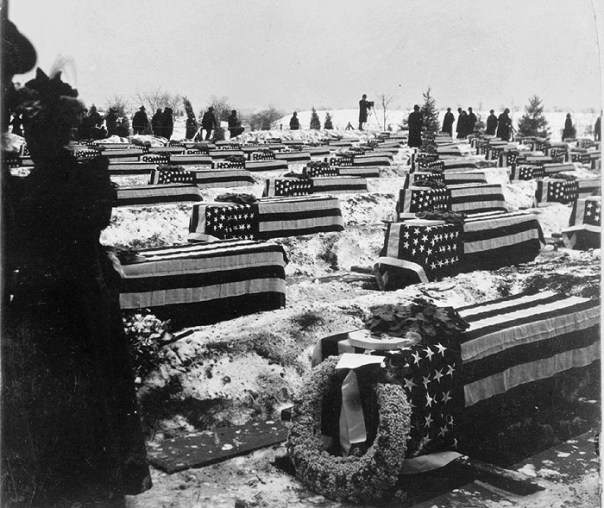
Galax leaf wreaths decorate the coffins containing the dead of the Maine on December 28, 1899.
Following a formal investigation and inquiry into the cause of the explosion, the cause was determined to be the result of a mine (though no supporting evidence existed). The slogan of the day, “To hell with Spain! Remember the Maine” could be found in print and plastered across buttons and pins as the American public began to rally to the cause. Following the publication of the findings, a media blitz of inflaming editorials and exaggerated facts ultimately led to an April 21, 1898 formal declaration of war against Spain.
-
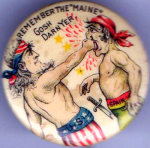
- America fights back. This button demonstrates the angry sentiments of the day with, “Remember the Maine – Gosh Darn Yer” (source: eBay image).
-
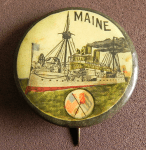
- More subdued, the message is still clear with regards to the Maine’s sinking. Note the crossed American and Cuban flags (source: eBay image).
-
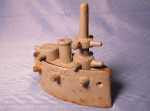
- USS Maine cast iron coin bank (source: eBay image).
-
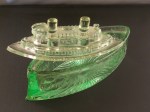
- Several versions of this candy dish are readily available in antique shops and online auction listings. I have found several colors – clear, two shades of green, and cobalt blue (source: eBay image).
After resounding victories in Manila Bay (in the Philippines) and San Jaun Hill (Puerto Rico), the Spanish pursued peace with the United States by the middle of July, 1898. The peace treaties were signed in Paris on August 12, 1898, relinquishing all rights and claims to the Philippines, Puerto Rico and Cuba.
With the guns now silent and the U.S. reverting to their isolationist stance, the rallying cry of “Remember the Maine” began to fade from the forefront of the U.S. populace. This was not so with Navy leadership who were still seeking definitive facts surrounding her sinking. In 1910, Navy engineers began constructing a cofferdam surrounding the shallow-water wreck of the ship. After the harbor waters receded from the wreck, investigators poured over every inch of the hulk. With no conclusive evidence uncovered and the bodies of the crewmen were removed for burial in the U.S. (at Arlington National Cemetery), the ship was refloated, towed out to sea and scuttled.
-
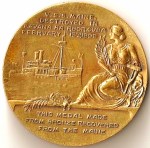
- This outstanding example of a USS Maine medallion commemorates the ship and the Pittsburgh, PA memorial that was dedicated in 1914. The inscription on the obverse reads, “U.S.S. Maine, Destroyed in Havana Harbor, Cuba, February 15th, 1898.This medal made from bronze recovered from the Maine.”
-
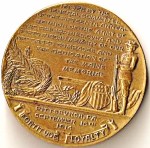
- The inscription on the medallion’s reverse reads, “Issued by the general committee of the fifteenth annual reunion of the army of the Philippines, Cuba and Porto Rico, in memory of our deceased comrades and the dedication of the Maine Memorial. Pittsburgh, PA | September 16th, 1914.”
-
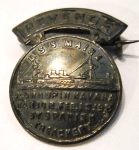
- This rare pin calls for Americans to avenge the sinking of the Maine (source: eBay image).
-
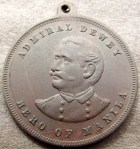
- Remember the Maine Medallion obverse showing Admiral Dewey (source: eBay image).
-
- This tally (from the BB-10) recently recently sold for under $200 (source: eBay image).
-
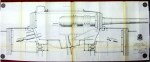
- USS Maine Turret Technical Drawing USS Maine turret technical drawing (source: eBay image).

Bell of the USS Maine, broken in half by the 1898 explosion, attached to the door of the memorial at Arlington National Cemetery.
Several pieces of the ship were removed at the time of the 1910-1912 investigation including munitions, guns, pieces of her superstructure and mast and other items that would serve as central components of memorials that were being constructed around the country. Commemorative medallions were cast from metal retrieved from her screws as Americans renewed their commitment to remember the Maine.
Four years following the devastating loss of the cruiser, the U.S. Navy commissioned the USS Maine (BB-10), the lead ship of three-ship class of battleships which also included the USS Missouri (BB-11) and USS Ohio (BB-12). The second USS Maine would proudly carry the name and legacy in Teddy Roosevelt’s Great White Fleet and through World War I. Her 18-year career ended with her May, 1920 decommissioning. The Maine name wouldn’t sail again until 1994 when the Navy launched the 16th Ohio-class Trident submarine, USS Maine (SSBN-741) which is currently homeported in Bangor, Washington.
More than 110 years later, the stricken USS Maine resonates with a minute segment of collectors. While very few items or artifacts originating from the ship surface within the marketplace, memorial pieces are readily available.
Inscription on the Havana USS Maine monument:
“El Pueblo De La Isla De Cuba Es Y De Derecho Debe Ser Libre E Independiente.” Resolucion con junta del Congreso de los Estados Unidos de Norteamerica De 19 de April De 1898.
“The people of the island of Cuba are and of right ought to be free and independent.” Congressional joint resolution with the United States of America from April 19, 1898.
Shredding History Part III – Dwindling with Time
In this final segment of my three-part series (see parts I and II), I am focusing on the availability of military uniforms and how the numbers diminish over time.
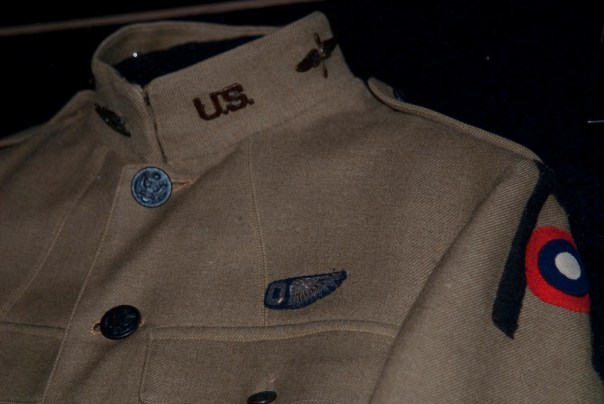
The WWI uniform of LT Marc A. Lagen, 1st Army Air Service, Balloon Pilot on display at the Museum of Flight in Seattle, WA.
Countless millions of Americans have worn the uniform of our armed services dating back to the War for Independence and forward to the current conflict in Afghanistan. It is difficult to determine how many people have worn the uniform in that span of time. However, focusing solely on the times of war when the ranks swelled to build effective fighting forces, we can approximate that nearly 36.3 million men and women (and children) served.
These figures are approximations (gleaned from several sources):
- Revolutionary War: 95,000 (Continental, militia and naval service combined)
- War of 1812: 500,000
- Mexican War: 100,000
- Civil War: 2.3 million (combined U.S. and Confederate)
- Spanish American War: 300,000
- World War I: 4 million
- World War II: 16 million
- Korean War: 1.8 million
- Viet Nam: 8 million (over 2.8 million served in-country or offshore)
- Desert Storm: 800,000
- Operation Enduring Freedom/Operation Iraqi Freedom: 2.4 million
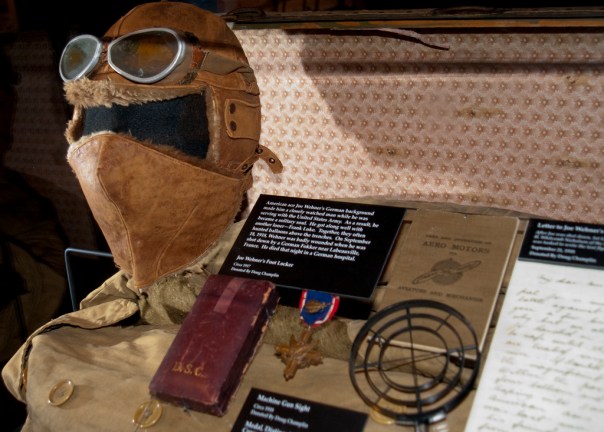
WWI Ace Joe Wehner’s Distinguished Service Cross medal, helmet, Goggles and face mask situated at the Museum of Flight in Seattle.
Considering these numbers, one could easily see that the potential exists for a considerable pool of garments to draw from in order to accommodate museums, collectors and companies like Bands for Arms. Analyzing these figures, we can deduce that WWII uniforms are plentiful and hardly something that could be considered rare. From WWII forward with 29 million in uniform (not counting the all-volunteer forces between the conflicts) there should be an enormous stockpile…but is this truly the case?
I doubt that anyone has conducted any studies as to how many veterans stowed their uniforms away upon completion of their service versus how many tossed them into the trash. Over the years, I have polled (unscientifically, mind you) veterans and determined that the numbers are relatively small, perhaps one in ten who preserved their uniforms. We can’t just take that 10% figure and deduce that 1.6 million WWII uniforms exist today, especially when nearly seven decades have elapsed.
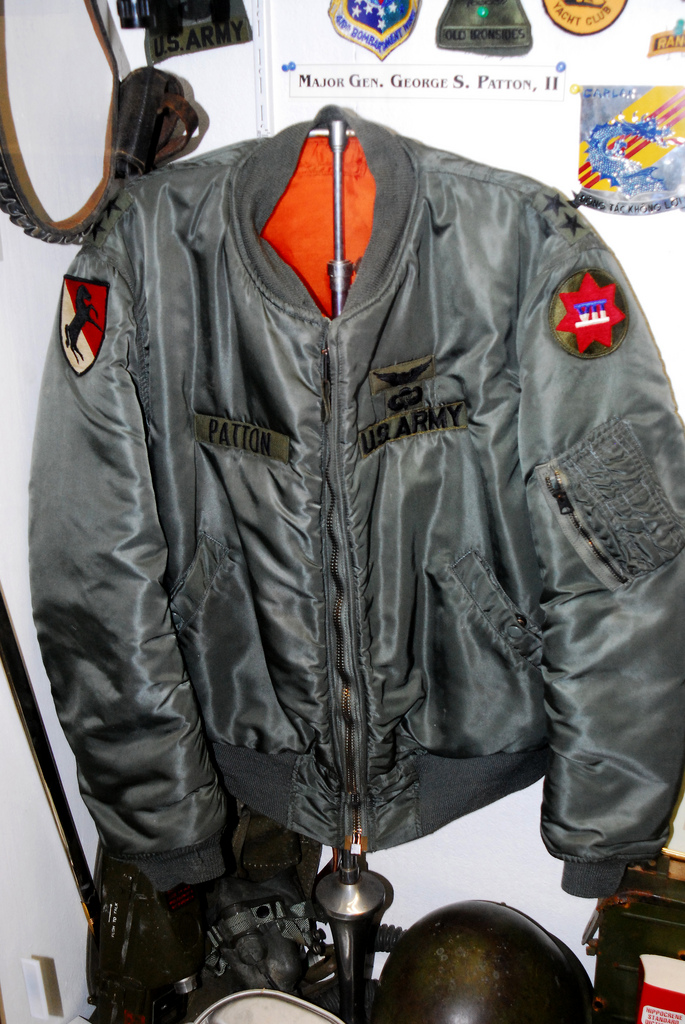
Major General George S. Patton II’s Jacket.
In the militaria collector community, we are regularly hearing stories of World War II uniforms making their way into trash cans and dumpsters as these veterans pass and their families have no connection or understanding of their family members’ service. Some of the vintage uniforms are so far deteriorated (moth-eaten, water-damaged, etc.) that folks simply discard them, failing to preserve any of the patches buttons, decorations or other historic features that may be salvageable. In the post WWII-era, children loved to “play army” and would dress up in dad’s uniform or don some of the surviving field gear, not considering the historical significance or need for preservation. No one truly considered any archival aspects of these items as they were through with war when they returned and sought to get on with their lives.
In the time-frame prior to World War II, uniform availability is almost non-existent. Trying to locate an authentic Civil War uniform from the Union Army, while not impossible, is a considerable challenge. To locate a Confederate piece is even more challenging. I know of a collector who knew of a fellow collector that was in possession of a Civil War-era Navy uniform from an enlisted sailor. The uniform was what is considered a “liberty” uniform – one that is worn ashore as it isn’t issue or authorized for use aboard ship. The piece is genuine and named to sailor and it is very rare which made for a rather steep purchase price when its owner decided to sell.
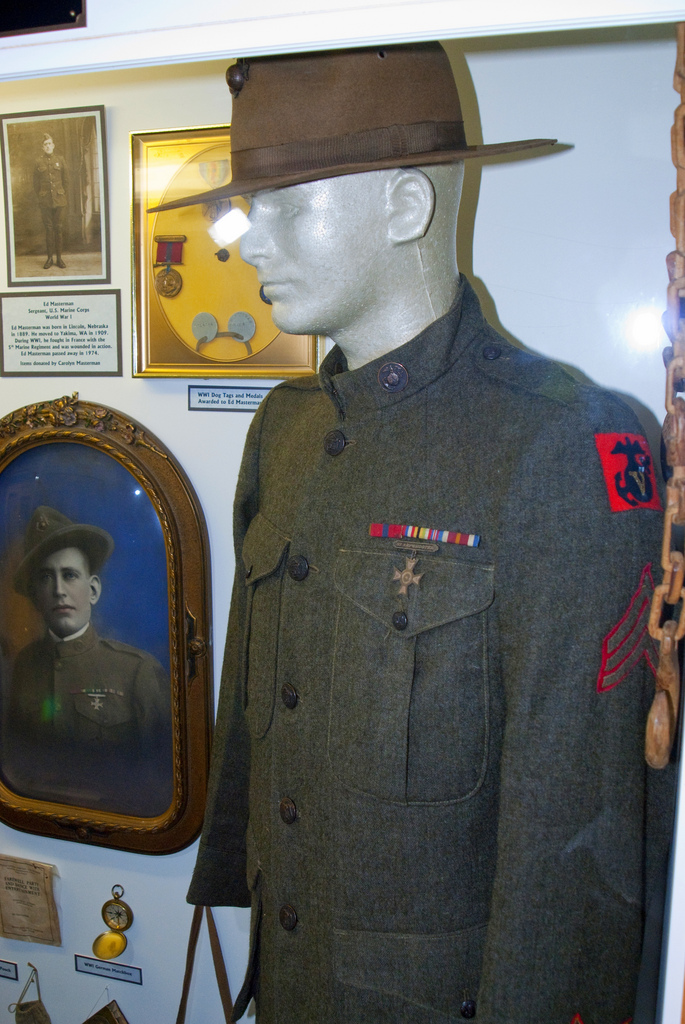
The uniform of WWI U.S.M.C Sergeant who served with the 5th Marine Brigade.
With each passing year, more uniform items are forever lost. Collectors come and go as do museums and with them also go these precious artifacts. Nothing lasts forever.
Collectors and museum curators realize that the pool of WWII artifacts is drying up and as a result, work diligently to preserve what they can. One can imagine the cringing that occurred when the collectors learned of the destruction of the vintage uniforms by Bands for Arms. Similarly, it is difficult to observe the destruction of modern-day uniforms for the same purpose, especially considering that roughly 10% are kept, regardless of the time-frame.
I will maintain my own uniforms along with those of my family members (in my possession) for as long as I care about such things. But, who is to say that my children will continue my efforts or simply donate or dispose of them when I am gone?
Is preserving militaria worth the effort or are these items merely pieces of textiles and materials? This is a quandary militaria collectors face.
Shredding History or Genuine Fundraising? Part I
I am kicking off a three-part series this week to focus on a hot-button militaria collector topic : re-purposing militaria artifacts for monetary gain. While the discussion can be category agnostic (meaning that it can be applied to virtually all areas of collecting rather than just militaria), I am focusing on this from the area of military memorabilia.
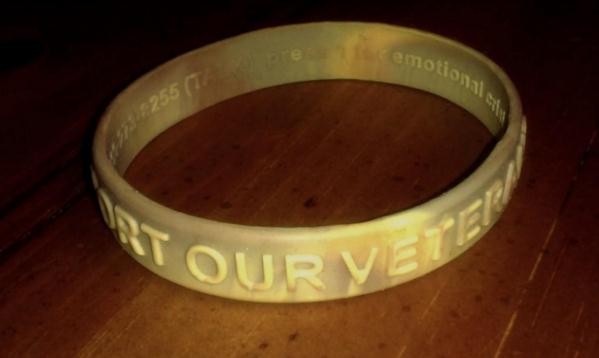
A desert camouflage bracelet for veterans from the VA with crisis support information imprinted on the inside surface.
Wrist bands. They are typically made from a rubbery, silicone-like substance and come in a range of colors from bright and flashy to muted and subdued with some even in camouflage patterns. They have messages embossed (actually molded into the material) that are intended to call attention to various causes and are used to market a company’s brand.
A trendy fashion statement made popular by Lance Armstrong’s LiveStrong charity, you have seen these wrist bands worn by everyone from celebrities, to colleagues, neighbors and even family members over the past half decade. You have probably worn or are wearing one at this very moment. I am sure that there are collectors who focus their attention on them.
In the true spirit of capitalism (which I enthusiastically subscribe to), a Navy veteran found a niche market and created a business called Bands for Arms (B4A) that manufactured and sold their own version – an evolutionary step, if you will – of the message-laden wrist band. Their company website described their products as a way to honor veterans and to help families (and supporters of the U.S. military) feel connected to service members and veterans.
Bands for Arms’ operating model was essentially taking donated U.S. military uniforms (mostly from veterans or their families), dismantling them and constructing wrist bands from the materials that in some way represent the intended message or sentiments of the wearer. I am not disparaging this company or the products they sell as I do find the bands rather intriguing – some are very tastefully designed. And who could find fault with their support (50% of all proceeds) of organizations such as USO Japan, Project Lifting Spirits and the Marine Toys for Tots Foundation?
So what does this have to do with militaria collecting you ask?
Recently, a thread on a popular militaria discussion board alerted collectors to an activity where historic uniforms, worn by veterans who served this nation for the cause of freedom, were donated to B4A as part of a special project, resulting is a special product line. Detailed on the B4A site was how the uniforms had been donated to them by the National WWII Museum (in New Orleans, LA) to create the new line of bracelets known as The Historic Bracelet Collection and 50% of the sales proceeds from this product line would subsequently be donated back to the museum. While the finished product is very well-made, the end result is that the historic uniforms are gone, along with the connection to history associated with the veteran who wore it.
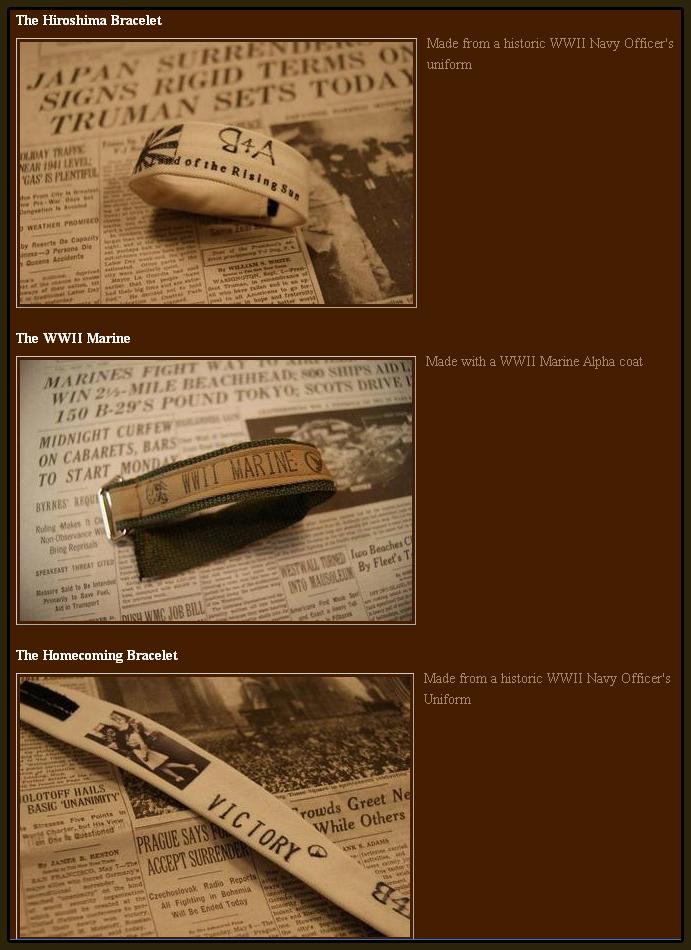
This screen capture shows bracelets were made from uniforms donated by the National World War II Museum. (Source: BandsforArms.com)
For the non-collector, this action may not be an issue. However, it is gut-wrenching for militaria collectors and historians, and has caused them to question the ethical practices of the museum and how they manage their artifacts. The unrest centers around the idea of a museum having donated uniforms for this purpose : intentionally destroying historic artifacts that had been entrusted to them with the promise that they would be preserved and displayed in that museum.
The militaria collectors I’ve associated with take the trust between donors and museums very seriously. If prospective donors no longer have the expectation of proper handling and care of their artifacts, why would they entrust them to any museum? Considering this trust, militaria collectors reacted to the idea that an entity as highly regarded as the National World War II Museum would remove these uniforms from their collection and send them out to be dismembered (and I use this term to emphasize the emotion surrounding this concept) to generate revenue in support of operational cost.
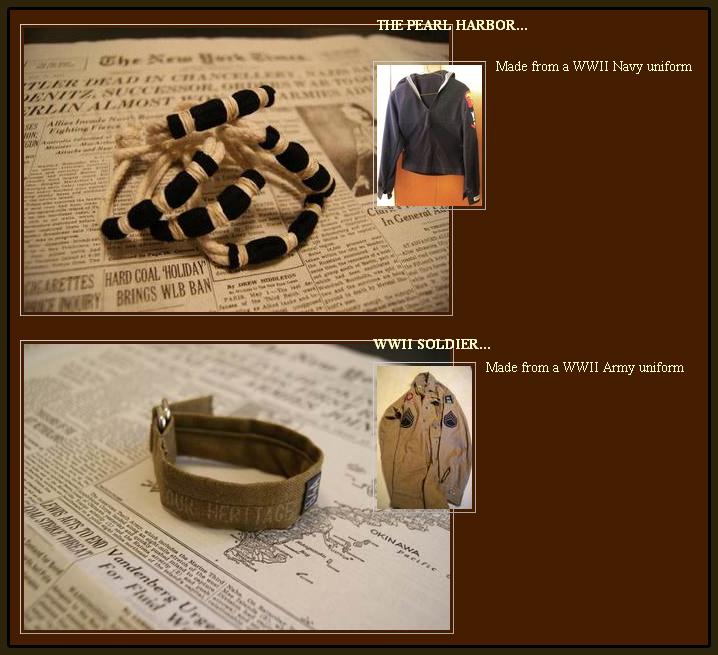
Displayed in this screen capture are two bracelets and the uniforms that were destroyed to make them. (Source: BandsforArms.com)
The militaria discussion board posts raised questions surrounding the proper handling of donated artifacts and the apparent disregard for the widely accepted, industry standard, museum deaccessioning processes. What opened the floodgates of animosity toward both entities were statements posted on the B4A sites (which includes their Facebook page) acknowledging the museum for the donated uniforms, which was the catalyst to the creation of the History Collection.
Frustrated collectors began posting their sentiments directly on the Facebook pages of both the National WWII museum and Bands for Arms, challenging the practice of dismantling historic artifacts (specifically, the WWII uniforms). B4A personnel responded by deleting any posts that called the B4A and National WWII Museum partnership into question.
Bands for Arms personnel added comments to their Facebook page that appeared to mock the collectors with statements such as:
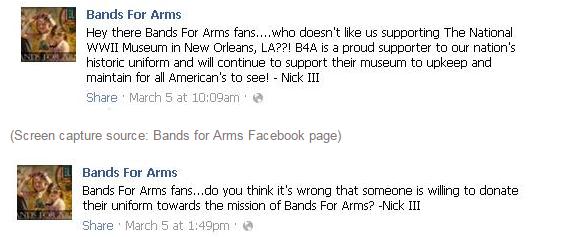
(Screen capture source: Bands for Arms Facebook page)
Over the span of a few days, B4A purged all evidence that referenced the uniform donation from the museum. The messaging on the (now defunct) B4A Historic Collection page had been carefully re-worded to describe the transaction more vaguely, between the ambiguously identified source of the uniform donations.
In stark contrast, the folks managing the Museum’s Facebook page began to directly address the collectors’ challenges openly while also requesting offline dialogue in order to fully explain the details of the transaction. A few of the responses demonstrate their positive actions:
- “We have been working to make sure all parties have the correct information and we are always available to respond to questions or concerns about the Museum.”
- “I would be happy to put you in touch with our registrar who can answer any questions you may have and share the details of our collections policy.”
Several collectors (at least one of which is a museum curator himself) did contact the museum directly and I know that a few had phone conversations with the staffer at the museum who was at the center of the transaction with Bands for Arms. The museum staffer also provided an e-mail response to inquiries regarding the issue:
“Thank you for your recent online inquiry regarding how the Museum cares for artifacts. I’d like to address your concern about a small number of items given to the Bands for Arms organization, but first want to explain our collections process. As you will see, we take very seriously our responsibility for handling artifacts in a professional and proper way.
Items donated to the Museum are considered for two major collections. The first is our Permanent Collection, which contains items that are rare and have a strong historical connection. The Museum always tries to link a military service member’s personal war experience to items donated by the individual or by family members.
The second major collection of the Museum is our Education Collection, which is used by several departments at the Museum for teaching activities. These activities include Living History Corps presentations, where presenters wear genuine World War II uniforms and gear for Museum visitors and students. Other selected items travel off-site under staff supervision for use with students and other interested groups. Educational uses do not preserve the life of the item long-term, but are instrumental in teaching World War II history.
Items that are dropped off at the Museum that do not meet the criteria for either the Permanent or Education Collection are typically returned to the donor. However, some donors do not wish to have items returned to them and the Museum makes these items available to other museums that may be able to use them. These items typically do not relate to the WWII period and have not been accepted into the Museum’s Permanent or Education collection.
When it has not been possible to return items to their original owner and no other institution is found to care for the items, we have utilized various methods to find another place for these pieces, including donation to local charities or other organizations. In 2010, after we were unable to return them to their owner and could not find another museum home for them, five uniform pieces—none from the WWII era—were given to Bands for Arms. These items did not qualify for inclusion in our collection. They are also the only items the Museum has provided to this organization. My personal connection is that I assist Bands for Arms in determining historical dates of uniforms they receive, a role that we play with many inquiring parties.
We currently house more than 140,000 items in our collection. While many items in the collection — including but not limited to Allied and Axis uniforms, weaponry, vehicles, medals, diaries, letters, artwork, photographs and other mementos — are on exhibit, the majority are kept safely in the Museum’s professional storage vault to be used for research and future exhibitions, or are being restored to their original condition.
The artifacts, documents, and personal accounts in the Museum’s Permanent and Education Collections are extremely important to the Museum’s mission of interpreting the American experience in WWII for current and future generations. In addition to carefully preserving these items, the Museum is embarking on a project to provide greater public access by improving our cataloguing and broadening our digitization of these items.”
Clearly, the museum is being responsive and professionally addressing the concerns head on, and I applaud them for these actions. As a novice historian, I still struggle with the destruction of the artifact, but I do understand the position the museum was in with regards to unwanted (at least by other museums or the donors) uniforms.
I know that the community of collectors are also satisfied with the museum’s responsiveness and willingness to be open about how they manage their collection. We are all hopeful that in the future, they will seek other avenues of artifact deaccession, avoiding destruction or disposal in order to continue to preserve our nation’s military history.
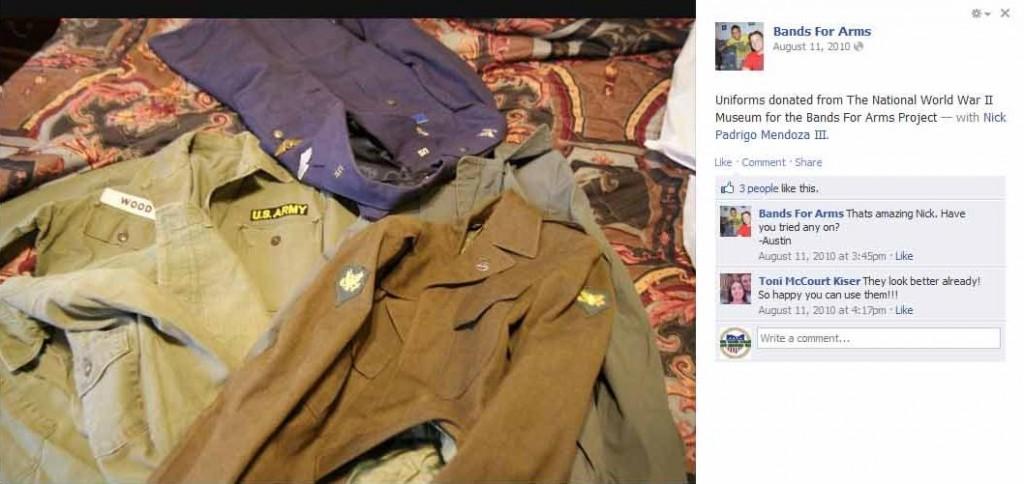
Shown here on an older Facebook post on the Bands for Arms page, references to the uniform donation by the National World War II Museum. These posts were subsequently removed.
What was difficult about the event was that Bands for Arms began a denial and suppression campaign when confronted by collectors who took issue with the uniform destruction. Instead of taking an above-board position by addressing the collectors’ concerns head on, they demonstrated a lack of maturity (and do not perceive this as an attack on B4A as I am not saying they behaved like children) that comes from having seasoned professionals managing external communications and messaging. I am betting that the leadership at B4A will use this event as a learning opportunity and will take note of the mistakes and missteps striving to not repeat them.
I’d also like to note that collectors do not take issue with B4A’s business model as they agree that veterans and family members may certainly do whatever they desire with their personal property. The folks at Bands for Arms do manufacture tasteful products and paying tribute to veterans while funding noteworthy veteran charities is quite admirable.
With the dust settling and the discussion posts winding down, is this the end of the debate? Do bracelets made from veterans’ uniforms truly honor them? As a collector, I have my own thoughts on this topic which will be the subject of the following segments in this series of posts.
 The Veteran's Collection