Category Archives: Insignia and Devices
Forecasting Patchy Skies: Sew-on Naval Aviation Heraldry
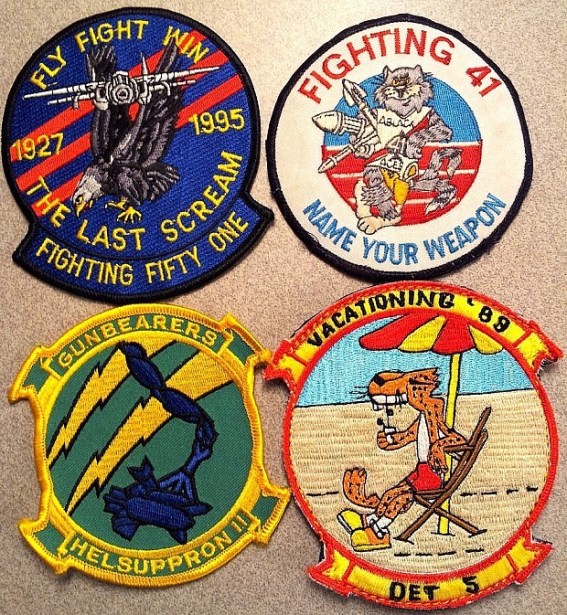
Counterclockwise from top left: VF-51 Screaming Eagles as the unit was being deactivated; VF-41 sporting the Tomcat character (for the F-14 Tomcat aircraft); HC-11, Detachment 5′s WestPac cruise patch; HC-11 squadron patch.
Since I began this blog, I’ve covered various aspects of military-patch collecting. From shoulder sleeve insignia (SSI) to rank and rating badges, this area of collecting has something for every level of collecting, from the beginner with a scant budget to the experienced one who collects each and every obscure variation of his or her favorites.
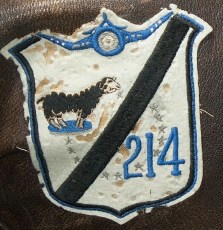
This authentic VMF-214 squadron patch dates from WWII and is most-likely Australian-made. This “Blacksheep” patch is affixed to the G-1 flight jacket that belonged to the Marine pilot, Fred Losch.
One of my personal favorites in collecting patches, even though the size of my collection disagrees, is naval aviation squadrons (including the U.S. Marine Corps) due to the colorful (pun intended) embellishments and symbolism representing each squadron. These patches represent a lengthy history in heraldry and the history of navy flight dating back almost to its very beginning.
The tradition and history of these patches and insignia is acknowledged by U.S. Navy leadership in the Chief of Naval Operations Instructions (OPNAVINST) 5030.4G, as it states:
“The practice fosters a sense of pride, unit cohesion and contributes to high morale, esprit de corps and professionalism within the Naval Aviation community. It also serves as an effective means of preserving a command’s tradition, continuity of purpose and recognition, as traced through its lineage.”
-
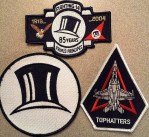
- One of the longest-standing Navy squadrons, the Tophatters of VF-14 is still in operation, but in a fighter/attack capacity with the F/A-18E. The patch on top commemorated the squadron’s 85th anniversary. The single top hat (without any word-marking is the long-running design.
-
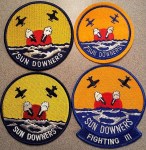
- VF-111 began life in WWII as VF-11. The nickname and design reflect the mission of the squadron during the war – charged with downing the aircraft from the Empire of the Sun (Japan). This design is still in use to this day.
-
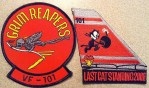
- VF-101 was originally formed in WWII aboard the USS Enterprise. The squadron patch (left) is virtually unchanged from the original with “Moe” in flight beneath the squadron’s nickname. The patch on the right was commemorating the final flight of the F-14 fighter aircraft within the squadron.
-
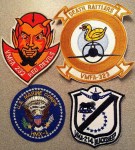
- This diverse collection of USMC aviation patches includes the President’s helicopter squadron (HMX-1) and the current version of the “Blacksheep” patch (VMA-214).
As early as the 1920s, United States naval aviators have employed visual graphics and heraldry complete with symbolism and characterizations of traits, behaviors and/or projections of the personality of their individual squadron commands. Often portraying ferocity or satire, these emblems would be displayed within the confines of the squadron office or the personnel’s common areas to encourage unity within the ranks.
Aviation units are quite diverse across four distinct areas: attack, fighter, patrol and helicopter squadrons. Within these areas are a myriad of functional (active) and decommissioned squadrons with a host of designs. Depending upon the length and breadth of an individual squadron’s service, there could exist dozens of designs and subsequent patch variations. As noted noted within these documents, squadron service history and lineage is incredibly detailed and expansive (histories for fighter and helicopter squadrons are in the works):
As a result of the diversity across the lineages, patch collectors can specialize in very specific areas (such as collecting all Vietnam-era fighter squadrons) or focus on a central design aspect (i.e. any squadron that incorporates an eagle into their design). For me, I look for those squadrons that I had direct contact with during my naval deployments, which include attack, fighter and helicopter squadrons, in the 1980s.
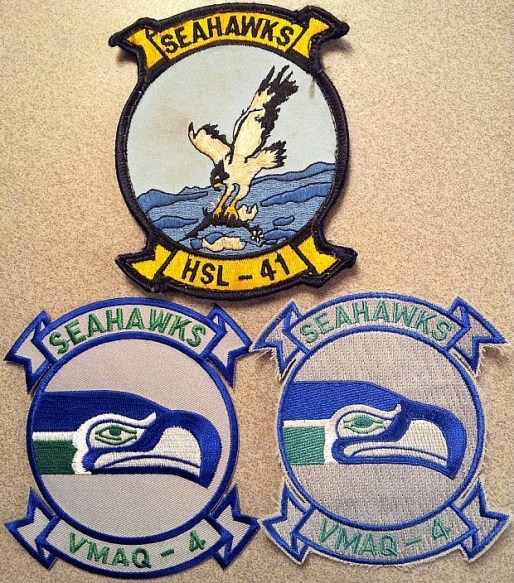
These patches represent two squadrons – one a USMC electronic warfare squadron and the other, an anti-submarine warfare helicopter squadron. Both bear the same nickname of “Seahawks.” The bottom two patches’ design was incorporated into the Marine Tactical Electronic Warfare Squadron (#4) when it was based at NAS Whibey Island in Washington State. The Seahawks (squadron) adopted the imagery from the Seahawks (the local NFL team). Since relocating to Marine Corps Air Station Cherry Point, VMAQ-4 departed from the NFL-based design,
*See related posts:
Fruitless Searching – The Quest for an Insignificant Patch
After years of searching for a simple uniform accouterment, I am feeling that the possibilities of completing a uniform recreation are far less than I had hoped. When I began my project in 2009, I figured that locating a fairly standard uniform patch would be a simple venture. As I reviewed the photo, seemingly nothing on my uncle’s uniform was rare or would be difficult to source. At the end of four years, I have learned that I may have to place this project on perpetual hold. Where did I go wrong?
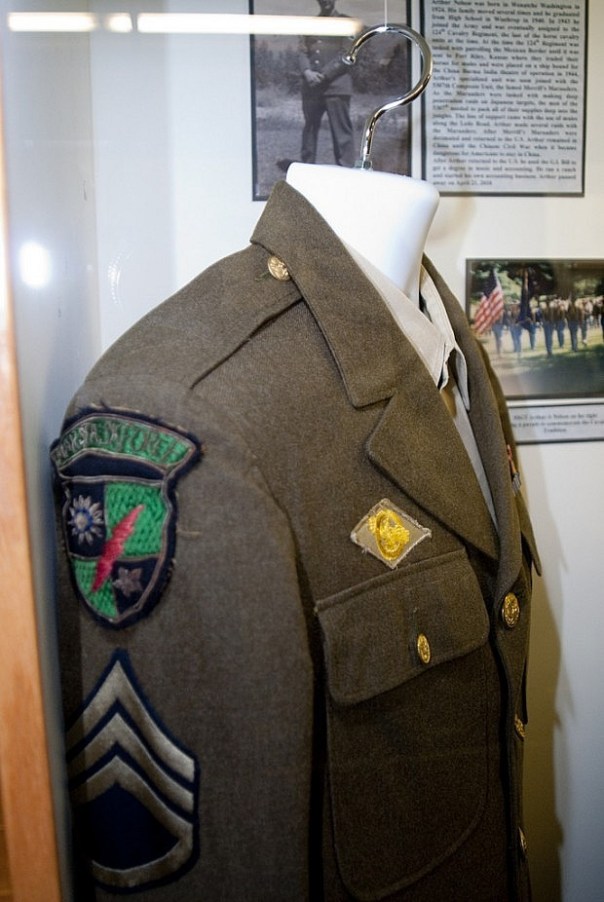
It is unfathomable to me that I stand a better chance locating this Merrill’s Marauders shoulder sleeve insignia patch than the overseas service bars/chevrons combination.
When I received a photo (taken in August of 1952) of my uncle receiving an Army Commendation Medal from a colonel, I knew that I wanted to assemble a uniform jacket with his full military decorations. Around the same time I got the photo, an enormous package arrived from the National Archives which contained a large stack of documents that encapsulated my uncle’s service spanning three wars and nearly 20 years.
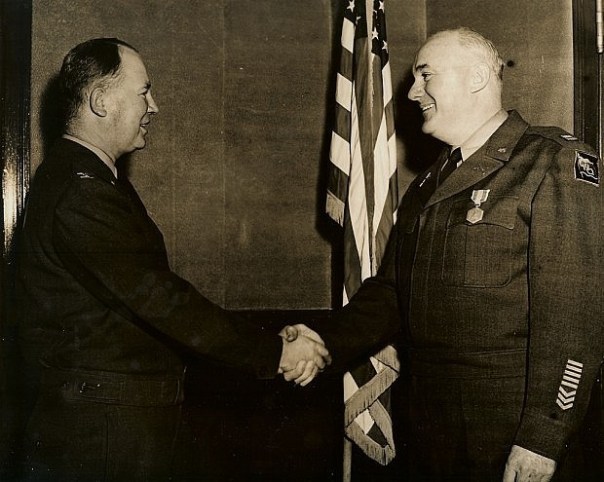
Here, my uncle receives his Army Commendation Medal. Though he is shown in uniform, he is wearing no other decorations or ribbons. The quest for the overseas stripes/chevrons patch continues after 3 years.

Darren McGavin’s wife (in the film A Christmas Story) saw how obviously hideous this lamp was. It was equally apparent that I needed to find the proper patch configuration for my display (source: Warner Brothers).
Reviewing the service records and the photo, I decided that I wanted to put together a uniform that was representative of what my uncle wore at the conclusion of his service in the army. Considering that my uncle enlisted to serve in World War One, I figured that the greatest challenge I faced was in locating the period-correct ribbons with the appropriate devices: the correct campaign stars. I already possessed a good portion of my uncle’s metal devices (rank, corps insignia) along with several period-correct ribbons and medals which meant that it shouldn’t take long to acquire what was still needed.
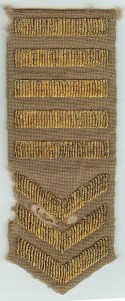
This patch was in my uncle’s possessions but the moth-eaten condition and that it is for a khaki uniform, makes it unsuitable for my display.
In possession of the uniform jacket, I began to take stock of each item before I would begin to sew on any of the patches. From the unit insignia (the GHQ patch) to the all of the various devices, I was ready to go…or so I thought. There, glaring at me like Darren McGavin’s sultry major award, gleaming brightly in the window of the front room from A Christmas Story, I was missing the overseas stripes that would be representative a soldier who served overseas for multiple wars.
One might ask, “What is so significant about this uniform item?” The overseas service bar (or chevron for World War I service) was issued for each block of six months served by a soldier in a combat zone. In the case of my uncle’s uniform, the photo shows that he wore three chevrons and five overseas service bars. With each stripe or chevron representing six months, my uncle served in a combat theater for three chevrons and five bars, or a total four years.
A Thousand Words? Pictures Are Worth so Much More!
As my family members have passed over the past several years, I have managed to acquire a number of antique photo albums and collections of photos of (or by) my family members that nobody else wanted. Most of the images’ subjects were of family gatherings, portraits or nondescript events and contained a lot of unknown faces of people long since gone. As the only person in the family who “seems to be interested” in this sort of history, I have become the default recipient.
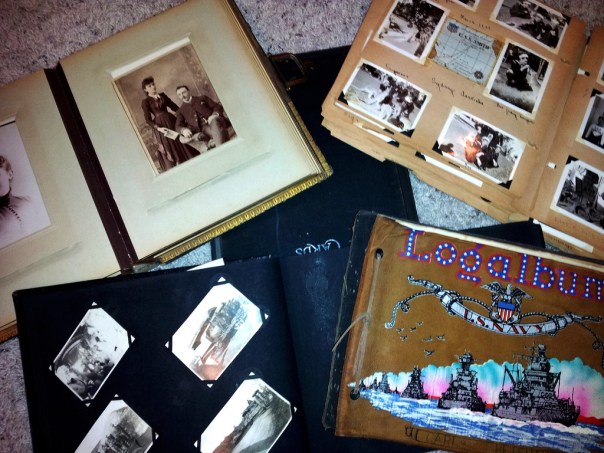
Here is a sampling of vintage photo albums I’ve inherited.
My Hidden Treasure
With all the activities and family functions occurring in my busy life, those albums received a rapid once-over (to see if I could discern any of the faces) and then were shelved to gather dust as they had done with their previous owners. Years later, I began to piece together a narrative of my relatives’ military service (a project you will hear about over the course of my blog posts). I have since returned to those albums only to discover a small treasure of military-related images that are serving to illustrate my narrative project. As an added bonus, they are providing me with an invaluable visual reference as I am reconstructing uniform displays to honor these veterans.
Photographs Can Unlock the Secrets
Similarly, militaria collectors strike gold when they can obtain photo of a veteran in uniform that can help to provide authentication as part of the due diligence for a specific group they are investigating prior to an acquisition. A photo showing the veteran wearing a certain Shoulder Sleeve Insignia (SSI), ribbon configuration or even a specific uniform garment can be authenticated if there are visible traits (such as tears or repairs) within the image.
Photographs from GIs in a wartime theater of operations or in combat are fairly rare. Photography was outlawed by theater commanders (due to the obvious security risks if the film or photographs were captured) and space was at a premium as one had to pack their weapons, ammunition, rations and essential gear. So finding the room to safely carry a camera and film for months at a time was nearly impossible. Similarly, shipboard personnel were not allowed to keep cameras in their personal possessions. Knowing the determination of soldiers, airmen and sailors, rules were meant to be broken and, fortunately for collectors, personal cameras did get used and photos were made while flying under the censors’ radar.
If you have deep pockets and you don’t mind paying a premium for pickers to do the legwork, wartime photo albums can be purchased online (dealers, auction sites) for hundreds of dollars. Many times, this can be a veritable crap-shoot to actually find images that have significant military or historical value and aren’t simply photos of an unnamed soldier partying with pals in a no-name bar in an an unknown location. For militaria collectors at least, there is value in the image details.
As you obtain military-centric photos, take the time to fully examine what can be seen. Don’t get distracted by the principal subject – look for the difficult-to-see details. Purchase a loupe or magnifying glass to enable you discern the traits that can reveal valuable information about when or where the photo was snapped. What unit identifying marks can bee seen on the uniforms? Can you identify anything that would help you to determine the era of the uniforms being worn by the GIs?
My Own Success
In assembling a display for one of my relatives, I wanted to create an example of his World War I uniform because the first of his three wars was quite significant in shaping his character for his lifetime. Having already obtained his service records (which span his entire military career, concluding a few years after the Korean War), a book that was written about his WWI unit (published by a fellow unit member) and my uncle’s photo album which was filled with snapshots of his deployment to France, I figured I would be able create a decent uniform representation.
-
- In this image, you can’t quite make out the left shoulder insignia.
-
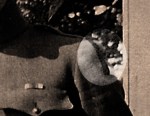
- A close-up of the left shoulder revealed the SSI of the 1st Army (artillery branch).
-

- This photo shows my uncle (on the left) in France with his First Class Gunner rank insignia.
-
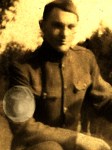
- In the close-up, you can (almost) clearly make out the rank insignia of a First Class Gunner.
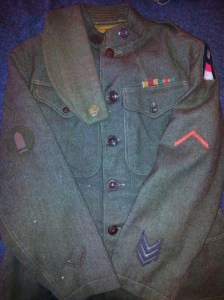
An overview of the uniform (and overseas cap) that I have recreated to represent my uncle’s WWI service. Note the artillery shell insignia on the right sleeve is that of a First Class Gunner.
In the various photo album images, I could see his right sleeve rank insignia as well as the overseas stripes on his left sleeve quite clearly. I could even make out his bronze collar service devices or “collar disks” in the photos (since I had his originals, they weren’t in question), but I had no idea of what unit insignia should go on his left shoulder. Not to be denied, I took the route of investigating his unit and the organizational hierarchy, trying to pinpoint the parent unit to which the 63rd Coastal Artillery Corps was assigned. Having located all of that data, I was still unsure of the SSI for the right shoulder.
Temporarily sidetracked from the uniform project, I returned to the photo album and scanned a few of the images (at the highest possible resolution) for use in my narrative. With one of the photos, I began to pay close attention to the left shoulder as I zoomed in tightly to repair 90 years worth of damage…and there it was! At the extreme magnification, I could clearly see the 1st Army patch (with the artillery bars inside the legs of the “A”) on my uncle’s left shoulder. I had missed it during the previous dozens of times that I viewed the photo.
An overview of the uniform (and overseas cap) that I have recreated to represent my uncle’s WWI service. Note the artillery shell insignia on the right sleeve is that of a First Class Gunner.
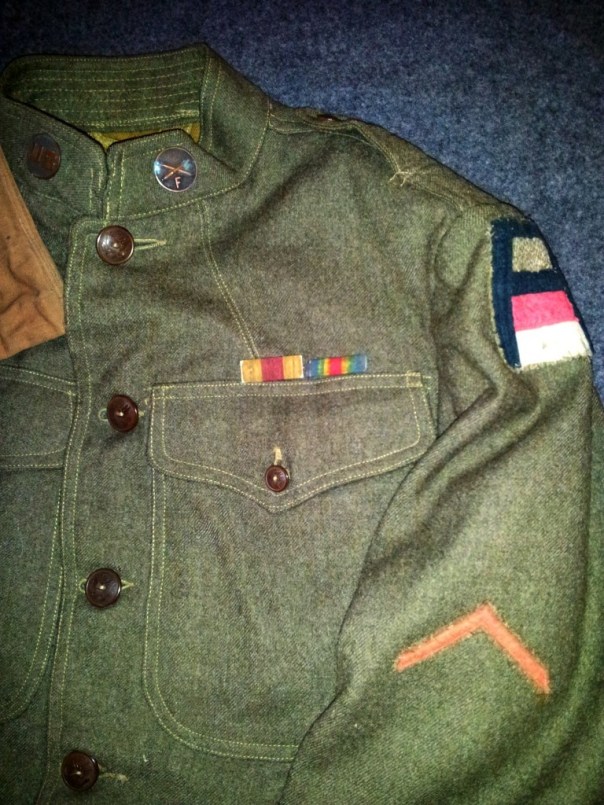
A close up of the SSI of the 1st Army (with the red and white bars of the artillery), my uncle’s collar disks, the honorable discharge chevron and his actual ribbons.
My research now complete, I obtained the correct vintage patches and affixed them to an un-named vintage WWI uniform jacket along with my uncle’s original ribbons and collar devices (disks) to complete this project. Now I have a fantastic and correct example of my uncle’s WWI uniform to display.
No Campaigning Here: Badges for Military Service Members in the White House
As our nation draws nearer to Inauguration Day on January 20, 2017 we are settling down from an election cycle that saw voters increasingly blasted with political advertisements on television and radio along with the landscape being polluted with the signs of candidates from local, state and federal elections. Now that the streets and neighborhood landscape has been cleared of all the pro- or anti-candidate signs with only the die-hard, disillusioned still driving their cars with bumper stickers from their failed candidates, hoping to wake up to a different outcome. The time of year that I loathe the most has come to an end.
As much as I have disdain for that season, there is a segment of collectors who thrive on the materials that are produced to grab the undecided voters’ attention and sway them to cast votes in the candidate’s favor. Does it work? That is a subject of much debate, but the materials created can be a treasure trove for collectors, especially when it comes to candidates for the office of the President of the United States.
As the above election items are clearly NOT my forte, there are some militaria pieces that hold my interest. Though they are connected to our nation’s highest office, these uniform accouterments have nothing to do with any individual president.
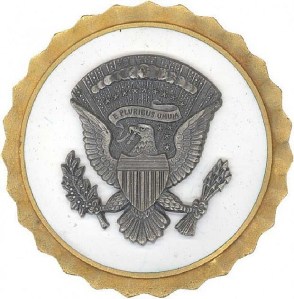
The obsolete White House Service Badge features a natural metal seal on the white field. When this bade was retired in 1964, it was replaced with the Presidential and Vice Presidential Service Badges.
On June 1, 1960, President Dwight D. Eisenhower signed Executive Order 10879 establishing the Presidential Service Badge or PSB (and the associated Presidential Service Certificate). Prior to the issuance of the PSB, U.S. military personnel assigned duty at the White House offices including…
- Camp David
- Naval Administrative Unit
- White House Garage
- White House Army Signal Agency
- Air Force One
- HMX-1
- US Army Executive Flight Detachment
…were issued the White House Service Badge (WHSB). The design of this badge incorporated a gold-colored medallion with a field of white with the eagle of the presidential seal superimposed over the center.
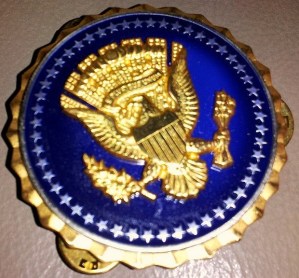
Superseding the WHSB in 1964 was the Presidential Service Badge. The badge was a slight departure from the WHSB, changing the field from white to blue and adding a ring of white, 5-pointed stars around the field’s inner circumference. Each PSB is individually and uniquely numbered. Each number is associated to the person to whom that individual badge was issued, making each one trackable. The PSBs come with a three-prong clutch-back to affix it to the wearers’ left breast pocket.
In addition to the staff assignments listed above (for the White House Service Badge), military aides who carry the “Football” and White House military public affairs officers.
Vice Presidential aides, like those serving the President, are also issued a badge that is nearly identical to the defunct White House Service Badge with the difference being a gold (versus silver) colored seal as well as a variation with the gold edge thickness and design.
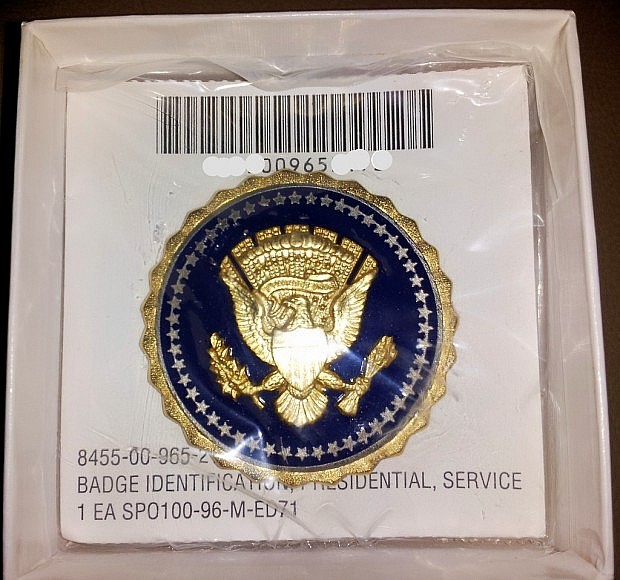
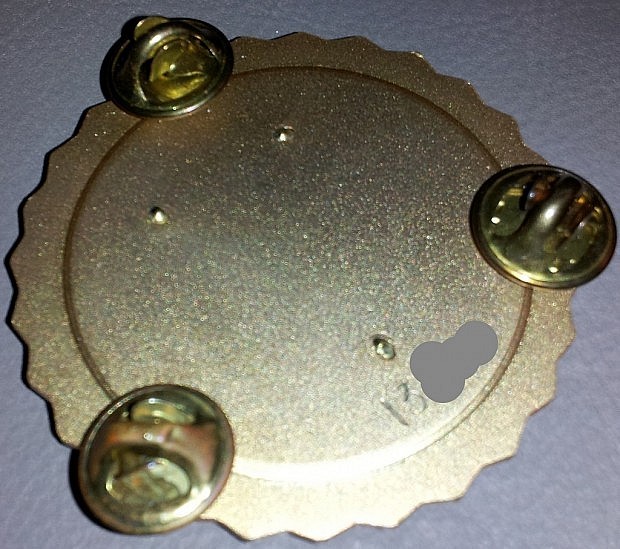
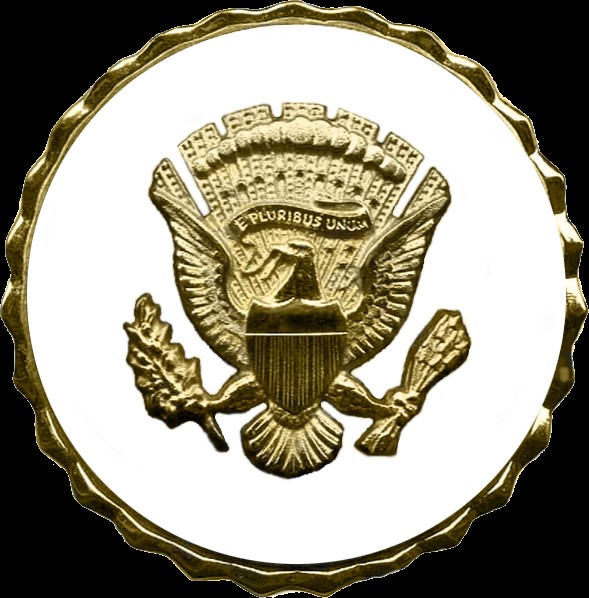
Just as awarded medals and ribbons, both the Presidential and Vice Presidential Service Badges remain a permanent part of the service members’ uniforms for the remainder of their military careers, even after their duty with the elected officials has been fulfilled.
These badges are fantastic additions to collectors of both militaria and presidential items.
Navy Enlisted Ratings Eliminated: What are the Impacts on Sailors and Collectors?
Until last week, I have been reluctant with this blog to delve into matters that touch on politics (my first politically-focused article was published yesterday – as of writing this article). The subject of this article has me approaching the line of demarcation (between politics and collecting) and I believe that I was able to keep the content weighted heavily in facts with a slight peppering of opinion interspersed between them as I began to address my concerns regarding the highly controversial decision (that is the central theme of this post) that was announced last week. This blog has a decent following and the stats indicate that a lot of people are searching for information pertaining to Navy ratings and badges (and discovering this site) leaving me soliciting readers to be heard by commenting after you finish reading the post.
With four articles written (see list below) about United States Navy Ratings and Rating Badges, I didn’t see myself delving back into this subject quite so soon. With recently announced changes to the Navy’s enlisted rates and rating structure – a complete overhaul – I am compelled to dive into the subject from my perspectives both as a veteran sailor and a collector.
From the moment that the Chief of Naval Operations (CNO) and the Masterchief Petty officer of the Navy (MCPON) announced that the Navy would be dissolving the 241-year-old tradition of identifying enlisted personnel by their job title (known in the Navy as “rating”), the uproar from veterans, retirees and active duty personnel was instantaneous and deafening. There is no doubt that if you were paying attention to social media on September 29, 2016 you most-likely saw someone lamenting the impending changes and their outrage directed towards the navy leadership for even considering the idea, let alone moving ahead with implementation of a plan to disestablish a tried, true and loved tradition.
Who Cares About 241 Years of Tradition?
Aside from the current leadership, most all sailors care about the preservation of vaunted and successful customs and traditions that set the Navy apart from the other branches of the armed forces. In the earliest days of the naval service, rated sailors have been called by their job titles – specifically, boatswains’ mates (pronounced, “bosun’s” mates) have been so called since 1775. It is a matter of pride to be known by the work that is performed. I remember when I advanced to Operations Specialist, Third Class (“OS3”), it was a matter of pride. No longer was I known as a Seaman and, not just a petty officer, but that I had attained the rating and rate; the culmination of performing my duties; getting qualified on every aspect of my job that was possible, studying and achieving proficiency. This mentality continues and builds as sailors advance through the pay-grades, evolving into an expert that subordinates and seniors alike learn to depend upon. Despite the job title or function, the sailors in each of these ratings own considerable pride in being referred to by their rating. To have that all stripped away and be known only as “petty officer (third, second, first) class” systematically removes sailors’ pride. If I was still serving, instead of being OS1 (Operations Specialist First Class), I would just be “Petty Officer” with an innocuous (hidden) designation; “B440.”
When the Continental Navy began in 1775, there were officers and men and two designated ratings of enlisted men. Once the hostilities ended, Congress agreed that there was no longer a need for a navy, voting to disband it in 1785.
- Armorer – In use in 1775; established 1797;
- Boatswain’s Mate – In use in 1775; established 1797
The new nation experienced renewed aggression from England and tensions grew between the United States and France compelling the government to take action, passing the Naval Act of 1794 to build six warships (known as the original “Six Frigates“). By 1797, the Navy began to establish an enlisted rating structure, solidifying the tradition and practice that was in place until last week. In addition to the boatswains mate and armorer, the newly established rates at that time were:
- Boy
- Carpenter’s Mate
- Cockswain (sic)
- Cook
- Cooper
- Gunner’s Mate
- Master-at-Arms
- Master’s Mate
- Midshipman
- Ordinary Seaman
- Quarter Gunner
- Sailmaker’s Mate
- Seaman
- Steward
- Yeoman of the Gunroom
-
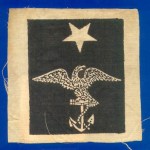
- This is the stenciled pattern that was provided to petty officers to hand-embroider their rating marks, beginning in 1841 (source: Dr. Howard G. Lanham/http://hglanham.tripod.com/datingrating/datingratings.html).
-
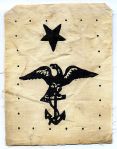
- This summer white uniform stencil for a petty officer badge would be used by the sailor to embroider his own badge (source: warrelics.eu).
-
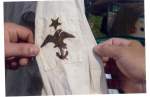
- This summer white jumper appears to be part of an (unofficial) “liberty” uniform. This is a fine example of the hand-embroidered petty officer badge from the Civil War period (source warrelics.eu).
-
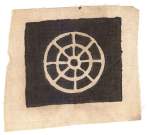
- 1869 Machinist specialty mark (source: warrelics.eu)
As the Navy changed operational procedures and modernized throughout its existence, so did the enlisted rating structure. It wasn’t until 1841 when the Navy established insignia for rated sailors. The design called for an eagle facing left (from the wearer’s perspective) with wings pointed down, while perched on a fouled anchor. It was to be worn half way between the elbow and shoulder on the front of the sleeve. Rated Petty officers in the following wore the badges on their right sleeve:
- Boatswain’s Mates
- Gunner’s Mates
- Carpenter’s Mates
- Masters at Arms
- Ship’s Stewards
- Ship’s Cooks
…while the following petty officers wore the badge on their left uniform sleeve:
- Quarter Masters
- Quarter Gunners
- Captains of the Forecastle
- Captains of Tops
- Captains of the Afterguard
- Armorers, Coopers
- Ship’s Corporals
- Captains of the Hold
-
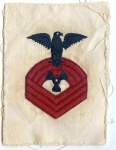
- This Machinist Mate Chief Petty officer badge dates from the late 1880s (source: warrelics.eu).
-
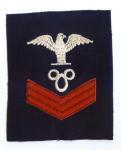
- An early 1880s Sailmaker’s Mate petty officer badge for the winter blue uniform (source: warrelics.eu).
-
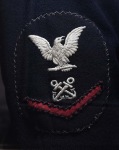
- This 1890s Coxswain crow (affixed to a dress blue jumper) is embellished with hand-embroidered stitching surrounding the edges and the chevron. Sailors often shaped the patch and added their own personal touches to their uniforms and their ratings were a significant part of this (source: Hampton Roads Naval Museum).
-
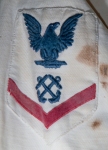
- In 1913, the Navy did away with the red chevrons on dress whites most-likely due to the red dye fading and bleeding onto the white uniforms when laundered. The chevrons were changed to blue matching the eagle and specialty marks.
-
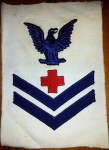
- Prior to WWII, Pharmacists’s Mates were right-arm ratings as indicated by this eagle facing the right. The eagle is also slightly bent as the legs lean toward the left and the torso leans toward the right indicating that it is post WWI.
In the following years (through the Civil War and beyond), the Navy continued to mature the rating badges by adding specialty marks (symbols that represented the sailor’s job). By the mid 1880s, the manufacture of petty officer marks were contracted to private companies, alleviating the need for the petty officers to hand-embroider them. The transition from sail to steam created the need to create new ratings to meet the rapidly changing technological advances. Navigation, communication and gunnery improved and sailors specialize creating new specialties. The Navy adapted and so did the sailors as they took pride in their jobs and uniforms.
For another century and a half, sailors have not only identified themselves by the mark on their sleeve during their careers, their passion and loyalty towards their rating continues throughout their lives. Though veterans of other branches might hold their specialty in high regard long after their service, it doesn’t compare to that of the Navy veteran. One glance at any veteran-memorabilia catalog reveals what sailors demand – t-shirts, polo shirts, ball caps, vehicle decals and challenge coins emblazoned with rating insignia.

This rating, Operations Specialist, Second Class (OS2) has been discontinued and is now known as a “B440.” The Navy has yet to decide the fate of the rating badges and insignia.
When the CNO and MCPON unceremoniously pulled the plug on the enlisted classification system, there were in excess of 90 active ratings in use. Since the ratings were officially established in 1797, more than 700 have been used. As a collector, I wonder what changes are forthcoming that will have impacts on the items that I am interested. As Mark D. Faram and Sam Fellman of the Navy Times noted, “the moves leaves the enlisted force’s foremost symbols as the petty officer crow and the chief petty officer anchors.” The writers continue, “It remains unclear what will happen to the ratings badges that feature iconic rating insignia that officials are considering changing. An engineman’s gear. An information systems technician’s sparks. These images were beloved by many and inspired countless tattoos.” Apparently, we have to wait and see what will become of our unique (to our branch of the armed forces) sleeve insignia. Will the Navy remove the distinguishing/specialty marks that currently reside between the eagle and chevrons? Since the goal is to make the enlisted structure more in line with the Army, Air Force and Marines (see: Hello, Seaman: Navy Ditches Ratings After Review – Military Times, 9/29/2016), would they simply reduce our insignia to just chevrons, also eliminating the eagle?
-
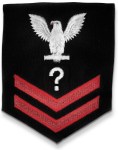
- The Navy’s wisdom shines through yet again. Without any plans for what will happen with rating badges, the decision to gut the system has been decided.
-
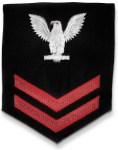
- If we are to follow along with what sailors are to be called, then it is probable that the Navy will remove the specialty mark from the rating badge.
-
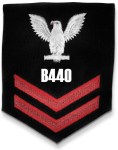
- Rather than Operations Specialist, these sailors would now be known as B440 Second Class Petty Officers (which is far more simpler than “OS2”).
-
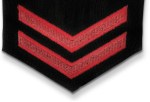
- Commander John Schofield, a spokesman for Navy Personnel Command told the Military Times last week, that the change “completely aligns us with the other services.” One could assume that the uniforms will ultimately be the same as the other branches, deep-sixing the last of the tried and true traditions.
For those who collect rating badges and insignia, the discontinued use of them on enlisted uniforms could spark a sudden boost in interest spurring on an increase in demand while driving up prices. At present, collectors have predominately focused their interest in rating badges that predate the current eagle design (often disparagingly referred to as a “sick parrot”) – prior to the design change in the late 1980s. The earlier “crow” designs incorporate an more aggressive and menacing perched eagle and finer details in the embroidery (see: Discerning Birds: U.S. Navy Rating Badges from WWI to WWII). Another factor that garners collectors’ interest is that many of the distinguishing/specialty marks have been long since disestablished or superseded. Collectors will be watching for any indication of changes (increased interest, more online auction bidders, etc.) in the market. It may be premature to say that the market appears to not be impacted by last week’s announcement. If the rating badges are altogether eliminated, I suspect that there will be a spate of new collectors influencing prices but it will eventually settle down shortly after. Time will tell.
What is Wrong With The New System?
Many people are wondering why are sailors so adamantly opposed to the new system that is being implemented. Why is there such a visceral and negative response to the impending changes? What began in January, 2016 as a directive by the Secretary of the Navy (SECNAV) Ray Maybus to evaluate all of the ratings in order to “ensure they were representative of all sailors and did not discriminate based on gender,” evolved in the elimination of every rating. Rather than to work within the ratings, addressing the directive and fighting to uphold tradition, the MCPON took the easy way out, flippantly recommending (to the SecNav) that simply demolishing the ratings all together “could be be done tomorrow.”
“Make no mistake about it,” MCPON Stevens recalled telling (SecNav) Mabus, “this course of action will be the most labor-intensive, probably the most expensive, certainly the most controversial as well as difficult to accept socially throughout the Navy.”
Stevens had previously presented four scenarios to Maybus that were workable solutions to the directive (removing “man” from 21 specific ratings) before proposing the one that would strike the biggest blow to enlisted morale and to the American taxpayers. Maybus would have the final decision and, according to Stevens, Mabus “sat there a little bit, pondered it, asked a few questions and then decided, in the best interest of the Navy’s future, this was the path he wanted to take.” With that, Navy leadership unceremoniously rendered sailors to be nothing more than generic enlisted people that will no longer be as specialized as they are today.
Rather than focus on the most pressing needs of the navy (preparedness and readiness), the navy instead has shifted gears to be more focused on social issues. This shift in focus has already begun to produce negative results on mission-readiness:
- Fourth breakdown in US Navy littoral combat ship – “…the Coronado’s incident (suffering an ‘engineering casualty’) means four of the six littoral combat ships in service have suffered mechanical failures in the past nine months.
- The New $3B USS Zumwalt Is a Stealthy Oddity That May Already Be a Relic – “On the DDG-1000 [Zumwalt-class], with the waves coming at you from behind, when a ship pitches down, it can lose transverse stability as the stern comes out of the water—and basically roll over…”
- Why More (Navy) Commanding Officers are Getting Fired (due to misconduct) – “…the presence of the opposite sex has led to an exploding rate of fraternization, at every level. Simply put, you cannot put young, healthy men and women into a small box, send them away for extended periods of isolation, and not expect them to interact dynamically with one another. They’re like magnets being put into a box and shaken — they stick.”
There are countless instances of sailors dealing with the effects of extended deployments (due to the reduction of the number of combat-ready vessels and aircraft yet an increased demand), reduced morale, radical changes to command structure, and de-funding of maintenance budgets for active ships – all of this is contributing to a naval force that is wholly unprepared to meet any emergent needs that should arise. Further diminishing morale by removing the enlisted rating system will only serve to continue the downward spiral that could take decades to end.
Contradiction and Irony
The eight-month long effort (January through September) to address Secretary Maybus’ directive to be sensitive to the ever-increasing list of federally recognized genders by removing “man” from rating titles is, at the outset, a failure. Though the leadership did succeed in eradicating the negative connotation from 21 ratings, they doubled-down on “man” for all sailors in pay-grades E-1 to E-3, referring to them all as “seaman,” leaving bluejackets to wonder what was Maybus’ underlying motivation.
Previous Articles about Collecting Navy Ratings and Badges:
- Silver Eagles: Navy Bullion Rate
- Tracking U.S. Navy Specialties: The History of Radarmen
- Chiefly Limited: Space for Uniforms is at a Premium
- Discerning Birds: U.S. Navy Rating Badges from WWI to WWII
References:
- The inside story of how the Navy’s top brass eliminated ratings
- Navy Eliminating 241-Year-Old Rating System in New Enlisted Rank Overhaul
- GOP lawmaker: Navy’s move to strip job titles will hurt morale
- Whitehouse.gov Petition: Restore the Traditional Navy Rating Specialty Titles
- The Navy dumped its time-honored job titles and the decision incited widespread outrage
- Navy move to scrap traditional enlisted ratings system draws criticism, questions in ranks
- War Relics.com – US Navy Rating Badges Discussion Topic
 The Veteran's Collection