Militaria Collecting Made Complicated – No Checklists

One of several checklists within the 1956 baseball card set by Topps.
Prior to delving into militaria and historical research, I collected sports cards for years. My principal interest in this arena was with baseball which is also my favorite sport to watch. Back then, my interest in the game centered on the history – the “golden era” – and the legends of the game. However, with baseball card collecting, I chose to focus on the 1950s and 1960s.
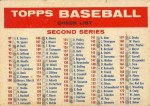
This 1957 Topps baseball card checklists shows the marks the collector made as they worked to complete the set.
With so many players in the game (not all of them represented on a card) in the early 1950s, card companies recognized that they could create more interest by letting their target audience know how many different cards were produced. This information, in the form of checklist cards, contained all the information that informed collectors what cards were produced. This information would keep collectors buying the wax packs (of course, getting the wonderfully powdered sugar covered, hard sticks of bubblegum) and trading their extras with their friends. As they filled out their sets, collectors would check their checklists.
Militaria couldn’t be a more polar opposite from sports card collecting. There are no checklists and finite production runs, no hardened rules about variations, no price guides that afford collectors with knowledge of sales trends….none of that. Militaria collecting requires the collector to acquire knowledge about the artifact – where it was used, who used it, when it was produced and available, when it was issued, how it was modified (in the field), etcetera – before they commit significant finances to collecting.
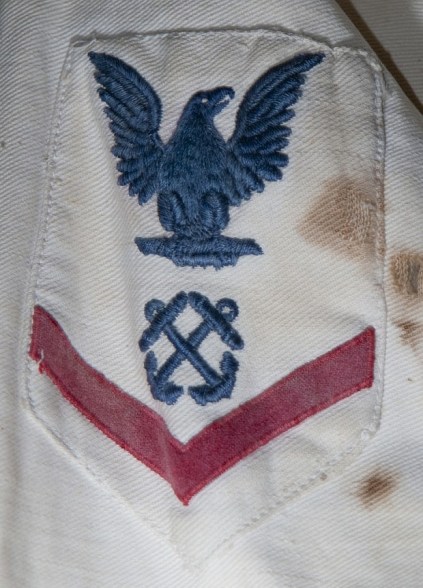
The right-sleeve rate of the 1905-1913 coxswain (with an additional chevron, this would be a boatswain’s mate 2nd class petty officer).
Navy rate collectors can tell stories about variations and just how frustrating it can be to acquire all of the renditions of a specific rate. When considering a long-standing rate, such as a boatswain’s mate (pronounced “bosun’s mate”, BM for short) that has been in existence since the founding of the U.S. Navy, its rate badges have gone through considerable transition. One could assemble an amazing volume of examples of each badge iteration as BM (and Coxswain) insignia have been around since the 1880s.
With each change to uniform regulations (1886, 1905, 1913, 1941, 1946, and so on) rate badges were impacted. Some changes were simply moving from one sleeve to the other (1946) while still others changed the design of the crow (the design of the eagle, color of the chevrons). Additional variations stem from the uniform that the crow is applied to (khaki, blues, whites, greens, grays) as well as the material variations of the base fabric (multiple iterations of blue and white cloth) or the color of the chevrons and eagle (such as bullion).
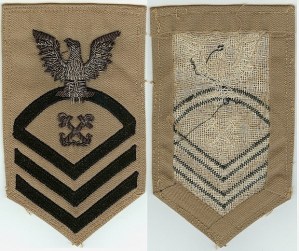
One of countless boatswain’s mate rate badge variations, this post-WWII crow is a bullion on khaki.
If a collector focused solely on the boatswain’s mate rate spanning its entire existence, the collection could potentially be quite large and very costly to build. Unfortunately, there are no checklists to guide collectors. What can confound collectors is the discovery of a rate variant that has never been seen before by seasoned, knowledgeable experts.
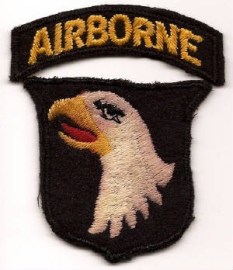
This Screaming Eagles patch is one of countless variants for collectors to pursue (source: Topkick Militaria).
Similar to rate collecting, U.S. Army patches are very diverse and have experienced many iterations over the course of their employment on uniforms. Variations exist within the same era on the same patch design which give collectors reason for pause as they try to collect every option available. Since I don’t really dabble in army patches, my eyes tend to glaze over when other collectors begin to espouse the many facets of the World War II-era Screaming Eagles shoulder insignia. From the different “airborne” tabs to the design of the eagle’s eye and tongue, the 101st Airborne patch could occupy collectors for years as they seek to assemble a complete collection. Cut-edge, marrowed-edge, fully embroidered, felt, greenbacks, white backs, the possibilities are seemingly endless making the concept of having a checklist ideal.
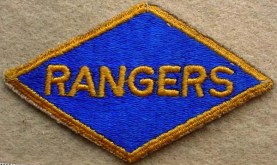
While I can’t vouch as to the authenticity of this being the real thing, it is the design of a World War II Rangers patch (source: SA Militaria).
One aspect I’ve not mentioned and won’t really delve into is the issue of fakes. When a television show or film achieves the level of popularity that Saving Private Ryan (SPR) and Band of Brothers (BoB) have, shady characters create opportunities to separate novices from their hard-earned cash. The Ranger (SPR) and Screaming Eagles patches (BoB) are some of the most heavily-faked embroidery in the militaria market.
In all fairness to those who invest heavily into these areas (with both time and finances), the main reason I shy away from army patches (specifically Rangers and 101st) is that I have no idea how to tell a fake from the real McCoy. I suppose that the pricing of some of the more rare variants (sometimes in excess of $1,000) keep me steering well-clear of collecting army patches all together.
A Different Sort of Navy Cross “Recipient”
Last week, I wrote about how the militaria collecting community embraces new collectors by providing invaluable guidance and answers to questions newbies might have. I also touched on the giving and generous nature these folks have toward genuinely interested, potential newcomers to the pastime.
With my day job, I have the wonderful opportunity to stay off the road a few days each week by telecommuting to work and plugging into my company and team workload electronically, which affords me the opportunity to be around my family during the day. Earlier this week, the doorbell rang about the time of our normal, daily postal delivery. I answered the door to see our letter carrier standing with a stack of mail and a parcel. Unfazed by the delivery contents, I thanked the postal worker as I grabbed the bundle and closed the door.
Walking away from door, I checked the parcel to see that it was addressed to my son. Just a few days before, I was checking the latest postings on one of the militaria forums as I was catching up on some of the amazing new discoveries other collectors were sharing when I saw something that caught my eye. It was a posting that was offering something special to a young, budding collector (under seventeen years of age) provided he or she is the first to respond to the thread.
As it was a school day and my kids are home-schooled, my son was nearby immersed in his math studies. I called him over to read the posting and to look at the pictures of the free item that was offered by this thoughtful collector. My son, who is fourteen, has a keen interest in history, including military history (hard to tell where he gets that from) and took to militaria a little more than a year ago. He read the details of the forum post and I watched as his eyes grew wide, viewing a full set of medals, full and miniature, ribbon and lapel pin of a fairly current Navy Cross in a presentation case, in unissued, new condition. He promptly responded to the offer, indicating that he wanted the medal for his collection.
-
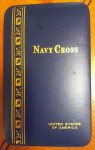
- My son opened the shipping box and pulled the presentation case out of the bubble wrap. It was exciting to see the anticipation on his face build.
-
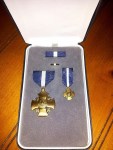
- Opening the case, it was revealed the four pristine pieces to this Navy Cross set. My son is quite thrilled to have this in his collection.
Since my son has embarked on his own militaria collecting venture, he has been the recipient of several similar offers ranging from medals to patches and even a World War II Eisenhower uniform jacket in pristine condition. These fellow collectors, in their efforts to spark the next generation of collectors, are almost obstinate in their refusal to accept so much as a penny to cover shipping costs. These folks do this (quite often, in fact) out of the kindness of their heart and knowing the joy that it brings the youngster on the receiving end.
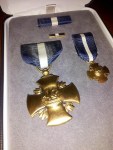
The medals are pristine and clearly, unissued to a recipient.
I walked to the table, returning to my laptop where my son was also seated with his books. In my hand was the package containing the Navy Cross set. I reached out to him with the package with butterflies in my stomach. I was almost as excited to see the medal as he was! Responsibilities come first in our house so I told him that he could open it once his work was completed. It pained me to do that…heck, I wanted to open it!
A few hours later, my son opened his package and was giddy as he removed the medal case from the bubble wrap. He opened the case and carefully removed each piece from its individual wrapping while we discussed the reasons Navy and Marine Corps personnel are awarded this beautifully-designed valor decoration. We discussed how this medal didn’t belong to him (it wasn’t awarded to him) and that he was merely a steward – charged with learning about it and sharing the history with others.
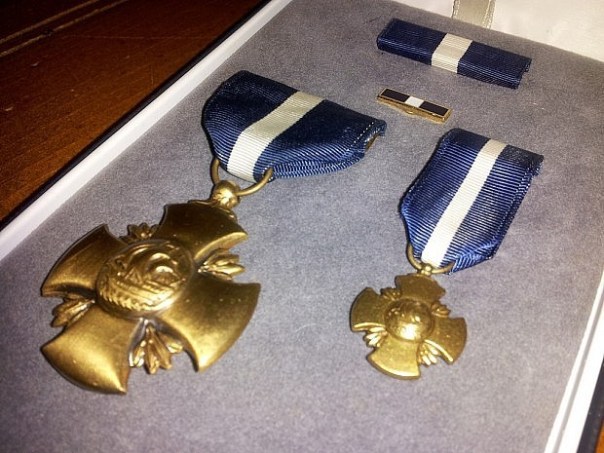
The medal set includes the full-size, mini, the ribbon and the lapel pin.
Sharing – this is something my son, along with many other young militaria collectors, is learning as it is being demonstrated to him by other collectors.
Militaria Issued: Giving and Receiving
Over the span of the last seven years, I’ve worked diligently in learning the ins and outs of collecting militaria and yet have only begun to scratch the surface. Delving into the details, for me, has produced an incredible wealth of knowledge surrounding many aspects of military pieces, such as when or where an item was worn or used. But that hasn’t been the most substantial reward in my passion for military collecting.
Being a student (not to be glib, as I am always learning) of American history has occupied my attention for decades. My wife and children could tell you stories about my side excursions to see some obscure item or location of historic note during our family vacations, in my passion to align book knowledge with the visual reality. Experiencing history helps to bring the stories to life and while facts are solidified in this process, actually seeing an item or location opens my mind to new questions with this acquired perspective. This process of learning is fun for me, but in regards to militaria, it still isn’t the pinnacle of satisfaction in collecting.
My military artifact collecting was sparked when a few boxes of Third Reich items were dropped into my lap nearly twenty years ago as my family dealt with our aging grandparents and the need to relocate them from their home of fifty years to an assisted living care facility. Having moved only once over the course of eighty-five years, my grandfather had accumulated quite a “treasure-trove” of artifacts including his older brother’s World War II trunks that were untouched from the time they arrived from Germany in 1945. I was suddenly thrust into the task of researching the pieces that my uncle had “acquired” during his participation in the elimination of the Nazi menace.
Though I didn’t get into collecting German militaria, my interest was piqued with the idea of owning pieces of history. The thought of possessing a tangible artifact that was connected to history as well as the connection to my family member’s participation in those events, was compelling and dovetailed nicely into the incessant genealogy project I was, and still am, working on.
-
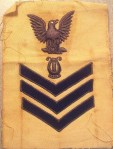
- I was gifted this 1920s navy musician 1/c rating badge – like one my uncle would have worn – from fellow collector when I first began collecting U.S. militaria. This act demonstrated to me that the militaria community was much different from the others I’d participated in.
-
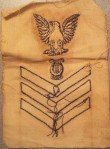
- Showing the reverse side of the rating badge – much can be revealed about these patches by looking at the back.
I have dabbled in collecting in several areas in my lifetime and I have met a lot of nice and passionate people who shared similar interests as me. Those relationships always tended to be more proprietor-patron rather than collaborative and sharing. However, from the moment I started to seek answers to questions regarding personal military artifacts that I had inherited from a few relatives, I began recognizing different traits in the people who collect militaria. Aside from a passion for the objects and the rich history, these collectors were quick with thoughtful responses to my inquiries as they provided detailed descriptions and guided me to research resources in an effort to enable me to be self-reliant. Among all the quirks and odd interests, I noticed an authentic sense of community with militaria collectors.
One trait that really blindsided me as I was increasingly immersed into militaria collecting was the trusting and giving nature of these people. As I participated in the discourse and discussion surrounding these wonderful objects, I began to build relationships with other collectors. Out of the blue, one collector asked me for my address as he had “something” for me. This fellow collector observed and gleaned, from my posts on a militaria forum, what my interests were and subsequently sent me a vintage 1920s rating badge – something that one of my uncles would have worn on his navy uniform. I was humbled by the gesture and that this collector would accept no offer of payment for his trouble. This example was merely a foretaste of what I would experience on a somewhat regular basis and my collection has grown because of the kind hearts of others. The charitable nature of others is infectious which prompted me to do the same with other collectors.
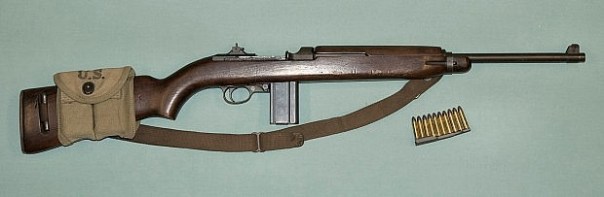
This fine example of the M1 carbine shows a magazine pouch attached to the rifle’s stock.
Awhile ago, I was invited to tag along with two other guys that are as passionate about military history and collecting as me to visit a local dealer of antique books and manuscripts. This dealer, a highly regarded authority in many circles, showed several fantastic pieces from his personal collection that prompted three jaws to repeatedly drop. Toward the end of our visit, the gentleman retrieved a WWII-vintage M1 carbine rifle in immaculate condition that was a distinct departure from the paper artifacts and, knowing that we were all interested in militaria, offered it for sale with a low-ball price tag. Unfortunately for me, financial constraints precluded me from purchasing the vintage weapon. However, one of my companions did “pull the trigger” and came away with the rifle.
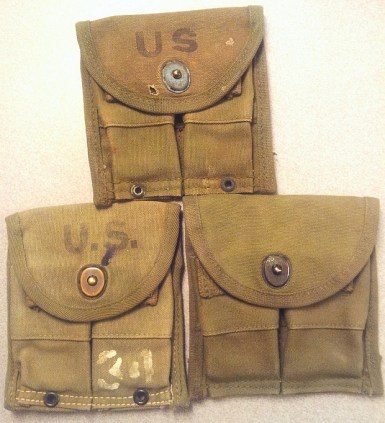
I recently acquired these M1 carbine pouches to give to a friend and fellow collector who recently purchased a late-WWI M1 carbine rifle. The nice, used condition will be great accompanying his rifle.
Not long after the M1 offering, I stumbled across a set of three WWII-vintage M1 carbine magazine pouches that were in good condition and were listed at a very affordable price. Thinking about my friend’s recent purchase, I snagged the pouches to give to the new carbine owner.
-
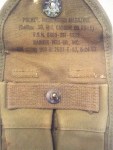
- This mag pouch shows a much later set of markings that appear to have a date stamp of 1957.
-
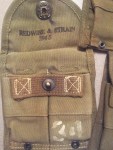
- Looking inside one of the pouch’s magazine flaps reveals a 1945 date stamp.
Over the last few years, I have gifted several pieces from my collection in the hope that it helps a fellow collector fill in the gaps or simply provides enjoyment in receiving a new piece they had not seen before or never knew existed.
Unlocking the Secrets of Your Collection: Research is the Key
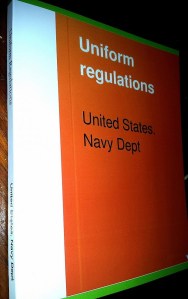
The cover of the 1913 U.S. Navy Uniform Regulations is very high quality in its construction.
Researching early military uniforms to ascertain a date or time period when they were issued or used can pose a challenge for collectors. Navy uniforms can be exceedingly difficult to pinpoint when it comes to dating them for a number of reasons.
Over the last few years, I have stressed that education and research materials only serve to enable collectors to make sound purchasing decisions. Knowing where to turn for information can be a daunting task for someone making their initial foray into this hobby. Simply knowing what research material might exist isn’t in the mindset of those seeking details about a uniform or uniform item.
This copy is complete with all of the details including tables and pertinent data.
When I started a serious approach to research (in this case, verifying a jumper as pre-World War I), I was in the dark as to where to look so I turned to Google to begin my investigation. With the understanding that information on the web is seldom complete or authoritative, the search results seemed to be ambiguous and quite vague, so I narrowed my focus to locating people I could glean information from. As with any relationship, time is necessary to determine whether an “expert” is truly knowledgeable in their professed field of experience, so there was a risk that I might have received some inaccurate data.
Wanting to have go-to resources at my disposal, I began to gather reference material that suited my needs. My collection being predominantly focused on the service of my relatives and ancestors, I knew that I had to get the details (i.e. enlistment dates, commands assigned to, campaigns they participated in, etc.) of their individual service records. Armed with hard facts, I could then pursue the pertinent reference materials such as individual unit histories, training manuals, and uniform regulations.
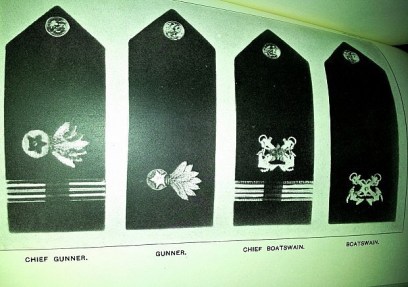
The plates are spectacular! This one shows the warrant officer shoulder boards and insignia.
Some of these materials are plentiful and relatively inexpensive, such as the Navy’s Blue Jackets Manual (issued to new recruits). Others are somewhat rare, making them difficult to find or posing negative impacts onto collecting budgets. One reference book I had been seeking was the 1913 United States Navy Uniform Regulations. I couldn’t locate one through various book stores or eBay. Fortunately for me, Google Books digitized a copy and had the majority of the book’s content available for online use. Unfortunately, the missing portions were the ones I needed for my research. I was amazed to see that I could purchase a hard copy, printed and bound complete book for less than $10.00, shipped to my door! Naturally, I pulled the trigger and less than five days later, I had the needed reference book in my hands.
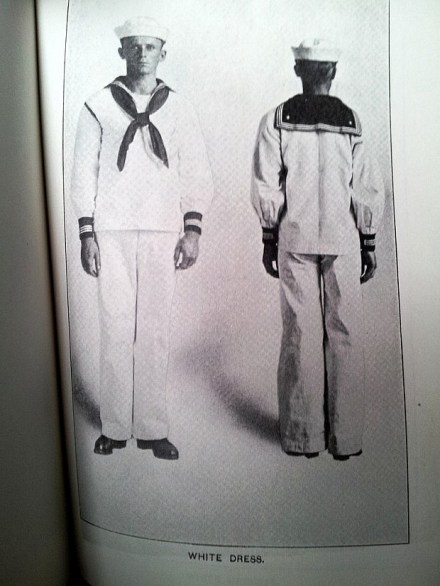
This plate shows the construction of the dress whites – bleached white duck and blue flannel cuffs and collar.
What arrived was a paperback book with a high quality glued-in binding that will withstand repeated viewings or being transported to collector shows much better than an original 100-year-old hardbound book with a weakened spine.
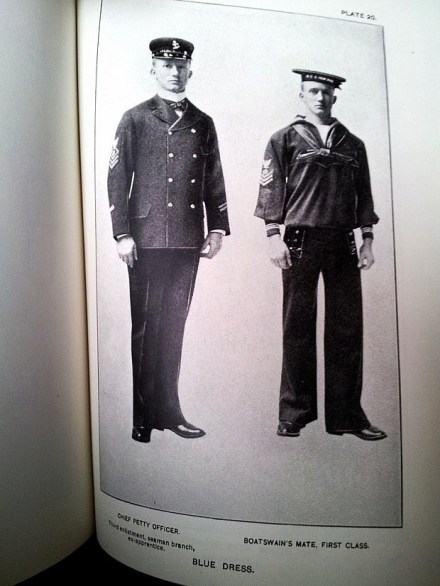
The chief and enlisted dress blues plate shows the proper wear and insignia placement.
Acquiring the 1913 regulations may not appeal to others, but for me this was like locating a missing piece that completes a collection. I’ve confirmed a piece as authentic and I can correctly pursue the remaining outstanding parts to properly complete my uniform display!
How’s About a Nice Cuppa…?
Anyone reading through my growing list of posts will note that militaria is a broad category when it comes to collecting. With my collecting, I tend to be somewhat focused with the items I seek: pieces that fit into the displays or groups that represent the service of my family members or items associated with some specific U.S. Navy ships. In the last several years, I also began to focus on baseball-related militaria and started an entirely separate blog to share my discoveries and findings. Many collectors focus on specific item categories such as medals and ribbons, uniforms, hats, bladed weapons and firearms, or even vehicles.
Some collectors arrive at militaria collecting due to category-crossover. This occurs when a category of collecting specific items includes pieces manufactured over a production run include examples that were used in active military service.
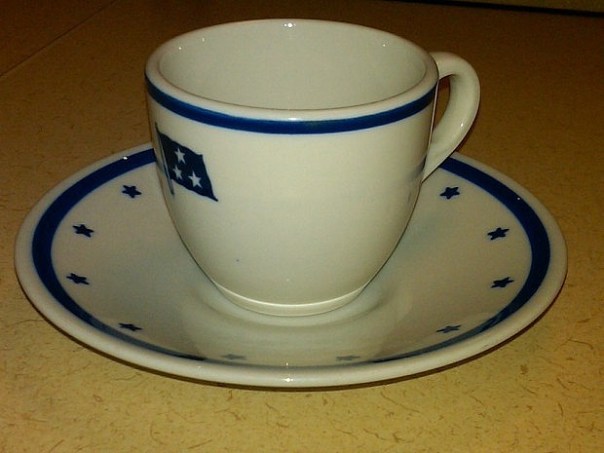
A gift from a friend, this demitasse cup and saucer set as special meaning for me. That it was used for a U.S. Navy vice admiral’s service makes it even more special.
While I have absolutely zero interest in collecting flatware, dinnerware or tea cups, my militaria collection does include a few of these items. My collection of these items consists almost entirely of World War II-era pieces, all of which were inherited or gifted to me.
One of these areas of crossover is tea and coffee cup collecting. For the most part, military pieces are easily researched to locate their date of manufacture like their commercial or civilian counterparts. One piece that I received as a gift was a demitasse cup and saucer set with the flapping flag of a vice admiral (three white stars on a blue field). The matching saucer continued the decorative theme with an encircling ring of blue stars.
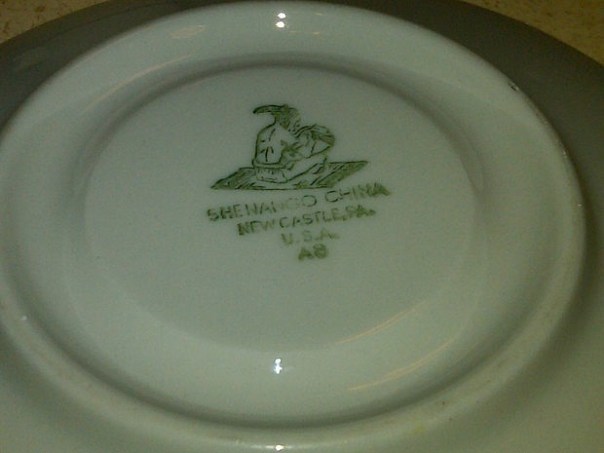
Simply turning over the saucer is very revealing when trying to determine the demitasse’s manufacturer information and details.
To attempt to date the cup and saucer, I simply flipped the items over to determine if there were any makers’ marks or identifying codes. In this case, the manufacturer’s logo, wordmark and a code are all present. A simple Internet search yielded the information that showed the piece to have been manufactured between July and December of 1950 (via RestaurantCollectors.com). These pieces can make nice additions to collections regardless of their focus and most are relatively inexpensive.
My maternal grandfather was a ship’s cook during World War II so I suppose that I could use these pieces to assemble a well-rounded display along with his uniforms, decorations, photographs and ephemera.
Since I received my last piece of Navy china in 2011-12, I haven’t added any additional items from this area. It appears that while I appreciate this area of collecting, it just doesn’t have much appeal to me.
 The Veteran's Collection