Category Archives: Military Era

Shredding History Part III – Dwindling with Time


In this final segment of my three-part series (see parts I and II), I am focusing on the availability of military uniforms and how the numbers diminish over time.

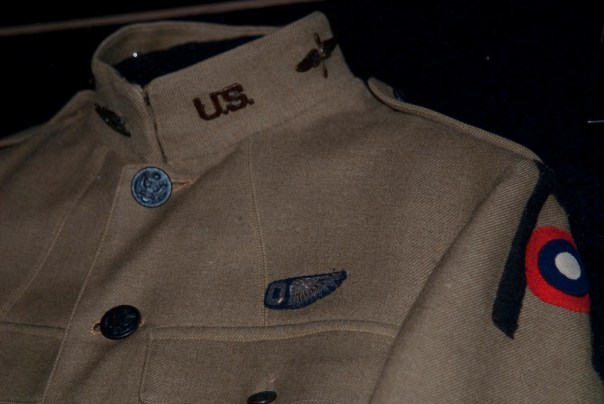
The WWI uniform of LT Marc A. Lagen, 1st Army Air Service, Balloon Pilot on display at the Museum of Flight in Seattle, WA.

The WWI uniform of LT Marc A. Lagen, 1st Army Air Service, Balloon Pilot on display at the Museum of Flight in Seattle, WA.

Countless millions of Americans have worn the uniform of our armed services dating back to the War for Independence and forward to the current conflict in Afghanistan.  It is difficult to determine how many people have worn the uniform in that span of time. However, focusing solely on the times of war when the ranks swelled to build effective fighting forces, we can approximate that nearly 36.3 million men and women (and children) served.

These figures are approximations (gleaned from several sources):

  • Revolutionary War: 95,000 (Continental, militia and naval service combined)
  • War of 1812: 500,000
  • Mexican War: 100,000
  • Civil War: 2.3 million (combined U.S. and Confederate)
  • Spanish American War: 300,000
  • World War I: 4 million
  • World War II: 16 million
  • Korean War: 1.8 million
  • Viet Nam: 8 million (over 2.8 million served in-country or offshore)
  • Desert Storm: 800,000
  • Operation Enduring Freedom/Operation Iraqi Freedom: 2.4 million
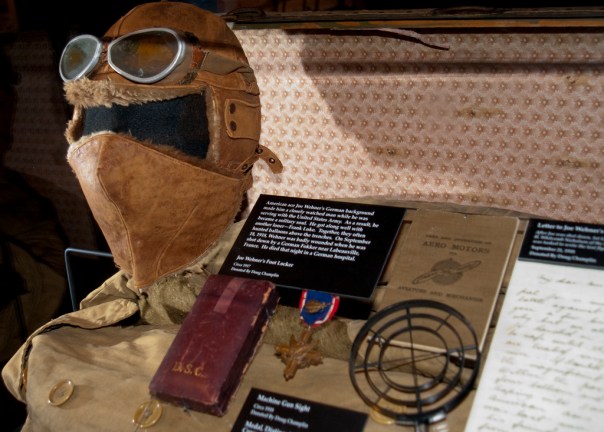
WWI Ace Joe Wehner's Distinguished Service Cross medal, helmet, Goggles and face mask situated at the Museum of Flight in Seattle.

WWI Ace Joe Wehner’s Distinguished Service Cross medal, helmet, Goggles and face mask situated at the Museum of Flight in Seattle.

Considering these numbers, one could easily see that the potential exists for a considerable pool of garments to draw from in order to accommodate museums, collectors and companies like Bands for Arms. Analyzing these figures, we can deduce that WWII uniforms are plentiful and hardly something that could be considered rare. From WWII forward with 29 million in uniform (not counting the all-volunteer forces between the conflicts) there should be an enormous stockpile…but is this truly the case?

I doubt that anyone has conducted any studies as to how many veterans stowed their uniforms away upon completion of their service versus how many tossed them into the trash. Over the years, I have polled (unscientifically, mind you) veterans and determined that the numbers are relatively small, perhaps one in ten who preserved their uniforms. We can’t just take that 10% figure and deduce that 1.6 million WWII uniforms exist today, especially when nearly seven decades have elapsed.

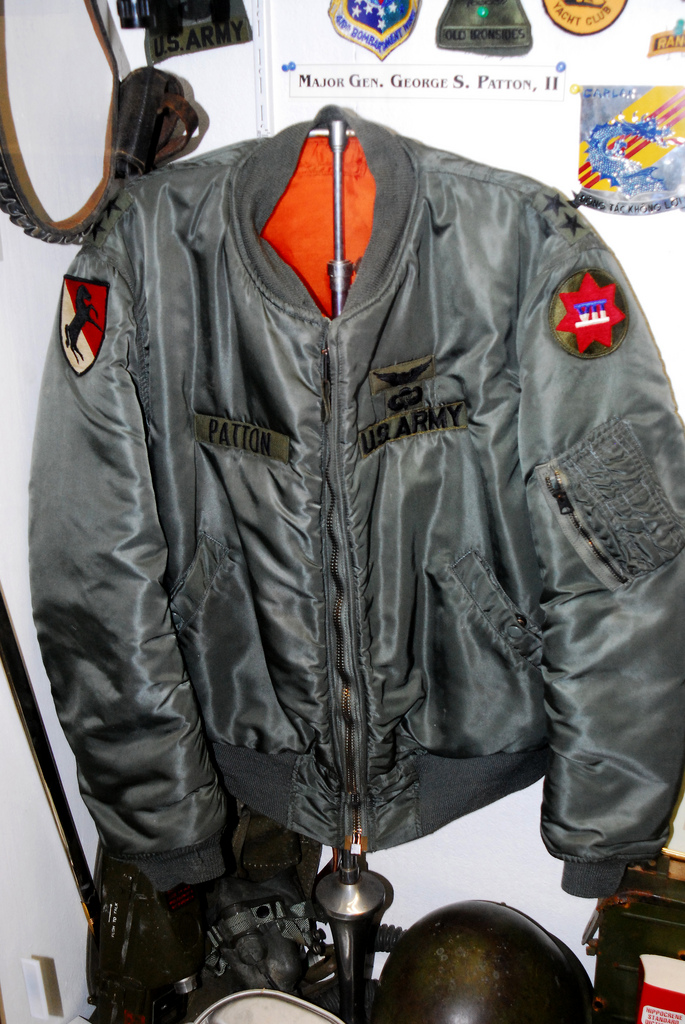
Major General George S. Patton II's Jacket.

Major General George S. Patton II’s Jacket.

In the militaria collector community, we are regularly hearing stories of World War II uniforms making their way into trash cans and dumpsters as these veterans pass and their families have no connection or understanding of their family members’ service. Some of the vintage uniforms are so far deteriorated (moth-eaten, water-damaged, etc.) that folks simply discard them, failing to preserve any of the patches buttons, decorations or other historic features that may be salvageable.  In the post WWII-era, children loved to “play army” and would dress up in dad’s uniform or don some of the surviving field gear, not considering the historical significance or need for preservation. No one truly considered any archival aspects of these items as they were through with war when they returned and sought to get on with their lives.

In the time-frame prior to World War II, uniform availability is almost non-existent.  Trying to locate an authentic Civil War uniform from the Union Army, while not impossible, is a considerable challenge. To locate a Confederate piece is even more challenging. I know of a collector who knew of a fellow collector that was in possession of a Civil War-era Navy uniform from an enlisted sailor. The uniform was what is considered a “liberty” uniform – one that is worn ashore as it isn’t issue or authorized for use aboard ship. The piece is genuine and named to sailor and it is very rare which made for a rather steep purchase price when its owner decided to sell.

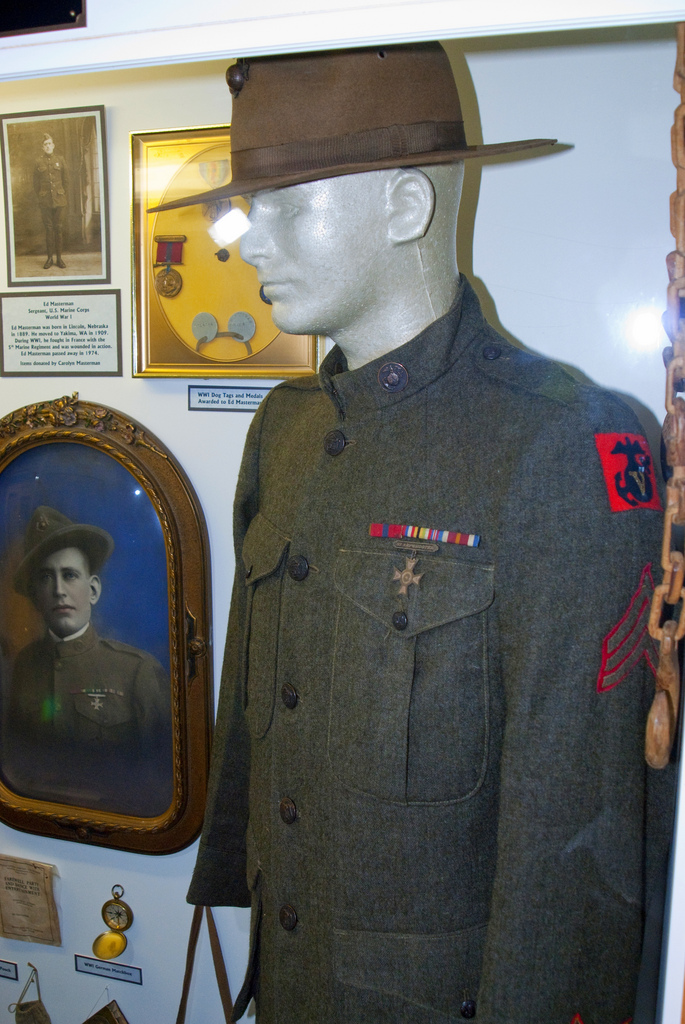
The uniform of WWI U.S.M.C Sergeant who served with the 5th Marine Brigade.

The uniform of WWI U.S.M.C Sergeant who served with the 5th Marine Brigade.

With each passing year, more uniform items are forever lost. Collectors come and go as do museums and with them also go these precious artifacts. Nothing lasts forever.

Collectors and museum curators realize that the pool of WWII artifacts is drying up and as a result, work diligently to preserve what they can. One can imagine the cringing that occurred when the collectors learned of the destruction of the vintage uniforms by Bands for Arms. Similarly, it is difficult to observe the destruction of modern-day uniforms for the same purpose, especially considering that roughly 10% are kept, regardless of the time-frame.

I will maintain my own uniforms along with those of my family members (in my possession) for as long as I care about such things. But, who is to say that my children will continue my efforts or simply donate or dispose of them when I am gone?

Is preserving militaria worth the effort or are these items merely pieces of textiles and materials? This is a quandary militaria collectors face.

A Legacy: Vincennes Wardroom Silver


More than three months into The War, the United States was reeling from suffering substantial and demoralizing losses at Pearl Harbor and again in the Sunda Strait (with the loss of the USS Houston CA-30). The U.S. was in dire need of stopping the bleeding and gaining a moral victory in order to build momentum for what was to become a nearly half-decade long war.

6054156282_e80b5d3ca3_z

These cased, broken champagne bottles were used to christen the cruisers named for the City of Vincennes, IN. The top bottle helped to name the CA-44 and the bottom, CL-64. Both are preserved at the city’s council chambers archive.

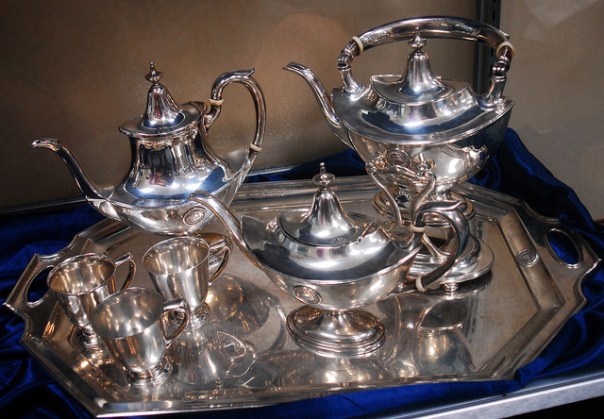
When the keel of the (then, future) USS Vincennes (CA-44) was laid, she was the pride of the small, Southwestern Indiana town of the same name. The citizens embraced her and her future crew, adopting the men who would serve aboard her as their own sons. When she was christened (launched), the daughter (Miss Harriet Virginia Kimmell) of the city’s mayor broke the ceremonial bottle of champagne on her bow, officially naming the heavy cruiser. More than two years later when the ship was commissioned and placed into service (February 24, 1937), the citizens raised funds to purchase and present a gift, a silver tea and coffee service, to the officers of the ship.

With the outbreak of war and the peacetime navy morphing to address the combat needs, USS Vincennes transferred from her home fleet duties within the Atlantic Ocean to augment the Pacific fleet following the losses suffered in the opening days and weeks of the war. As part of readying the ship for service against the Japanese, the Vincennes paid a visit to the Mare Island Naval Shipyard in Vallejo, in San Francisco Bay for additional combat upgrades. In conjunction with the changes being made to the ship, the compliment of officers and men was being increased and with space being a premium and the probability of combat engagement with the enemy being almost certain, the silver service and other items were removed from the ship and placed into storage for the duration of the war.

6053604567_f6bc0af683_z

The USS Vincennes’ sterling silver tea and coffee service is on display in the City of Vincennes, Indiana in the council chambers archive.

Soon afterward, the Vincennes would take part in some of the most pivotal actions in an effort to stem the Japanese Eastward expansion beginning with the Doolittle Raid, (aiding in the aftermath of) the battle of Coral Sea, the Battle of Midway and the US Marines’ first offensive, Guadalcanal. On the evening of the 2nd night of the landings, the Vincennes would sustain hundreds of Japanese naval gunfire hits and being pierced by the enemy’s Long Lance torpedoes, leaving a blazing, sinking inferno.

uss_vincennes_28ca-4429_bombards_guadalcanal

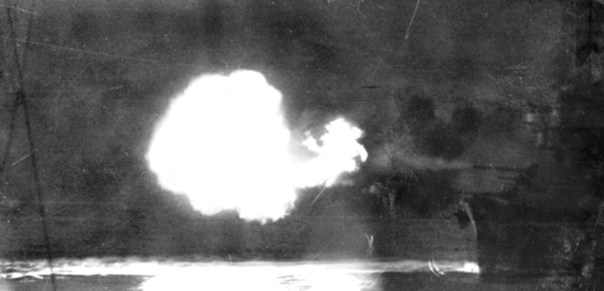
The 8″ main battery of the heavy cruiser, USS Vincennes (CA-44) commence firing at enemy positions on Guadalcanal; early morning, August 7, 1942.

Five decades later, the surviving veterans of the lost cruiser would be instrumental in ensuring that the name of their beloved lost ship would be carried to sea aboard a modern cruiser of the Ticonderoga class. At her commissioning in 1985, the city of Vincennes would once again gift the preserved silver service to their newest ship, the USS Vincennes (CG-49) to be used by the officers and visiting dignitaries and guests throughout her twenty-year life.

Upon her decommissioning in 2005, the silver service was returned to the city where it is now displayed and cared for. Perhaps one day, another ship will bear the name Vincennes and the set will serve the officers of a new generation of the adopted sons and daughters of the southwest Indiana city.

Naval Coverings of WWII – Navy Hats


My military collecting focuses almost entirely on documenting my family’s service with both a narrative and visual materials. One of the products of my research will ultimately be a hardbound, four-color book complete with original photographs of these veterans and displays of their uniforms and artifacts. You’ll have to take my word that this is a lengthy undertaking, considering that most of my subjects are long-deceased, requiring interaction with the National Archives and a lot of lag time waiting for the requested service records and materials.

As I began assembling a representative group portraying my uncle’s service in the United States Navy, I soon realized that I would have to collect several uniforms as he went from an Apprentice Seaman to a Chief Warrant Officer during his thirty years of service. For this article, I am going to cover one aspect of the assembled group : headwear.

My uncle enlisted in 1932 and remained on active duty throughout World War II. By 1941, he had advanced to first class petty officer radioman. His specialty was in intelligence and he had been with Joe Rochefort, having attended the Navy’s highly secretive and fledgling cryptologic school in the 1930s. He was meritoriously promoted to chief petty officer (CPO) for his efforts supporting the commander of Task Force 16 during the Battle of Midway. In 1944, he was promoted again to Radio Electrician, Warrant Officer (grade W-1).

Possessing that information, I knew that I had to collect some chief petty officer uniforms as well as some difficult to find warrant officer items. To complete those sets, headgear could pose a significant challenge. I first had to determine what a W-1 (the Navy discontinued this rank at the war’s end) would wear as I had personally never seen the uniform. I referred to some reference material that provided some basic information, but not the specifics regarding all of the hat components for this grade. I could select either (or both) a combination or garrison cap.

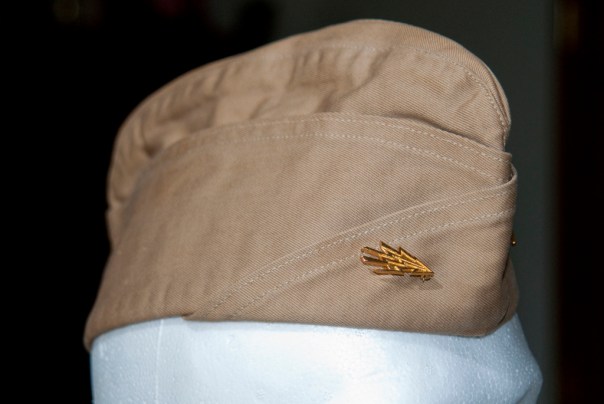
With a khaki jacket in my possession and the appropriate epaulettes (shoulder boards) that are affixed to the jacket’s shoulders, I knew that I wanted to have at the very minimum, a garrison cover. Current Chief Warrant Officers’ garrison cover devices include the naval officer’s crest on one side and the rank bar on the opposing side. The rank bar devices did not exist yet during the war (instituted in the 1950s) so I was at a loss for what they wore. I contacted some navy uniform experts who informed me that the W-1 would wear only their specialty devices (in this case, the radioman insignia). During WWII, these devices are mirrored, meaning that they both “point” forward yet look the same from either side. Current devices are not mirrored – Chief Radio Electricians wear two of the same device – one is upside down.

I located a vintage set of the devices and pinned them to the WWII-vintage Navy khaki garrison cap that I had previously obtained. The hat was now complete.

6780958138_dce152675c_b

WWII-Era U.S. Navy Radio Electrician Warrant Officer’s Garrison Cap.

I turned my attention to the combination cover (some erroneously call the Navy caps “visor caps”) which is a hat with a visor that may be simply altered to match the uniform by replacing the cover with the appropriate color/material cover. Chiefs and officers could feasibly own a single hat frame (the sweatband/frame/visor) and simply change from white to blue or khaki (also grey or green) to align with the uniform of the day. I wanted to create a combination cap to go with this uniform as it looks classy.

I located a standard officer’s dress blue cover with the wide gold chin strap and the line officer’s crest. I already had a nice example of this cap so I decided that this would be a good base to create the warrant hat. Any alterations I made could easily be reversed to return it to its original state. I also kept the original owner’s name placard in the holder inside the hat. I found an original W-1 hat band and a 24k large hat insignia as well as the unique ½-inch gold chin strap (all vintage components). I disassembled the hat and replaced the appropriate parts with the newly acquired components.

6927142749_75b648227c_b

WWII U.S. Navy Warrant Officer’s (W-1) Combination Cover

One last cover I focused on was the CPO hat. Examining numerous period-photographs, I locked onto the hat that I wanted to acquire or assemble. Through the assistance of a friend, I was directed to an early WWII CPO combination cap with a grey cover that was well-enjoyed by a family of moths. The sterling silver hat device was outstanding as was the remainder of the hat. I purchased the hat and obtained a set of covers (blue, white and khaki) to accompany the three CPO uniforms (all chief radioman). Now I could display each chief uniform with using a single combination cover.

6780979352_53c9301e92_b

World War II-Era U.S. Navy Chief Petty Officer Combination Cover.

The remaining uniform left to tackle (for this relative, at least)? A dress blue or white jumper with neckerchief and white hat.

Where to Look – Seeking Militaria in all the Right Places


Metal Insignia

Looking for a metal insignia device to fill a missing gap in your shadow box or a hole in your collection? This table had a decent array of insignia to choose from.

Read the rest of this entry

A Whale of a Tooth: 19th Century Naval Scrimshaw


Where does the time go? I know that my writing schedule has been severely impacted by home and work priorities (this column is nowhere near being a day job for me) and other facets of life routinely draw my attention away from my love of military history. However, my interest never truly wanes or strays very far from this passion and yet when I checked to see that my last posting was more than three months ago, I realized that I need to get back on the horse and get the creative juices stirred.

I can’t blame writer’s block or submit any grandiose excuses for not writing. I merely de-prioritized my militaria collecting during the 90-day time span. Though my acquisition pace has slowed during the last half-year, I only suggest that I’ve become hyper selective about what I add to the expanding pile. With the smattering of pieces coming through the door, I found myself asking the question, “what should I write about?”

Not wanting to overload the Veteran’s Collection with an overwhelming theme, I have been putting forth an effort to balance the various subjects. My best efforts aside, I find that my posts are skewed toward the Navy (where I served) with some of those topics focusing on a specific ship. Regardless, after a few moments of careful consideration, I decided that instead of talking about a new (to my collection) piece, I would spend some time with something that eluded me a few years ago (the subject just happens to be in a few of my wheelhouses). Missing out on this piece has haunted me since the online auction bidding surpassed my meager budget.

Without going into detail as to what fuels my interests (read my About page for those details), I’ll jump right into today’s topic.

I can bet that half of those who read this column (all four of you) are familiar with the widely popular PBS television production, Antiques Roadshow and have viewed episodes where 19th century maritime folk art objects have been viewed and appraised. One of the most popular types of that particular folk art is scrimshawed marine mammal bones (or teeth/tusks). Needless to say that along with popularity (and scarcity) of these pieces comes an array of reproductions and outright fakes onto the market. Applying the caution of a mariner skirting the shoal waters, one needs to be very knowledgeable before navigating into these waters.
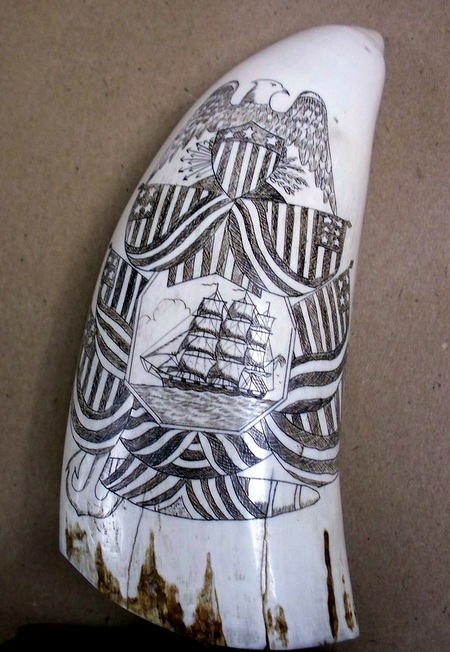
USS Vincennes Scrimshaw

The ship design in the center is clearly that of an 1820s United States Navy sloop of war (source: eBay image).

When this item was listed in an online auction, I was shocked that it lasted without being taken down by the host as genuine scrimshaw violates their established policies that forbid the sale of items made from protected animals. In reading the seller’s description, I noted that it was being sold as a piece that was manufactured from man-made materials rather than from a whale bone or tooth. However, in examining the photos of the piece, it was clearly NOT sourced from synthetics, though I couldn’t be certain without a hands-on inspection. Hoping to get clarification from the seller, I resorted to asking specific questions only to be rebuffed with a message that reiterated the details in the listing’s description.
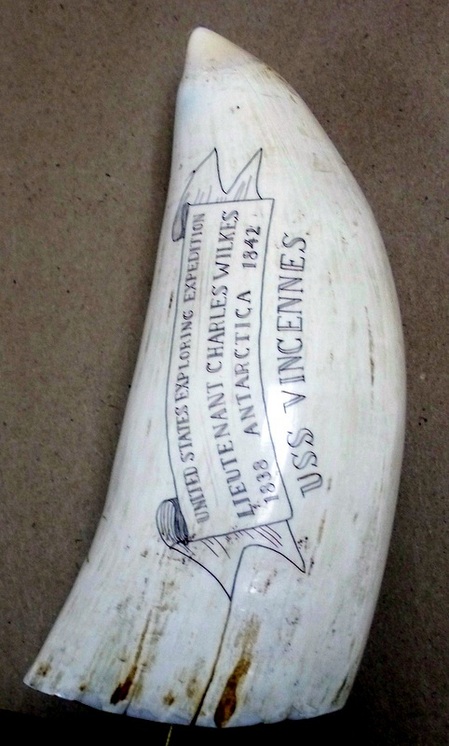
USS Vincennes Scrimshaw

The inscription reads, “United States Exploring Expedition, Lieutenant Charles Wilkes, 1838 | Antarctica | 1842. USS Vincennes” (source: eBay image).

The subject of the scrimshaw artwork is what drew me to the piece from the beginning. The illustrations on either side of the “whale tooth” were made to commemorate the United States very first foray into global exploration. The U.S. Exploring Expedition was led by the US Navy’s polarizing figure (of that era), LT Charles Wilkes from 1838-1842 and consisted of men from several biological and geological scientific disciplines along with illustrators, geographical surveyors and naval officers and men aboard six US Navy vessels – the flagship being the sloop of war, USS Vincennes.

On one side of the tooth is a rather elaborate design of the three-masted sloop (a port-side view) that is centered among an array of flags with an eagle perched above an American-themed shield holding arrows and an olive branch which is very reminiscent of 19th century designs. On the reverse is an unrolled scroll that appears to be a banner with the US Ex. Ex, Wilkes’ name, the dates and “Antarctica” emblazoned across. Immediately beneath the scroll is the name of the expedition’s flagship, “USS Vincennes.”

I grappled with deciding to bid on the object. There was no definitive manner in which to determine the authenticity or if it was, in fact, a mocked up piece of plastic. I was left to weigh all of the evidence and draw conclusions (aside from the fact that the seller stated that it wasn’t the real thing which could easily be that person’s subverting of the online auction site’s rules).

USS Brooklyn Scrimshaw

An example of an 19th Century whale’s tooth scrimshaw depicting the USS Brooklyn (source: dukeriley.info)

Scrimshawed Whale's tooth.

Showing a vintage whale’s tooth scrimshaw mounted to a cork base. Note the similar themes (to the USS Vincennes tooth) and the odd number of stripes on the shield (source: Wikimedia).

The cons

  • The tooth is very bright for an early 19th century piece. Most scrimshawed items tend to yellow with time. After 170 years, the bone/tooth material should be much darker.
  • Taking a look at the artwork design, what gave me reason to pause is that the artist departed from the widely used American themes within his design. The eagle’s shield is lacking the correct number of stars and stripes (shown are three and 11, respectively).
  • The wooden base (which appears to be of dark walnut) that the tooth is mounted to seems to be fairly modern; almost new, conditionally.
Early 19th century flag

This early 19th century flag depicts the three-starred shield and 9 stripes yet the eagle faces his right shoulder (source: NAVA).

The pros

  • As someone who, for the last two decades, has been searching for anything pertaining to any of the US Navy warships that bore the same name, this is the only scrimshaw that I have encountered that had any reference to the ship or the expedition. Uniqueness is definitely a plus in that if someone was going to bother manufacturing fakes of this nature, there would, most-likely be multiple examples appearing on the market.
  • The cons that I listed above can be explained. The artist may not be as detail-oriented when it comes to the thirteen stars and stripes. However, the direction that the eagle’s head faces is accurate for the time (facing its left shoulder). The illustration of the ship is very accurate to that of the 1820s U.S. sloop of war (designed by Samuel Humphreys) which leads me to believe that the artwork is correct to the period.
  • The base could have been merely a replacement or an addition by a subsequent owner.
  • The piece may have been stored in a cool, dark location for most of its existence, which could possibly account for the lack of typical aging effects.
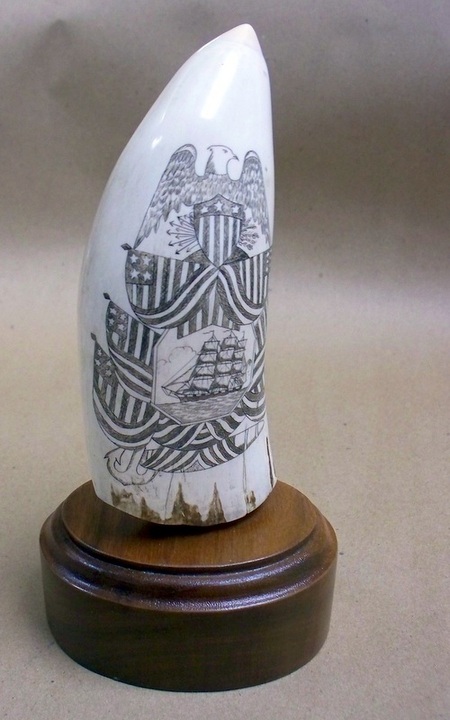
USS Vincennes Scrimshaw

The walnut base appears to be a fairly recent addition as it shows no signs of aging (source: eBay image).

After several days of careful consideration, I decided that it was worth a nominal investment risk and configured my bid snipe program accordingly. Within a few hours of the auction close, the bidding (from multiple parties) surpassed my maximum and I watched this beautiful piece of scrimshaw slip into someone else’s hands for several hundred dollars above my limit. It seems that other collectors had arrived at the same conclusion that I had and the benefit of owning such a nice piece far exceeded the risk that it might not be authentic.

For me, this whale tooth was not to be.

Design a site like this with WordPress.com
Get started