Category Archives: Medals
Decorating Sacrifice: Honoring Our Fallen

Most Americans have no connection Memorial Day, their heritage or to the legacy left behind by those who gave their lives in service to this country.
This weekend, we Americans are being inundated with myriad auditory treats, such as the sound of burgers and hot dogs sizzling on the barbecue grill, the roar of the ski boats tearing across the lake, the rapid-clicking of fishing reels spinning, or the din of children playing in the backyard. All of this points to the commencement of summer and the excitement-filled season of outdoor activities, vacations and fun. The bonus is that we get to extend this weekend by a day and play a little harder as that’s what this weekend is all about!
With the opening volleys of artillery (the Confederates firing on Fort Sumter) in the early morning hours of Friday, April 12, 1861, a war of the bloodiest nature commenced within the confines of what was known as the United States of America, but which was anything but united. The division of the states had been years in the making as the founding fathers could hardly agree on the slavery issue when trying to establish a single Constitution that would bind the individual states together as one unified nation. The division led to an all-out conflict—a war that would pit brother against brother and father against son—that wouldn’t cease until almost exactly four years later (at Appomattox on April 10, 1865) and three-quarters of a million Americans were dead (the number was recently revised, up from 618,000, by demographic historians).
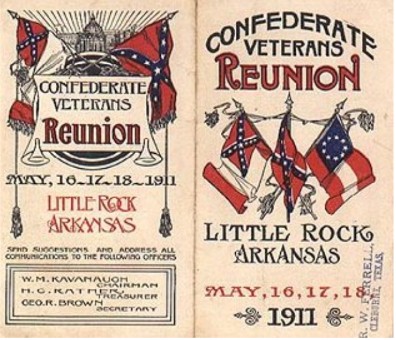
A 1911 reunion pamphlet for the United Confederate Veterans organization.
In the days, weeks, months and years that followed, the sting of the Civil War would linger as families suffered the loss of generations of men. The Southern States where battles took place had cities that were obliterated. The agricultural Industry was devastated. The business operation surrounding the king crop of the south, cotton, heavily dependent upon slave labor, had to be completely revamped. Many plantations never returned to operation. The Northern industries that had grown extremely profitable and dependent upon the war, churning out uniforms, accouterments, artillery pieces and ammunition, no longer had a customer.
Although the South was undergoing reconstruction and the nation was moving to put the war in the past, and some Americans who lost everything were seeking to start afresh in the West. Like the servicemen and women of the current conflicts, Union and Confederate veterans alike were dealing with the same lingering effects of the combat trauma they had endured. While life for them was moving on, they were drawn to their comrades-in-arms seeking the friendship they shared while in uniform. In 1866, Union veterans began reuniting, forming a long-standing veterans organization (which would last until 1956 when the last veteran died) that would be known as the Grand Army of the Republic (GAR). Similarly, Confederate troops would reunite, but wouldn’t formally organize until 1889 with the United Confederate Veterans.
While the country was still engaged in the war, the spouses and mothers of troops, along with their local communities, honored those killed in the war—the scant few that were returned home for burial—by decorating their graves. Freed slaves (known as Freedmen) from Charleston, South Carolina, knew of a tragedy that took place at a prisoner of war (POW) camp where there were more than 250 Union soldiers who had died in captivity and had been buried in unmarked graves. The Freedmen, knowing about the graves, organized and gathered at the burial site to beautify the grounds in recognition of the sacrifices made by the soldiers on their behalf. On May 1, 1865, nearly 10,000 Freedmen, Union veterans, school children and missionaries and black ministers, gathered to honor the dead at the site on what would come to be recognized as the first Memorial Day.
“This was the first Memorial Day. African-Americans invented Memorial Day in Charleston, South Carolina. What you have there is black Americans recently freed from slavery announcing to the world with their flowers, their feet, and their songs what the War had been about. What they basically were creating was the Independence Day of a Second American Revolution.” – historian David W. Blight
-
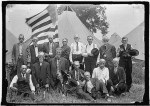
- Gettysburg Reunion: GAR members and veterans of The Battle of Gettysburg encamped at the gathering (source: Smithsonian Institute).
-

- Veterans of General George Pickett gather at Gettysburg’s Bloody Angle during the 50th anniversary of the battle (source: Smithsonian Institute).
-
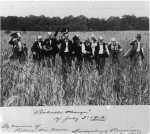
- To mark the 50th anniversary of the Civil War this group of Confederate veterans reenacted “Pickett’s Charge” at Gettysburg during the 1913 reunion (source: Smithsonian Institute).
The largest gathering of Civil War veterans took place in 1913 at the Gettysburg battlefield, marking the 50th anniversary of this monumental battle. Soldiers from all of the participating units converged on the various sites to recount their actions, conduct reenactments, and to simply reconnect with their comrades. Heavily documented by photographers and newsmen alike, the gathering gave twentieth century Americans a glimpse into the past and the personal aspects of the battles and the lifelong impact they had on these men. By the 1930s, the aged veterans numbers had dwindled considerably yet they still continued to reunite. In one of these last gatherings, Confederate veterans recreated their battle cry, the Rebel Yell, for in this short film (digitized by the Smithsonian Institute).
-
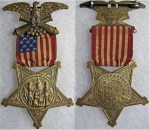
- Obverse and reverse of a GAR medal from 1886 (source: OMSA database).
-

- This vintage cabinet photo shows a Civil War veteran proudly displaying his GAR medal.
The Militaria Collecting Connection
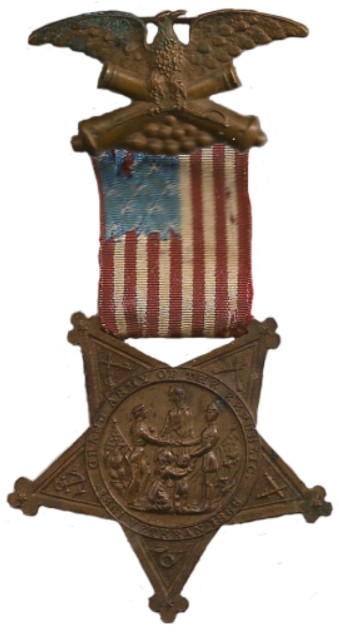
GAR Membership medals are very collectible and are reasonably priced.
While collecting Civil War militaria can be quite an expensive venture, items related to these veterans organizations and reunions are a great alternative. One item that is particularly interesting, the GAR membership medal, was authorized for veterans to wear on military uniforms by Congressional action. The medals or badges were used to indicate membership within the organization or to commemorate one of its annual reunions or gatherings.
Over the years following the 1913 reunion, veterans and their families increasingly honored those killed during the war around the same time each year. As early as 1882, the day to honor the Civil War dead (traditionally, May 30) was also known as Memorial Day. After gaining popularity in the years following World War II, Memorial Day became official as congress passed a law in 1967, recognizing Memorial Day as a federal holiday. The following year, on June 28, the holiday was moved to the last Monday of May, creating a three-day weekend.
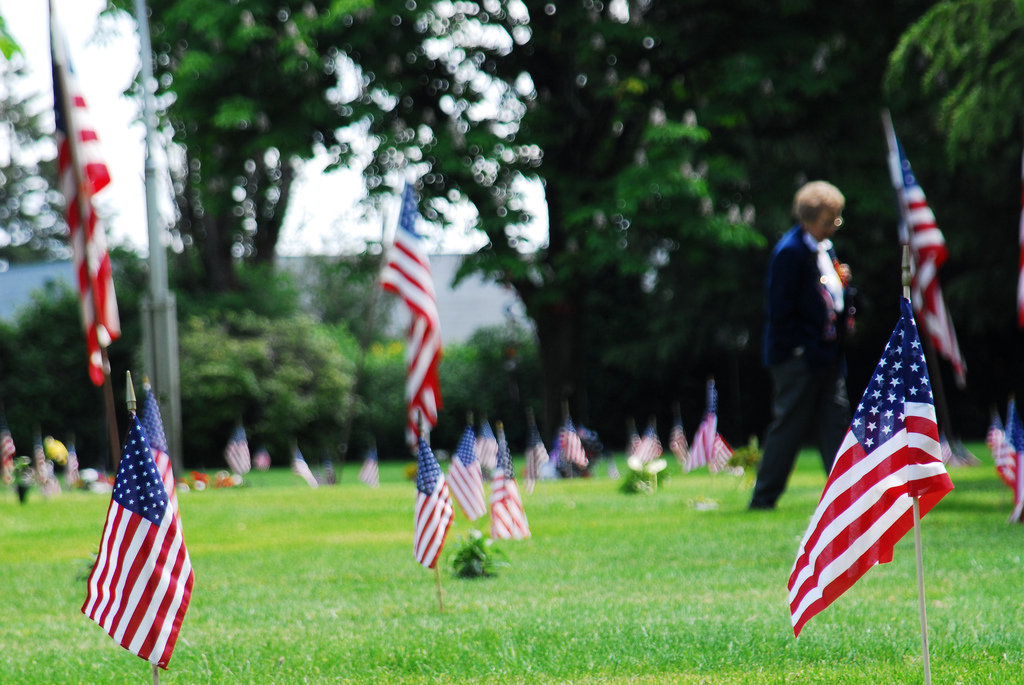
A woman walks the cemetery grounds on Memorial Day.
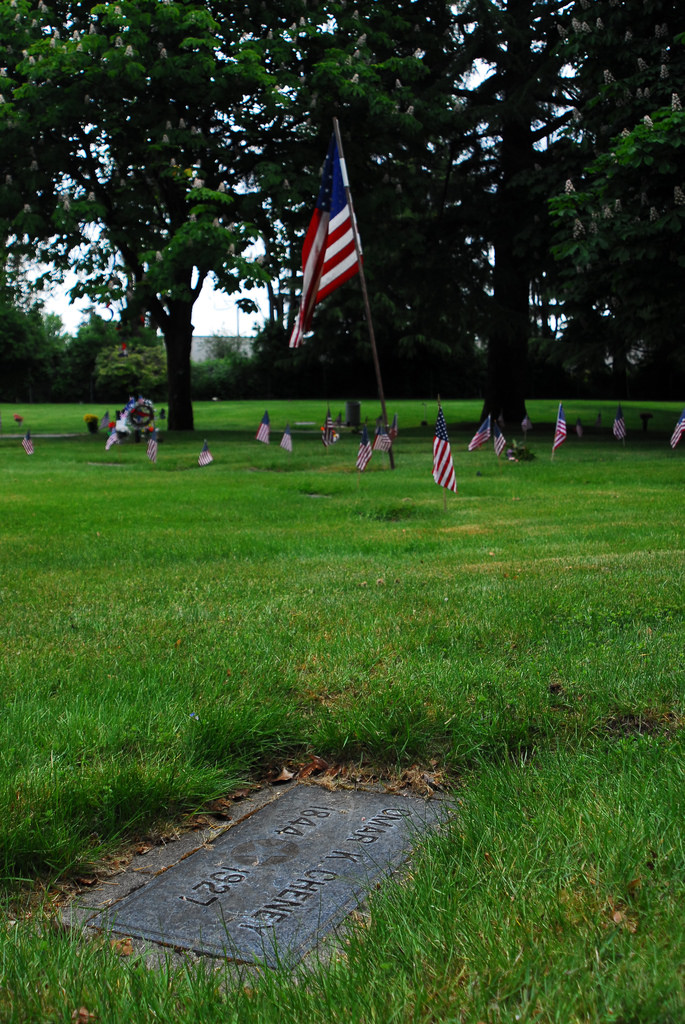
The grave of Union Veteran and GAR member, Omar Cheney.
This Memorial Day, rather than committing the day to squeezing in one last waterskiing pass on the lake or grilling up a slab of ribs, head out to a cemetery (preferably a National Cemetery if you are in close enough proximity) and decorate a veteran’s grave with a flag and spend time in reflection of the price paid by all service members who laid down their lives for this nation. Note the stark contrast to the violence experienced on the field of battle as you take in the stillness and quiet peace of the surroundings, observing the gentleness of the billowing flags.
The Merits of Heart Collecting
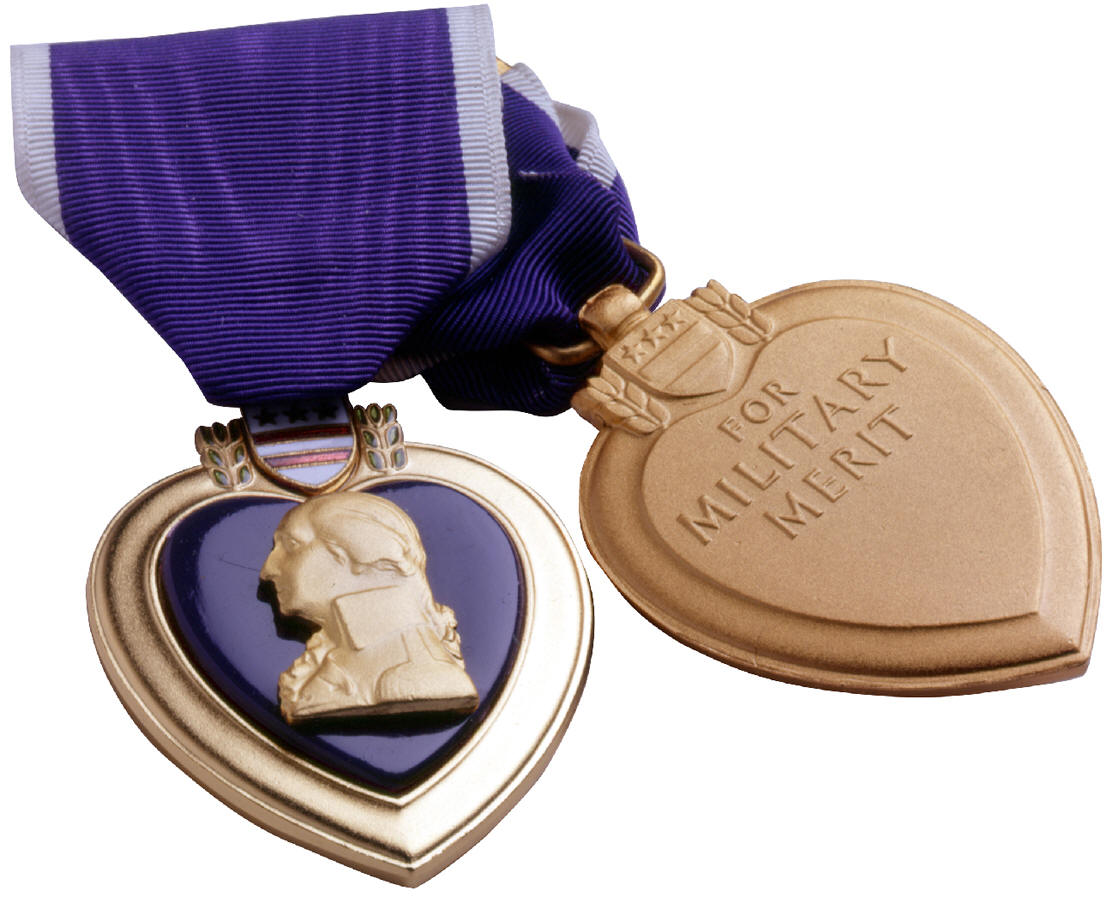
The Purple Heart Medal has been awarded since 1932 to veterans who were wounded or killed in action in WWI through the current conflicts. This image shows both the front and the reverse of the PHM which includes the inscription-relief, “For Military Merit” and the space beneath where it is traditionally engraved with the recipient’s name and rank.
One of the most sacred military medals created for service personnel of the United States military is one that can only be “earned” by receiving a wound inflicted by an enemy in combat. Since February 22, 1932 (the 200th anniversary of General George Washington’s birth), the Purple Heart Medal (PHM) has been awarded to members of the U.S. armed forces who sustained combat-related wounds (or were killed in action) on the field of battle, from World War I (retroactively by the veteran’s request) through the present conflicts in Iraq and Afghanistan.
Beautifully sculpted in a gold tear-drop shape with Washington’s bust profile superimposed in a heart-shaped field of purple, the Purple Heart is a highly sought after item for militaria collectors. The medal was a revival of a design of an award that was presented by General Washington in 1782 that was presented to three soldiers during the Revolutionary War as a Badge of Military Merit.
Collecting the medal can be offensive to laymen who can be repulsed by the idea of a collector who treasures something that is specific to the suffering or death of a service member. For me, I have somewhat mixed feelings about the concept.
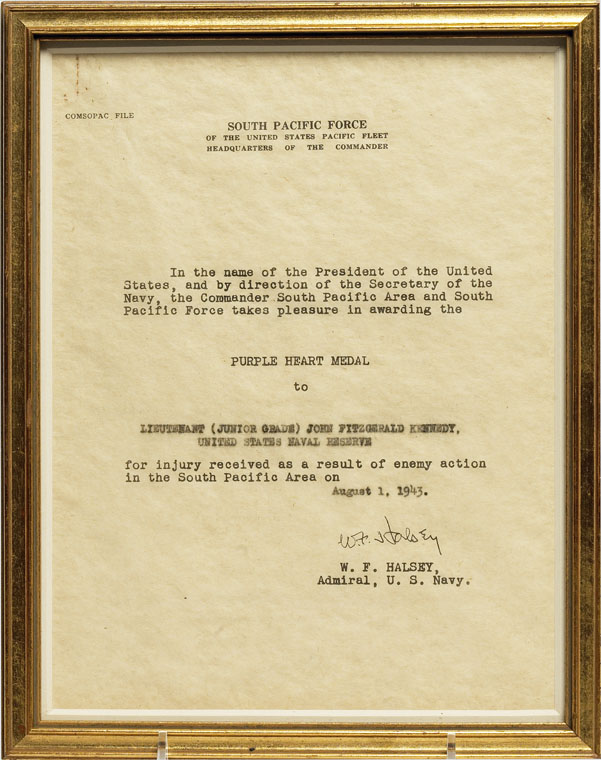
The citation that accompanied LTJG John F. Kennedy’s Purple Heart Medal (source: JFK Library).
Prior to departing for my first combat deployment, my father, a Viet Nam veteran, advised me to avoid seeking a Purple Heart as if he was directing one of his young charges back in 1969. Of course, I survived my deployment physically unscathed returning home without the bust of George on my chest.
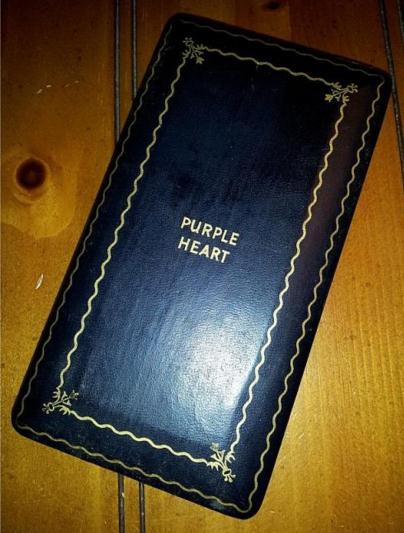
Affectionately known as a “coffin case,” this presentation box is inscribed with the name of the medal in gold leaf.
When I encounter veterans who have been awarded the medal, I have a great deal of respect for them. Not because they were wounded, but that they offered themselves up voluntarily, knowing what the personal cost could be. For those who survive their wounds, the road to recovery can last months, years or a lifetime. World War II war correspondent Keith Wheeler described in horrific detail what that road looks like in his 1945 book, We Are The Wounded, telling of his own experience after being wounded (shot) on Iwo Jima. As a civilian, Wheeler was ineligible to receive the award, but he certainly earned it as what he endured paralleled that of the combat veterans who were medically treated alongside him.
For collectors, at least the ones I know, the medal is sacred. To them, the medal is a representation of the sacrifice made by the recipient denoting significance in personal military history. Over the years as family members and descendants (of those veterans) who have lost personal connection to that history, allow the military items to be sold. Many collectors have revealed that they’ve saved items from garbage cans and dumpsters as they were callously discarded.
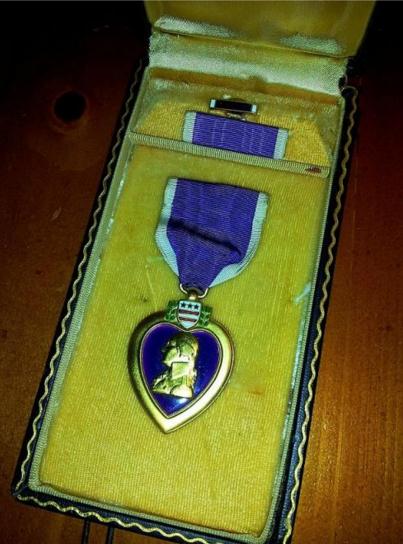
This is a World War II Purple Heart Medal set complete with the ribbon and lapel device in the correct presentation case.
Most Purple Heart medals issued through the Viet Nam War are engraved with the recipient’s name affording collectors with the ability to research them and reconstruct the personal history. Several collectors create veteran dossiers for each of the PHMs in their collection displaying them alongside their collection at public Memorial and Veterans Day events, describing the price that was paid by each individual.
I have two PHMs in my collection. One of them is part of the medals that were awarded to my uncle who was wounded in World War I and again in World War II. He also served in the Korean War finishing his service in 1954. The other example is one that I acquired that is an un-engraved (and numbered on the edge) WWII-issue, complete set (including the ribbon and lapel devices) in the presentation cases.
Purple Heart Collections
Happen to Have $250k for a “Rare” 1775 Medal?
Having a sense of humor is a good thing for those of you who have served (or are serving) in uniform. You understand the necessity…no…the requirement of possessing the invaluable ability to laugh at humorous situations but also actions, activities, operations or events that are FUBAR (you can look that term up if you don’t already know the definition). With regards to militaria collecting, sarcasm, eye-rolling, head-shaking and bursting forth with gut-shaking laughter helps to keep things in proper perspective, especially when one stumbles upon situations like the following.
I know that many, if not most of the people reading this have little or no background covering the history of the United States military medals and decorations. In order to provide some sort of baseline which will then help you to either laugh, roll your eyes or shake your head in disbelief with some measure of authority, I will provide brief history lesson. I won’t go into great detail with the intricacies and extremely specific minutiae so (for those you who are OMSA members) give me a little latitude as I provide a “Reader’s Digest” version.
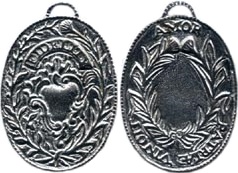
The Fidelity Medallion was authorized by Congress in 1780 and awarded to three soldiers of the Continental Army.
Prior to the Declaration of Independence and the subsequent military action taken by the rebellious colonists of North America, awards and decorations were a tradition of European militaries predominantly awarded to the senior military leaders and heads of state to commemorate victorious aspects of their illustrious careers. For the first five years of the Revolution, no decoration existed for men who served in the Continental Army or Navy as, it would seem that winning independence from the tyrannical British rule would be enough (aside from being paid for service) to risk life and limb.
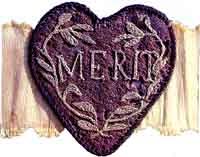
Presented by General Washington, the Badge for Military Merit was awarded to at least three army soldiers.
It wasn’t until 1780 that Congress enacted the very first decoration, the Fidelity Medal, which was awarded to three specific militiamen (John Paulding, Isaac Van Wart and David Williams) who captured British intelligence officer, Major John Andre’ (who was assisting Benedict Arnold in his treasonous act). Aside from a few Congressional actions taken to award medals to General George Washington (1776), General Horatio Gates (1777) and General Henry Lee (1779), the first medal awarded to soldiers was initiated by the issuance of a field order by General Washington on August 7, 1782 establishing the Badge of Military Merit. There is some debate as to the number of recipients of the Badge of Military Merit (the predecessor of the Purple Heart medal), but there were very few soldiers to have it bestowed upon them (as few as three).
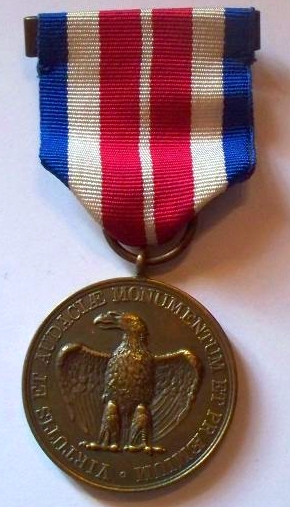
In 1905, Congress approved an act that created a medal for the Certificate of Merit.
Another military decoration wouldn’t be awarded for 65 years when the Certificate of Merit (officially recognized with a medal in 1905) was enacted by Congress during the Mexican-American war, in 1847 and re-established during the Indian Wars in the second-half of the nineteenth century.
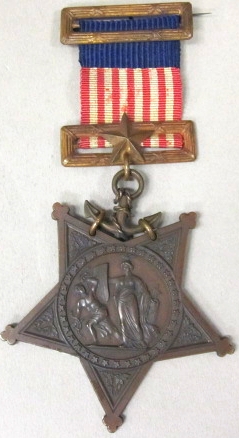
This Navy Type 1 Civil War-era Medal of Honor was presented in 1864 (source: Naval History & Heritage Command).
The most notable American military decoration, the Medal of Honor, was established during the Civil War with the first official presentation taking place on March 25, 1863 decorating six Union Army soldiers with the medal. From the Civil War on through World War II, the process of enacting, creating, managing and awarding military decorations was a process that required developing and maturing as awards manuals and official procedures and precedents were established. For military novices, online resources are quite plentiful and very useful for learning how to determine the identity of a specific decoration and it’s potential collector demand and subsequent value. Now that I have presented all of this information, it is my hope that you see the humor in the remainder of this article.
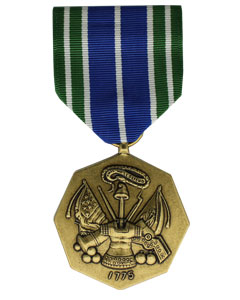
The Army Achievement Medal was established in 1981 and is awarded for outstanding achievement or meritorious service.
In 1961, the Navy Department established a medal to recognize individual, meritorious achievements that were not commensurate with the criteria of the Navy Commendation medal. In 1981, the Army (and Air Force) followed suit with their own achievement medals.
The design of the Army Achievement medal obverse is somewhat generic as it depicts the official U.S. Army seal along with the year the Continental Army was established (1775). The reverse of pendant simply states, “For Military Achievement.”
In a recent online auction listing, a seller listed a military decoration and titled it “1775 medal” and listed it as an Original Period militaria Item from the Revolutionary War (1775-83). The photo of the medal showed it as a set (ribbon device, lapel pin, miniature and full sized medals) in the current-issue plastic presentation case. One could suppose that the seller simply mis-categorized the listing and perhaps, mistyped the auction title. These sorts of mistakes are quite common occurrences. However, this story doesn’t end with a simple mistake.
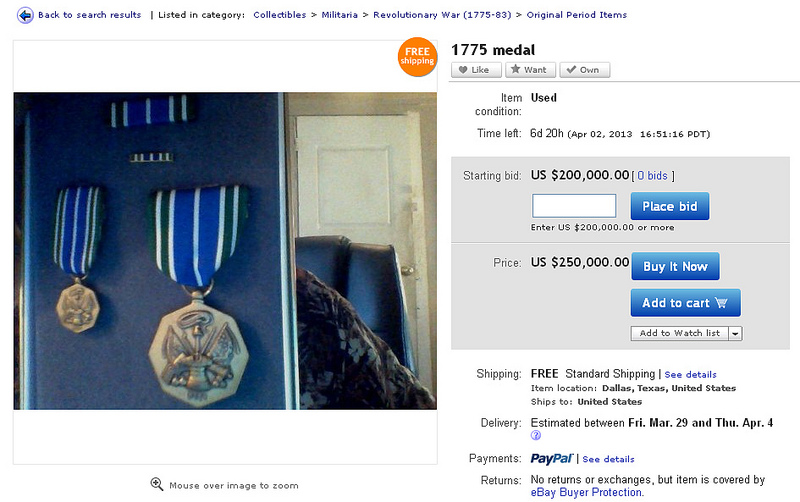
This auction is humorous regardless if the seller believes the medal is 240 years old or simply being sarcastic (source: eBay screenshot).
Reviewing the 1775 medal auction description and price, it should become readily apparent that the seller is either out of his or her element, seeking to deceive a potential buyer or having some fun with an online auction listing. The seller states in the text, “1775 military achievement award complete set asking 200,000 worth 350.000 (sic).” Fortunately for potential buyers, the seller provided an option to buy it now for $250k, splitting the difference between the starting bid and the (stated) value.

Either the seller thinks this medal is only worth $350 but is selling it for a mere $200k or potential buyers can save as much as $150k submitting his minimum bid (source: eBay screenshot).
Not one to make accusations as to the seller’s intentions, I choose to instead, laugh and enjoy the antics routinely experienced in the world of online auctions. For the record, if a collector is seeking to purchase an Army Achievement medal set, look to pay in the neighborhood of $20-40.
 The Veteran's Collection