Blog Archives
Discerning Birds: U.S. Navy Rating Badges from WWI to WWII
Patch collecting is one of the most affordable aspects of militaria collecting and can be a highly rewarding venture to delve into the history and variations that are available. I am, by no means a serious collector of patches opting instead to be selective about the embroidered and colorful pieces of uniform history.
While the overwhelming majority of militaria collectors who have interests in patch collecting are primarily focused on United States Army unit and rank insignia, a smaller portion of us enjoy the eclectic realm of U.S. Navy enlisted rank insignia and the very colorful and meaningful progression of their designs through the ages. That historical progression along with all of its nuances is enough to fill a book (see U.S. Navy Rating Badges, Specialty Marks & Distinguishing Marks 1885-1982
, by John A. Stacey) so with today’s article, I am instead zeroing in on a specific design from a seemingly specific era.

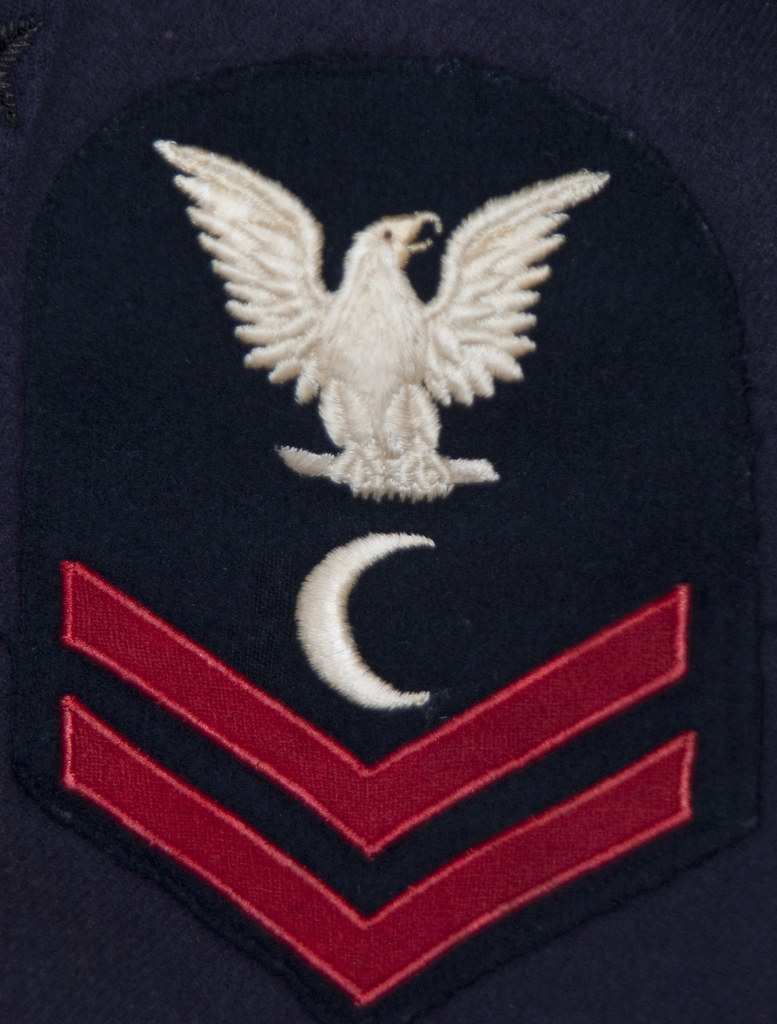
In the modern US Navy, rating badges are consistent in appearance and wear. From the design elements (eagle, specialty mark and chevrons) to the materials they are constructed from, they are all consistent. While this concept places emphasis on the uniformity of appearance and the unit-mindset (that all crew members work together as a single entity), it does restrict the ability for sailors to express and exhibit a measure of individuality and personal pride in their uniform appearance. The current rating insignia (in my opinion) have a rather sterile and sanitized appearance as they are all manufactured by a single source using one design pattern for each and every piece that is made. However, in previous years, sailors had much more freedom to instill their own spices into their uniforms.
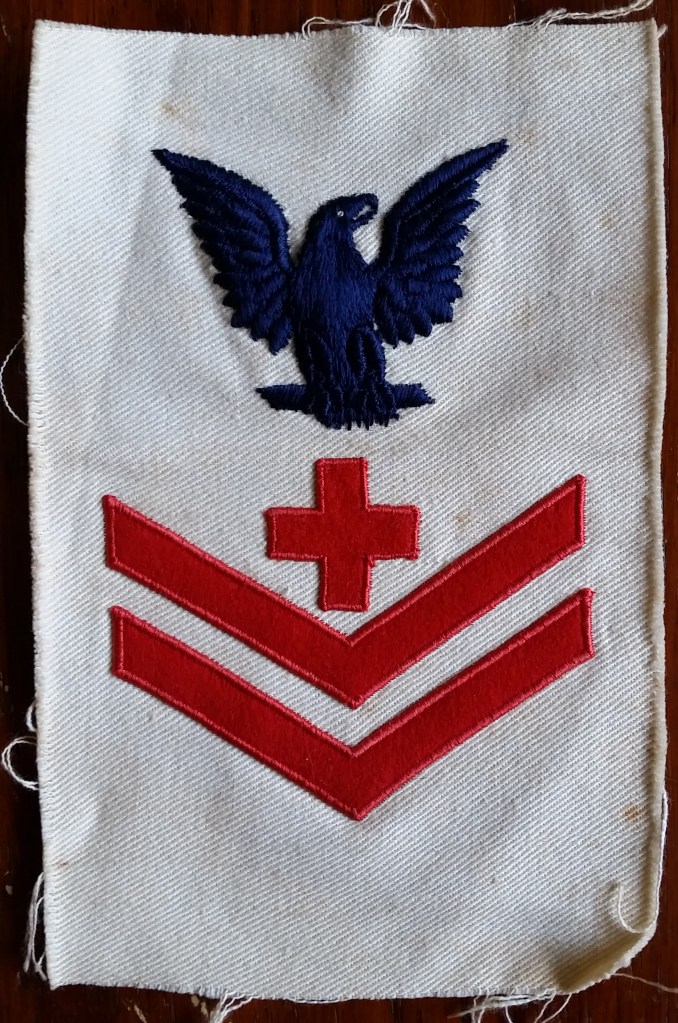
Rating badge collectors might focus their approach from casting a wide net (collecting everything that comes their way) to obtaining every single variety of a specific rating over the course of its existence. I find my collecting efforts to be even more specific as I seek only a handful of specialties (Radarman, Radioman, Ship’s Cook and Pharmacist’s Mate along with a few others) from varied eras (WWI-WWII) on select uniform choices (such as dress blues, whites or khakis). Though my choice of eras might seem rather specific, a closer look at the uniform regulations and the changes imposed during that time-frame reveals that the design of the ratings experienced several iterations.
“All petty officers shall wear on the outer garment a rating-badge, consisting of a spread eagle placed above a class chevron. In the interior angle of the chevron, under the eagle, the specialty mark of the wearer shall be placed. The badge shall be worn on the outer side of the right or left sleeve, half way between the shoulder and elbow. Petty officers of the starboard watch will wear the badge on the right arm; those of the port watch on the left arm.” – Regulations Governing the Uniform of Commissioned Officers, Warrant Officers, and Enlisted Men of the United States 1886
Dating back to 1886, the design (as cited in the uniform regulations) of the eagle called for its wings to be spread. The eagle’s head also now faced toward its left shoulder (having previously faced to the right) and would do so until 1941 when regulations then called for the head to point to the wearer’s front (regardless of the sleeve it was to be worn…more on that later).
Prior to 1913, ships’ crews were divided into two watchstanding sections and were designated with terms that corresponded with the left (port) and right (starboard) sides of the ship which dictated which sleeve the sections’ petty officers would wear their rating badges. From 1913 onward, all petty officers whose specialties were in the Seaman Branch (such as Boatswain’s Mate, Coxswain, Gunner’s Mate, Turret Captain and Quartermaster) were right-arm ratings while all others in the Artificer Branch and Engine Room Force wore theirs on the left sleeve. What can make this confusing for new collectors is finding a rating badge (such as an electrician’s mate) with the eagle pointing toward the left shoulder. Finding this rating badge affixed to a dress blue jumper with it worn on the left sleeve would narrow the time-period down (given the embroidered pattern of the eagle had the eagle sitting completely vertical on the perch) to the inter-war era.
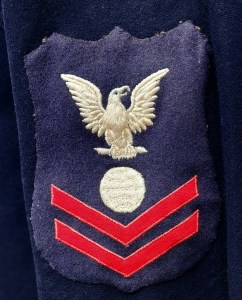
Though the practice started years before, during World War I, rating badges were customized by petty officers by trimming them from the traditional 5-sided shape (rectangle with the bottom corners cut away to form a point) to a contoured pattern. Fancy hand-stitching was then applied to follow the new shape (many times in the shape of a shield) providing a highly stylized appearance on the jumper shirt. As with many fads, this adornment fell out of practice as the Navy specified the pentagon shape and dimensions in a specific change (dated 16 February 1933) to the Navy Uniform Regulations.
In 1941, the Navy changed the eagle to point to the wearer’s front specifying that all non-Seaman Branch petty officers’ ratings have the eagle look to its right shoulder (rather than to the left). The Seaman Branch (which had grown to include Fire Controlman, Mineman, Signalman, Torpedoman’s Mate). In addition to the eagle’s direction, the eagle no longer included the slouched (or leaning) posture that had existed for decades.Though there is no provenance to support this, the idea for these changes was to have the eagle positioned for fighting (facing the enemy and standing tall).


During WWII, a handful of manufacturers provided dates embroidered directly onto the back of rating badges which nullifies the need for researching.


I have merely scratched the surface with these details. There are pages-worth of content that I could provide that provides additional points and factors to pay attention to in order to discern the date of manufacture (and use) of the rating badge, such as:
- Cloth material (enlisted dress blue material changed between WWI and WWII, additional materials were introduced for WWII, etc.)
- Rating Specialties (ratings were added/retired throughout this period)
In 1947, the most significant change that indicated a desire for uniform appearance across enlisted ranks was moving all ratings to the left arm with the eagle facing forward. The distinction between the Seaman Branch and all other petty officers was removed.
In the months to come, I will be providing additional articles in order to provide you with more insight into collecting rating badges and how to discern them without having to rely on others.
—-
All images are the property of their respective owners or The Veteran’s Collection unless otherwise noted. Photo source may or may not indicate the original owner / copyright holder of the image.
The Enigmatic pursuit of the Third Reich Encryption Machine
History is continuously subjected to revision as stories are told and retold. Researchers and historical experts are seemingly discovering previously hidden facts or secrets that shed new light on events. With the new revelations, previous facts surrounding historical events are skewed or changed causing a re-shaping of timelines and ultimately public perception. Hollywood however, seems bent on taking a different tack with regards to revising history in order to reshape producers’, directors’ and actors’ bank accounts.
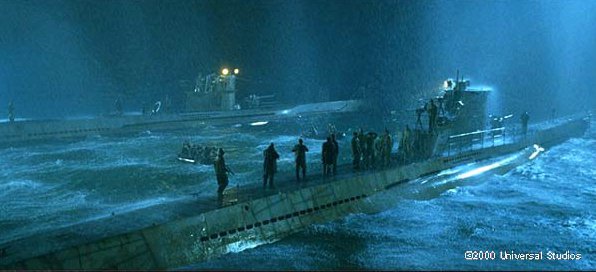
This scene shows the disguised American sub (“S-33”) meeting with the U-571 in a rouse to obtain the Enigma code machine (source: Universal Pictures).
In April of 2000, Universal Pictures released a highly successful historical-fiction movie depicting the U.S. Navy’s successful capture of a Kriegsmarine u-boat during World War II. The premise of the film was centered on seizing the keystone encryption device (often referred to as Germany’s “secret weapon”), the Enigma encode/decoding machine along with the codes. While director Jonathan Mostow (who also co-wrote the screenplay) navigates around the historical truths by conveniently mentioning that the story is a compilation of actual events rather than being based on a true story. While this may have worked for American audiences, Great Britain’s Prime Minister (at the time of the film’s release), Tony Blair agreed with discussion (about the film) in Parliament that the story was an affront to the British sailors who gave their lives in the actual retrieval of the Enigma device during the war.
Rather than embarking on a mission to demonstrate the challenges created by Hollywood’s propensity of altering reality (albeit for entertainment purposes), I want to focus more on the capture of the machine and codes and what that meant for achieving an Allied victory over the Axis powers during World War II.
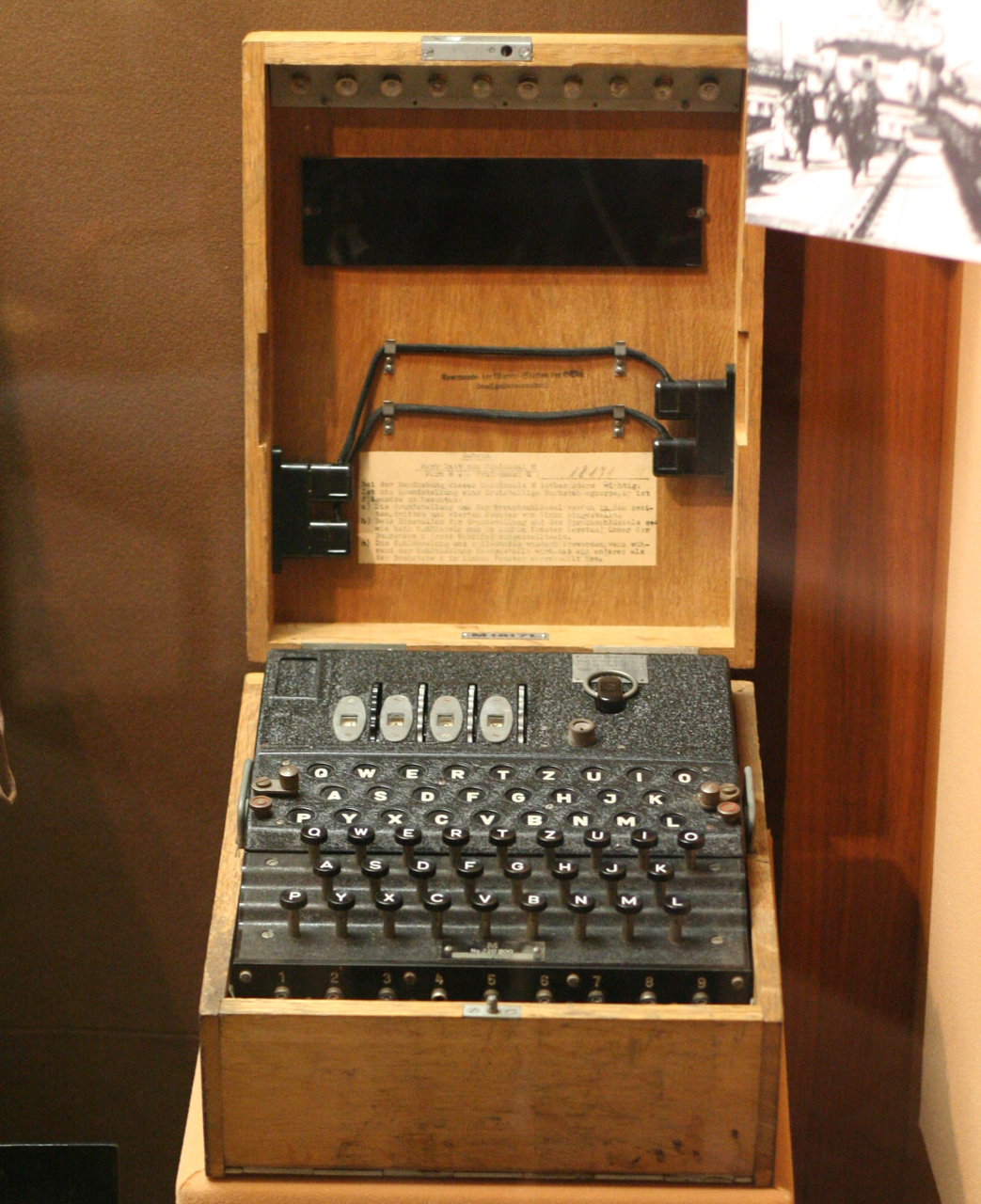
This Enigma is an German navy (Kriegsmarine) example.
Prior to the United States’ entry into WWII on December 8, 1941, Europe had already been gripped with conflict for twenty-five months. Though it was a highly protected secret, the Allies were fully aware of the existence of the Enigma machine and had already seen successful code-breaking efforts (by the Polish Cipher Bureau in July of 1939) until continued German technological advances rendered those efforts obsolete. It wasn’t until May 9th, 1941 that the Allies achieved their most substantial breakthrough with the British capture of U-110 along with codes and other intelligence materials.
One of the events that is allegedly covered (by the U-571 film) is the United States’ capture of the U-505 in 1944 (three years after U-110) which was towed to Bermuda. Following the war, the U-boat was towed to Portsmouth Navy Yard, New Hampshire where she sat until being transported to Chicago to be displayed as a museum ship. The U-505 is now preserved inside the Chicago Museum of Science and Industry. Also on display are two Enigma code machines.
In addition to the two machines in the Chicago MOSI, there are a handful in museum collections around the globe. Due to the scarcity of the devices, their notoriety and the impact of their capture had on the outcome of the war, Enigmas command incredible premiums when they surface on the market. As recent as 2011, a Christies’ listing yielded a sale with the winning bid in excess of $200,000.
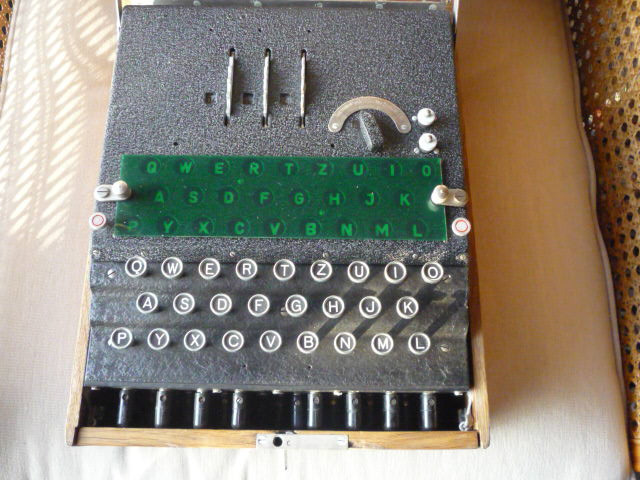
This Enigma’s selling price was in excess of $35,000 (US) when it was listed at auction in March of 2013 (source: eBay image).
Most recently, the winning bid for an online auction listing (for a three-disk Enigma) seemed to reflect a more modest price as it sold for “only” $35,103. One has to wonder why, in only two years, would there be such a considerable price disparity (obviously factoring model, variant, condition, etc.) between the two transactions. Perhaps the current state of the economy is at play? Maybe the collector or museum with deep pockets was eliminated from the market with their purchase in 2011? Perhaps the $200k selling price was an anomaly and this recent auction reflects a more realistic value?
Either way, the Enigma will remain…well…just that…an enigma with regards to my own collection and the possibility of ever possessing one.
 The Veteran's Collection